




Your pinky toe shouldn't be the thing that ends your day. But there it is, that sharp pinch on the outer edge of your foot, right around hour six, reminding you that ill-fitting footwear has opinions too.
Most people blame their toe. Bunionette, they Google. Weird foot shape, they conclude. The shoe rarely gets the blame it deserves. Below, we cover what's actually causing pinky toe pain, what you can do about it, and when it's worth seeing someone.
Your Pinky Toe Pain Questions, Answered
Can Shoes Actually Cause Pinky Toe Pain?
Yes. Shoes cause pinky toe pain by compressing the fifth toe against a tapered toe box, leading to corns, nerve irritation, and structural changes over time. Most dress shoes, loafers, and heels taper toward the front, which squeezes the foot exactly where it's widest. That's the outer edge. That's where your pinky toe lives.
Standard width measurements focus on the ball of the foot, not the outer edge. So the pinky toe gets compressed, day after day, until something gives.
The consequences aren't subtle. Repeated pressure from ill-fitting footwear leads to corns and calluses on the outer toe, nerve irritation along the lateral foot, and over time, structural changes like hammertoe or a bunionette.
None of those are quick fixes. All of them start with the shoe.
Why Is the Pinky Toe Always the First to Hurt?
The pinky toe hurts first because it sits at the outermost edge of the foot, where shoes taper, has no neighbor on its outer side, and receives the full force of lateral compression. It's the smallest toe, has the least muscle support around it, and takes the full brunt of what the shoe wall dishes out.
Every other toe has a neighbor on both sides. The pinky toe has one. On the other side: the shoe wall. When that wall presses inward, there's nowhere for the fifth toe to go. It absorbs the pressure directly.
Add a heel into the equation, and the problem compounds. Elevated heels shift body weight forward, loading the front of the foot harder with every step. The pinky toe, already squeezed laterally, now takes more vertical force too. It's structurally the most vulnerable toe on your foot, and most shoes treat it like an afterthought.
How Do I Know If It's a Fracture or Just Shoe Pressure?

Onset pattern is your clearest diagnostic signal. A stress fracture hits suddenly, often after a specific moment of impact. Chronic shoe pressure builds gradually and eases when you take the shoes off. The symptoms overlap, but that timing difference tells you most of what you need to know.
| Symptom | Stress Fracture | Shoe Pressure |
|---|---|---|
| Onset | Sudden, often after impact | Gradual, worsens over time |
| Swelling | Yes, often visible | Mild or none |
| Bruising | Common | Rare |
| Pain with movement | Any movement hurts | Mainly during wear |
| Relief barefoot | Minimal | Significant improvement |
| Skin changes | None | Corns, calluses, redness |
If you suspect a broken toe, especially after a drop or collision, get it imaged. A stress fracture that goes unaddressed can shift and heal incorrectly. Shoe pressure, on the other hand, responds well to footwear changes and rest. When in doubt, a podiatrist can tell the difference in about five minutes.
What Does 'Breaking In' Shoes Actually Do to Your Pinky Toe?
Breaking in shoes deforms your foot to fit the shoe, not the other way around. The leather softens slightly, sure. But what's really happening is that your foot is reshaping itself to match the shoe's geometry. That's not a feature. That's a problem.
Repeated compression of the fifth toe leads to thickened skin, nerve irritation, and eventually structural changes at the joint. That's how a bunionette forms. That's how you end up with toes that feel like they've been in a vice by the end of a normal workday.
The idea that suffering through a tight shoe is normal, that it'll get better, is one of the more persistent myths in footwear. A shoe that fits correctly on day one shouldn't require weeks of pain as a prerequisite. If it hurts out of the box, it's telling you something. Listen to it.
How Do I Stop My Pinky Toe from Hurting in My Shoes?
Short-term relief and long-term prevention are two different problems. Start with the immediate stuff, then address the root cause.
Immediate Relief for Pinky Toe Pain
- Padding: moleskin or gel toe caps reduce friction directly on the fifth toe
- Buddy taping: tape the pinky toe to the fourth toe for support and to limit movement
- RICE method: rest, ice, compression, elevation — useful if there's swelling or acute soreness
- Toe spacers: separate the toes and reduce lateral compression during wear
- Orthotics: can redistribute pressure across the foot, reducing load on the outer edge
These help, and there's no question about it. However, none of them solve the problem if you keep wearing the same shoes.
Long-Term Prevention of Pinky Toe Pain

The root cause is almost always the shoe. A narrow toe box compresses the fifth toe every hour you wear it. Padding buys you time. Switching to a shoe with enough room for your toes to sit naturally is what actually stops the cycle.
What Type of Shoe Is Least Likely to Cause Pinky Toe Pain?
Shoes with a wide toe box, zero-drop sole, and flexible construction are least likely to cause pinky toe pain. Three features matter most:
- Wide toe box: gives the fifth toe room to sit without lateral compression. Standard shoe widths are built around average measurements that ignore the outer foot entirely.
- Zero-drop sole: keeps the heel and forefoot at the same height. Heeled shoes shift weight forward, increasing pressure on the front of the foot, including the pinky toe. A flat sole distributes that load more evenly.
- Flexible construction: a rigid shoe fights your foot's natural movement. A flexible sole lets the foot splay and move as it should, reducing friction at the outer edge.
The challenge is finding shoes that check all three boxes without looking like something you'd wear to a hospital appointment. That's a real problem for anyone who needs to look put-together at work.
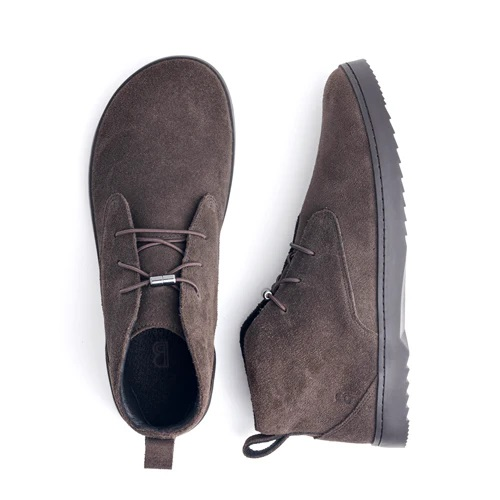
The Carnforth Barefoot Chukka Boot is a good example of what this looks like in practice. Wide toe box, zero-drop sole, full-grain American leather, and it looks like a normal chukka boot. No compromises on either end.
Will a Tailor's Bunion Go Away If I Switch Shoes?
No. Switching shoes won't reverse bone changes. A tailor's bunion (bunionette) is a bony prominence at the base of the fifth metatarsal. Once it shifts, it stays shifted.
What footwear changes can do is stop the progression and significantly reduce pain. According to the Cleveland Clinic, early-stage bunionettes often respond well to wider footwear, padding, and activity modification, without surgical intervention. The earlier you make the switch, the better the outcome.
If the bunionette is already causing significant pain or affecting your gait, a podiatrist can assess whether conservative management is still viable.
A 2021 study published in PMC on foot pain and quality of life found that footwear is the most modifiable risk factor for chronic foot conditions. The bone won't move back. But the pain doesn't have to stay.
When Should You Actually Worry About Pinky Toe Pain?
See a podiatrist if pinky toe pain does not improve within 1-2 weeks, or immediately if you experience numbness, visible deformity, inability to bear weight, or signs of infection. Most pinky toe pain resolves on its own, but these signs mean it won't.
- Numbness or tingling that lasts more than a few days
- Visible deformity at the toe joint that wasn't there before
- Inability to bear weight on the foot
- Signs of infection: redness spreading beyond the toe, warmth, discharge
- An ingrown toenail that isn't resolving on its own
- Pain that doesn't improve after 1-2 weeks of home care
Nerve irritation that goes unaddressed can become chronic. A stress fracture that gets walked on heals badly. Neither outcome is worth avoiding a 20-minute appointment. If something feels wrong beyond normal shoe soreness, get it looked at.
Still Not Sure What's Going On With Your Toe?
If the answers above didn't quite match what you're dealing with, that's a signal. Pinky toe pain that doesn't fit a clear pattern after 1-2 weeks of home care deserves a proper look from a podiatrist. Not because something is definitely wrong, but because guessing gets expensive.
That said, the vast majority of pinky toe pain is footwear-driven and reversible. The single highest-impact change most people can make is switching to shoes that actually respect the shape of their foot. Everything else is managing symptoms around a problem you haven't addressed yet.
Keep Reading

Your pinky toe pain has a cause. Usually, it's the shoe. Now you know what to look for, what to do about it, and when to stop guessing and see someone.
If you want to go deeper, these two are worth your time.
Wide Toe Box Shoes for Men: Why It Matters and What to Look For covers the full case for giving your toes actual room.
Shop Barefoot Shoes if you're ready to make the switch. And What Makes a Dress Shoe Actually Comfortable breaks down what separates a shoe that works from one that just looks like it should.
Prices accurate as of June 2026.