
Written by Matthew Tran, Birchbury's Founder
Most men's shoes are built around aesthetics first. The result is a tapered toe box that squeezes the foot exactly where it's widest, creating pressure points that build up over hours of wear. It's a design compromise most men accept without questioning it.
Choosing the right toe box shape is one of the most overlooked decisions in buying shoes. This guide covers what a wide toe box actually does, how to identify quality construction, and why it matters for daily comfort and long-term foot health.

Wide-Fit Shoes vs. Wide Toe Box Shoes: What Men Actually Need
Wide-fit shoes and wide toe box shoes solve different problems. The label "wide" doesn't tell you where that width lives — and that's the detail most buyers miss. A wide-fit shoe adds width uniformly across the entire shoe, including the midfoot and heel, which helps men with a broader foot overall but doesn't address the front of the shoe, where toes actually need room to spread.
A wide toe box shoe takes a different approach. It widens specifically at the forefoot, allowing the toes to splay naturally without loosening the fit through the arch or heel. The shape mirrors the actual outline of the foot, which is widest at the toes, not the middle. This is what's meant by an anatomical toe box or foot-shaped toe box. A peer-reviewed study on footwear and forefoot pressure found that toe box geometry directly influences how load is distributed across the front of the foot during walking.
Choosing the wrong type creates its own problems. A uniform wide-fit shoe can leave the heel sloppy and unsupported while still compressing the toes. A standard shoe with a narrow toe box, regardless of overall width, restricts toe splay entirely. Neither outcome is what most men are looking for.
The right fit holds the heel and midfoot securely while giving the toes genuine room to function. That's the distinction worth understanding before evaluating any shoe.
What to Look For in Wide Toe Box Shoes

Toe Box Width and Height
A quality wide toe box shoe must provide clearance in both width and height. Width is only half the equation. A toe box that's wide but shallow still presses down on the tops of the toes, which is a common issue for men dealing with hammer toes or bunions. Vertical height determines whether the toes can lift, spread, and move without rubbing against the upper.
Look for a toe box that gives clearance in both dimensions. A clinical overview on bunion development notes that prolonged compression from narrow footwear contributes to progressive joint deformity. Width and height together are what create genuinely functional space.
Zero-Drop Sole and Alignment
A zero-drop sole means the heel and forefoot sit at the same height — unlike conventional shoes, which carry an 8 to 12 millimeter heel drop that tilts the body forward and shifts excess load onto the forefoot. Over a full day of walking, that forward tilt accumulates stress through the lower body.
A zero-drop sole keeps the heel and forefoot at the same level, allowing the spine, hips, knees, and ankles to stack more naturally. This doesn't mean the shoe lacks cushioning. It means the platform is level.
For men who spend long hours on their feet, that alignment difference is noticeable by mid-afternoon. If you've ever noticed fatigue building in your lower back or knees by the end of the day, a roomier toe box combined with a level sole is worth evaluating.

Materials and Break-In Period
The upper material determines how much a shoe conforms to your foot over time. Synthetic materials tend to hold their shape rigidly, which means the shoe either fits from day one or it doesn't. American full-grain leather behaves differently. It softens and conforms to the foot's contours with wear, which means a well-constructed leather shoe gets more comfortable over time rather than less.
Sole flexibility matters here too. A sole that bends with the foot allows natural propulsion through the toe-off phase of each step, improving both stability and comfort across long wear periods.
Removable Insoles and Orthotic Compatibility
Men who use custom orthotics should look for shoes with a fully removable insole. Adding an insole to a standard shoe reduces the already-limited toe box volume — a removable insole solves this. You can pull the stock insole out, drop in your custom insert, and retain the full interior space the shoe was designed to provide.
This matters most in shoes with a genuine wide toe box, where the extra volume is worth preserving. If orthotic compatibility is a priority, confirm the insole is fully removable before purchasing.

Wide Toe Box Shoes That Work in Professional Settings
Most wide toe box shoes are built for the trail or the gym. That leaves a real gap for men who need to dress professionally but don't want to spend eight hours in shoes that compress their toes. Finding a barefoot shoe that holds up in a boardroom, a courtroom, or a client meeting is harder than it should be.
The challenge is that the visual cues of barefoot footwear — thick rubber soles, rounded silhouettes, and minimalist uppers — tend to read as casual. A well-engineered dress shoe can deliver the same anatomical toe box and zero-drop sole behind a profile that looks like a classic oxford. The design does the work without announcing itself.
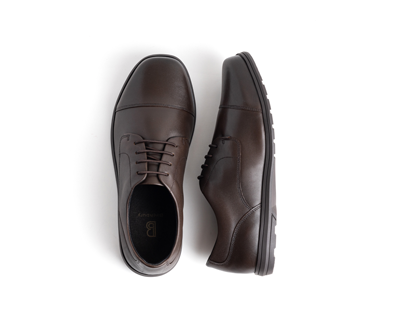
The Brenston Barefoot Dress Shoe ($180.00) combines a wide toe box, zero-drop sole, and full-grain American leather in a classic oxford silhouette — built around exactly that idea. Inside, it carries a wide toe box that allows natural toe splay, a zero-drop sole for level alignment, and soft full-grain American leather that requires no break-in period. A removable insole means men who use custom orthotics can swap it out without losing interior volume.
The elastic no-tie laces are worth mentioning. They look like standard laces from a distance but allow the shoe to slip on and off without sacrificing the fitted appearance. For men on their feet through long workdays, that convenience adds up.
Rated 4.5 stars across more than 612 reviews, the Brenston has become a go-to for lawyers, doctors, and professionals who need a shoe that performs without drawing attention to itself. It works with a suit, business casual, or dark denim.
How to Make Your Decision
The right wide toe box shoe depends on use case, toe box geometry, insole compatibility, and sole drop. Start by narrowing down the context: casual everyday wear, athletic use, or professional settings. Each category has different construction priorities, and a shoe optimized for the trail won't serve you well in a client meeting.
Once you've identified the use case, run through these criteria before committing:
- Prioritize toe box shape over width labels. A shoe marked "wide" may still taper at the toes. Look for a foot-shaped silhouette that widens at the forefoot.
- Check both width and height. If you deal with bunions or hammer toes, a shallow toe box creates pressure points even when the width is adequate.
- Confirm insole compatibility. If you use custom orthotics, the insole needs to be fully removable to preserve interior volume.
- Look for a zero-drop sole if you stand or walk for long stretches. A level platform reduces the fatigue that builds through the lower body over a full day.
- Try shoes at end of day — feet swell with use and are widest then. A morning fit may feel tight by afternoon.
If you're weighing different barefoot shoe brands, the Birchbury vs. Vivobarefoot comparison breaks down how construction choices differ across key categories, including toe splay room, sole flexibility, and professional versatility.
Frequently Asked Questions
What Is the Difference Between Wide-Fit Shoes and Wide Toe Box Shoes?
Wide-fit shoes add width uniformly across the entire shoe, including the heel and midfoot. Wide toe box shoes widen specifically at the forefoot, allowing the toes to splay naturally while keeping the heel and arch securely fitted. The two solve different problems.
Can Wide Toe Box Shoes Still Look Professional for the Office?
Yes. Modern construction allows an anatomical toe box and zero-drop sole to sit inside a clean oxford silhouette. The functional design is internal. From the outside, the shoe reads as a standard dress shoe, which makes it a practical option for professional environments.
How Do I Know If I Need a Wide Toe Box Shoe?
Signs you need a wide toe box: toes compressed by mid-morning, calluses on outer foot edges, or a big toe angling inward. If your foot is widest at the toes but your shoes taper there, a foot-shaped toe box will likely feel noticeably different.
Do Wide Toe Box Shoes Help With Bunions and Hammer Toes?
A wide toe box reduces the pressure that aggravates bunions and hammer toes by giving the forefoot room to spread. It won't reverse existing conditions, but removing compression from the affected area can meaningfully reduce daily discomfort over time.
What Should I Look for When Measuring Toe Box Width and Height?
Check both dimensions. Width determines lateral room for toe splay. Height determines whether the toes can lift without pressing against the upper. Men with hammer toes or high-volume feet need adequate clearance in both directions, not just side to side.
Your Feet Were Built to Move Freely
Shoes have spent decades being designed around aesthetics at the expense of function. A wide toe box isn't a specialty feature — it's what footwear looks like when it's built around the actual shape of a foot. Allowing natural toe splay isn't a compromise. It's the baseline.
Comfort and style stopped being mutually exclusive the moment construction caught up with the idea. The right shoe holds its shape, looks the part, and gives your feet the room they were built to use.
Prices accurate as of April 2026.

Matthew Tran
Founder, Birchbury
Matthew Tran is a mechanical engineer who founded Birchbury. He started the company after struggling to find dress shoes that didn’t hurt — and barefoot shoes that didn’t look out of place at work. That gap led him to design his own: a wide-toe-box, zero-drop shoe made from full-grain leather, built specifically to look like a normal shoe. Birchbury has since been worn by lawyers, chiropractors, restaurant managers, and anyone else who spends their day on their feet and refuses to suffer for it.
More about Matthew Tran →