
Ordinary Oxford shoes that look right with a suit have your toes negotiating for space by lunch.
You have another option: barefoot dress shoes. However, these shoes with actual look like something you'd wear to a physical therapy appointment, not a client meeting.
So you picked the pain of regular Oxford dress shoes. At least pain doesn't show.
Wide toe box oxford shoes are supposed to end that trade, yet most manufacturers make barefoot dress shoes that look ugly.
But there's one brand of Oxford shoes that actually look like regular shoes. And before we talk about that, let's clarify some terms used in the shoe industry so you know what they actually mean.

A Wide Toe Box Oxford Is Not the Same Thing as a Wide Width Oxford
A wide toe box oxford is a dress shoe shaped like a foot at the front. Your toes splay instead of stacking, while the outside keeps the closed lacing and clean lines everyone expects.
Four things make one work:
- Wide toe box: the forefoot matches the natural width of your foot, so toes spread instead of stacking
- Zero-drop sole: heel and forefoot sit at the same height
- Faux heel outsole: a molded step that keeps the dress shoe silhouette
- American full-grain leather: soft from the first wear
Birchbury's Brenston is the shoe that checks all four.
Wide width changes volume; a wide toe box changes shape. Wide width (the E and EE sizings) scales the entire shoe up, taper included, so a size wider in the wrong shape still pinches your toes, and incorrectly fitted footwear is a well-documented problem.
| Wide width oxford | Wide toe box oxford | |
|---|---|---|
| Last shape | Same taper, scaled up | Foot-shaped at the front |
| Toe splay | Still pinched | Full splay |
| What changes | Volume | Shape |
True wide toe box oxfords stay rare because oxford formality pushes makers toward a narrow, tapered last. (The last is the form shoemakers build a shoe around, and it decides interior shape more than any padding does.) A shoe built on a foot-shaped last skips that convention.

Why Standard Oxfords Have Your Toes Clenched by Mid-Afternoon
Blame the last, not your feet. Standard oxfords hurt for three reasons: a tapered forefoot, an elevated heel, and a stiff sole.
- The tapered last. The forefoot taper squeezes your toes together for eight hours straight, and research on footwear shows toe box shape measurably changes pressure across the front of the foot.
- The elevated heel. Heel elevation tips your weight forward onto that same crowded forefoot.
- The stiff sole. A rigid sole with serious stack height (the total thickness of material between your foot and the ground) means your foot never flexes the way it wants to.
Natural foot movement loses to construction, every day, all day.
The traditional answer was a brutal break-in period. Weeks of suffering, sold as a feature, on shoes you paid real money for. No wonder so few dress shoes survive a ten-hour day on hard floors.
And now, the wide toe box Oxford shoes that look like regular shoes. Let's talk about it.

The Birchbury Brenston, Feature by Feature
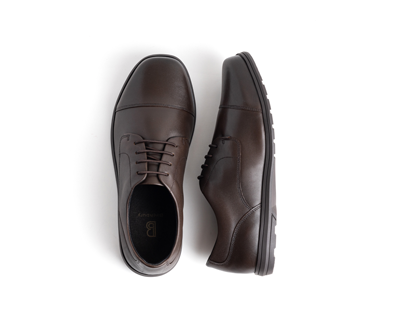
The Brenston is Birchbury's answer: a barefoot dress shoe that reads as a classic oxford from the outside and gives your foot a full workday of room on the inside. Birchbury handcrafts every pair. Here's what each part of the build does.
The quick rundown:
- Toe box: wide, foot-shaped
- Heel drop: zero, heel and forefoot level
- Sole: flat, flexible, non-slip, with a molded faux heel
- Upper: handcrafted American full-grain leather
- Laces: elastic, no-tie
- Insole: removable
- Returns: free returns and exchanges, 30-day window

Wide Toe Box That Lets Your Toes Spread Through a Full Workday
The front of the Brenston matches the natural width of your foot, so your toes splay instead of stacking on top of each other. Toe splay (your toes spreading outward as they take your weight) is what all-day comfort actually depends on. Everything else is padding on top of a bad shape.
Zero-Drop Heel That Keeps You Standing Level
Zero-drop means exactly that: heel and forefoot sit at the same height, 0mm of drop between them. You stand the way you would barefoot instead of tipped forward onto your toes.
The zero-drop platform is designed to support natural posture, and after a week you notice how off-balance your old pair felt.
Non-Slip Outsole With a Faux Heel That Holds the Dress Shoe Line
A faux heel is a molded step in the outsole. It recreates the stepped silhouette people expect from an oxford without raising your heel above the forefoot.
The flexible sole stays flat and low in stack height, so your foot bends where it wants to. Grip underneath, formality in profile.
American Full-Grain Leather That Is Soft From the First Wear
Handcrafted American full-grain leather, soft out of the box. No break-in period, no bandages in your desk drawer.
Full-grain is the top layer of the hide, unsanded and uncoated. That's also why it holds up through years of five-day office wear rather than cracking after one winter.
Elastic No-Tie Laces and a Removable Insole
Elastic no-tie laces let the Brenston slip on like a loafer while looking laced. The insole comes out if you prefer a different underfoot feel, or want even more interior room. Small details, daily payoff.

Will Anyone at Work Clock Them as Barefoot Shoes?
No. Not unless you tell them. Closed lacing plus a faux heel silhouette reads as a standard oxford.
The eye reads two things on an oxford: the closed lacing and the heel line. The Brenston keeps both, since the faux heel preserves the silhouette and the extra room lives at the front where nobody is looking.
The full-grain leather takes a polish like any dress shoe, so business casual works, suit-and-tie works, and dark denim works too. Oxford lacing is closed where a derby's is open, which is why it reads more formal, and exactly why a true wide toe box oxford is worth having.
Most barefoot shoes stop at casual. This one doesn't.
What $180 Actually Buys You
$180 buys handcrafted American full-grain leather, a foot-shaped last, and a molded faux heel outsole. Spread across years of five-day-a-week office wear, that math looks very different than it does on the checkout page.
Under-$100 wide toe box dress shoes generally get there with corrected or coated leather and synthetic uppers, a real trade-off in how long they last and how soon they feel good.
Returns are free for 30 days, and exchanges are free too. On fit: measure your foot in inches and size by Birchbury's sizing guide, not by your old wide width oxfords.
Sharp Shoes, Unclenched Toes
The formality lives on the outside. The room lives where your toes are. Those two facts never had to fight.
You were never choosing between comfort and looking sharp. You were choosing between shoe shapes, and one of them was wrong. A wide toe box oxford ends the argument: Oxford shoes on the outside, your actual foot on the inside.
The Birchbury Brenston is that oxford: wide toe box, zero-drop sole, faux heel outsole, handcrafted American full-grain leather.
Prices accurate as of September 2026.
FAQs
1. What are some good formal shoes with a wide toe box for men?
The Birchbury Brenston is widely considered one of the best formal dress shoes with a wide toe box because it looks like a traditional, refined cap-toe oxford on the outside while functioning like a barefoot shoe on the inside. Unlike conventional oxfords that force your toes into a narrow triangular point, the Brenston is built on an anatomical last that gives your toes full freedom to splay naturally. Handcrafted from soft American full-grain leather with a flat zero-drop sole and a classic exterior faux heel, it delivers boardroom-level elegance without cramping your feet.
2. What brand of shoes has a wider toe box?
Several footwear brands specialize in wider toe boxes, each serving different daily environments and functional needs. Brands like Vivobarefoot focus on athletic training, trail running, and outdoor adventures with sporty, rugged designs engineered for maximum ground feel.
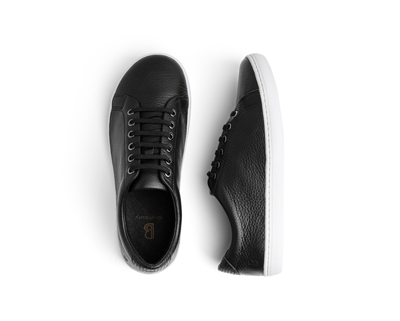
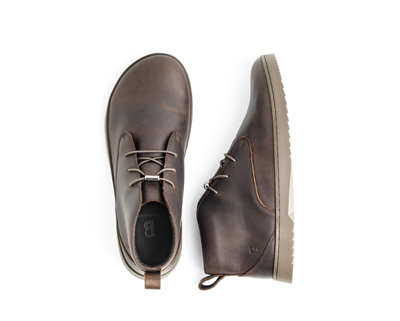
For formal, professional, and everyday smart casual wear, Birchbury designs wide toe box shoes that preserve classic footwear styling. Their lineup includes the Brenston formal cap-toe dress shoe, the Bramford smart casual leather sneaker, and the Carnforth chukka boot for an elevated casual look.
3. Who should wear wide toe box shoes?
Anyone looking to restore natural foot biomechanics, eliminate chronic toe crowding, or prevent forefoot deformities should wear wide toe box shoes. They are especially beneficial for people dealing with bunions, hammertoes, or wide forefeet, as well as professionals who spend long hours standing on hard surfaces. Letting your toes spread out naturally creates a stable base of support, improves whole-body balance, and distributes your weight evenly to protect your joints.
4. What is considered a wide toe box?
A wide toe box is an anatomical shoe front engineered to match the natural fan-like shape of a human foot rather than tapering inward toward the center. It provides ample horizontal and vertical volume across the forefoot, allowing your big toe to sit straight and your smaller toes to splay freely with every step. In a proper

Matthew Tran
Founder, Birchbury
Matthew Tran is a mechanical engineer who founded Birchbury. He started the company after struggling to find dress shoes that didn’t hurt — and barefoot shoes that didn’t look out of place at work. That gap led him to design his own: a wide-toe-box, zero-drop shoe made from full-grain leather, built specifically to look like a normal shoe. Birchbury has since been worn by lawyers, chiropractors, restaurant managers, and anyone else who spends their day on their feet and refuses to suffer for it.
More about Matthew Tran →