
Written by Matthew Tran, Birchbury's Founder
Dress shoes have a design flaw nobody talks about. Your foot is widest at the toes. Dress shoes are narrowest there.
Someone decided pointy meant professional, and your pinky toe has paid for it ever since.
Wide toe box dress shoes end that argument. The right pair gives your toes room to splay, keeps your heel level with the ground, and still looks sharp under a suit.
The wrong pair just says "wide" on the box and pinches anyway. Here's how to tell the difference before you spend a dime.
Why Toe Box Width Affects Long-Term Foot Health
Before you compare a single pair, you need to know what's at stake. This isn't about comfort preferences. It's about what your shoes do to your feet over a decade.

How Narrow Shoes Lead to Toe Splay and Bunions
Narrow dress shoes restrict toe splay, and over years that pressure can build a bunion. Your toes want to splay when you walk. A tapered dress shoe blocks that movement and presses your big toe inward, hour after hour, year after year.
A population-based study found hallux valgus (the clinical term for bunions) in over a third of adults over 65. Bone and joint specialists tie tight, narrow footwear to bunion formation. The pattern over time:
- Toes compress and stop splaying naturally
- The big toe drifts inward
- A bony bump forms at the joint, and it doesn't reverse on its own

When a Wider Toe Box Helps Extra-Wide Feet
A wider toe box helps. Podiatric guidelines point to roomier toe boxes as a way to slow the progression of existing bunions. Not a magic reversal. Just less daily pressure on the joint.
Men with extra-wide feet feel that pressure first and worst. A wide toe box isn't a luxury for them. It's the baseline.
So which dress shoe style actually delivers that room?

Oxford vs. Derby vs. Loafer: Which Style Fits Wide Feet Best
Derbies fit wide feet best, most of the time. But the full answer depends on each style's construction, and one exception changes the math.
Oxford dress shoes use closed lacing. The eyelet facings stitch under the vamp, which looks sharp but leaves little give. That structure makes the vamp harder to widen unless the shoe started on a foot-shaped last from day one.
Derby shoes flip the design. Open lacing sits on top of the vamp, so the facings spread to accommodate a wider foot without redesigning the last. Loafers skip laces entirely, which sounds like freedom until you notice most of them taper hard at the toe.
| Style | Lacing | Typical Toe Box Room | Best Occasion |
|---|---|---|---|
| Oxford | Closed | Tight, unless built on a wide last | Formal occasions |
| Derby | Open | More adjustable through the vamp | Business-casual to semi-formal |
| Loafer | None | Often sharply tapered | Business-casual |
Matching Style to Occasion
The quick version:
- Formal occasions: Oxford
- Business-casual: Derby or loafer
- Formal with wide feet: Oxford built on a foot-shaped last
Here's the catch. Formal occasions call for an Oxford, the one style least forgiving of wide feet. Derbies and loafers cover business-casual fine, but nobody wears a loafer to a black-tie wedding.
The workaround is an Oxford-style barefoot dress shoe handcrafted on a foot-shaped last, with a wide toe box built in rather than stretched in later. You keep the formal silhouette. Your toes keep their real estate.

Our Top Pick: The Brenston Barefoot Dress Shoe
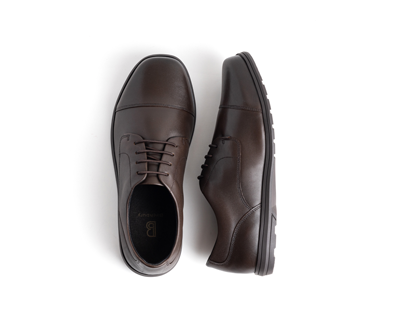
The Brenston barefoot dress shoe ($180) is an Oxford-style barefoot shoe with a wide toe box and a flat, flexible sole. Every criterion above points to it.
And yes, I know what you're picturing: barefoot dress shoes usually look like something a hobbit would wear to a job interview. The Brenston is the counterargument. From across the room, it reads as a classic Oxford. Inside, it hides room your toes will notice by lunch.

Specs at a Glance
- Full-grain American leather, soft from the first wear. No break-in punishment.
- Zero-drop, flexible sole that bends where your foot bends
- Wide toe box shaped like an actual foot
- Elastic no-tie laces for quick on and off
- Removable insole to adjust fit and cushioning
- Works for the office or a wedding
Why It Works for Wide Feet
The Brenston fits wide feet because it starts from a foot-shaped last, not a standard last with width tacked on. Most dress shoes handle width by adding a letter to the size and calling it a day. The Brenston puts the room where your foot actually needs it: at the toes.
The removable insole gives you two fits in one shoe. Leave it in for cushioning, or pull it out for extra volume and a closer feel of the ground.
Handcrafted construction keeps the leather supple rather than stiff, which matters when a wide forefoot meets a structured vamp. If the Oxford silhouette isn't your thing, the same foot-shaped last carries across the full line of barefoot shoes that look like regular shoes.
How to Transition From Narrow Dress Shoes to a Wide Toe Box
The right shoe is half the job. The other half is letting your feet remember what room feels like.
What to Expect During Break-In
Feet that have spent years in tapered dress shoes usually need a week or two to adjust. Narrow lasts have pressed your toes into formation. Here's the typical timeline:
- Day 1: Soft barefoot-style leather needs no break-in. The shoe feels good out of the box.
- Week 1: Your toes start spreading back out of the formation those narrow lasts pressed them into.
- Week 2: The zero-drop stance feels normal. A raised heel tips you forward; a flat sole plants you level with the ground. Expect a flatter stance, not instability.
The adjustment happens in your feet, not the shoe.
Tips for a Smooth Switch
A few moves make the transition painless:
- Wear your new pair for shorter stretches first if you're coming from a very tapered last
- Pull the removable insole for extra volume, or leave it in for cushioning while your feet adjust
- Fine-tune the lacing as your toes splay into the wide toe box
Men with extra-wide feet usually adjust fastest. Their feet have been waiting for this.

How to Make Your Decision
You've seen the anatomy, the styles, and the transition plan. Now compress it all into a two-minute check you can run before buying anything.
Run every candidate through this list:
| Criterion | Why It Matters |
|---|---|
| Toe box shape | Foot-shaped, not just labeled "wide." Room should sit at the toes. |
| Sole flexibility | The shoe should bend where your foot bends, not fight you. |
| Zero-drop with a dress silhouette | A level platform that still passes under a suit. |
| Cushioning and arch support | A removable insole lets you dial both in yourself. |
| Style matched to occasion | Oxford for formal occasions, Derby or loafer for business-casual. |
Most shoes pass two or three of those. The pointy Oxford flunks the first line. The comfort sneaker flunks the last.
The Brenston checks every box: foot-shaped toe box, flexible zero-drop sole, removable insole, and an Oxford silhouette that covers everything from the boardroom to a wedding. That's why it sat at the top of this list.
Still have questions? Fair. The answers are below.
FAQ
Can Wide Toe Box Dress Shoes Still Look Sharp With a Suit?
Yes, as long as the shoe starts from a foot-shaped last rather than a standard last sized up. The extra room hides inside the toe box, so the silhouette stays clean under a suit. Nobody at the meeting will know your toes can move.
Do Wide Toe Box Dress Shoes Work for Men With Bunions or Extra-Wide Feet?
Yes. Podiatric guidance confirms roomy toe boxes cut daily pressure on the big toe joint, so men with extra-wide feet or bunions benefit most. Less squeeze, less aggravation.
Is There a Break-In Period for Wide Toe Box Dress Shoes?
Barely. Soft full-grain leather barefoot dress shoes feel comfortable from the first wear. Your feet, not the shoes, do the short adjusting.
How Do Zero-Drop Dress Shoes Differ From Standard Heeled Dress Shoes?
Standard dress shoes raise your heel above your toes and tip you forward. Zero-drop soles keep both level with the ground, which gives you a natural, planted stance all day.
Are Wide Toe Box Dress Shoes Appropriate for Business-Casual and Formal Offices?
Yes, both. An Oxford-style pair handles formal occasions, and the same shoe pairs with dark denim for business-casual days. One shoe, two dress codes.
Shop the Brenston wide toe box dress shoe →
Prices accurate as of July 2026.

Matthew Tran
Founder, Birchbury
Matthew Tran is a mechanical engineer who founded Birchbury. He started the company after struggling to find dress shoes that didn’t hurt — and barefoot shoes that didn’t look out of place at work. That gap led him to design his own: a wide-toe-box, zero-drop shoe made from full-grain leather, built specifically to look like a normal shoe. Birchbury has since been worn by lawyers, chiropractors, restaurant managers, and anyone else who spends their day on their feet and refuses to suffer for it.
More about Matthew Tran →