
Written by Matthew Tran, Birchbury's Founder
It's 2pm. You're in a meeting, shifting your weight from one foot to the other like you're standing on hot coals.
Your oxfords look sharp. Your feet want a divorce.
So you accepted the trade: dress shoes that hurt, or comfortable shoes that ruin the outfit. Pick one.
Here's the thing. Comfortable dress shoes for all-day wear exist, and the secret isn't more padding.
Foot fatigue from standing all day starts with the shape of the shoe. All-day comfort starts there too.

The Short Answer: Toe Room, a Flat Sole, and Leather That Is Soft on Day One
A dress shoe delivers all-day comfort when three things line up:
- A wide toe box that lets your toes spread. Peer-reviewed research links tapered footwear to forefoot pressure and pain.
- A zero-drop sole (heel and forefoot at the same height, a 0mm drop) that sits flat and actually flexes. Biomechanics research shows a raised heel shifts how load travels up your leg.
- Leather soft enough to skip the break-in period entirely.
Notice what's missing. Cushioning. That's the last variable that matters, not the first.
Want two picks you can act on right now? The Brenston barefoot dress shoe for formal offices, and the Carnforth barefoot chukka boot for business casual and wet commutes.
Both handcrafted with American full-grain leather, the outermost and most durable layer of the hide. Both built on that exact formula.
The rest of this article explains why those three things matter, then gives you 9 picks sorted by what each one does best.

Why Your Dress Shoes Hurt by 2pm
Your shoes don't fail randomly at 2pm. They fail on schedule, for three mechanical reasons: a tapered toe box, a raised heel, and a stiff sole.
Narrow Toe Boxes Squeeze the Widest Part of Your Foot
Traditional dress shoe lasts (the foot-shaped molds a shoe is built around) taper to a point. Your foot doesn't.
The squeeze lands exactly where your foot is widest, and peer-reviewed research links tapered footwear to forefoot pressure and pain. A toe box shaped like an actual foot removes the problem at the source.
A Raised Heel Tips You Forward for Eight Straight Hours
An elevated heel holds your foot pointed downward and shifts how load travels up your leg, according to biomechanics research. Fine for an hour.
Rough for standing all day. A zero-drop sole keeps you level instead.
A Stiff Sole Stops Your Foot From Moving at All
A stiff, heavy rubber outsole resists forefoot flex on every step, and the same biomechanics research shows how footwear design changes the way your foot loads. That resistance compounds across a commute plus a full day on hard floors. That's foot fatigue, manufactured.
Why Memory Foam and Gel Inserts Cannot Rescue a Narrow Shoe
No. Cushioning cannot rescue a narrow shoe.
Padding under a foot with nowhere to spread just compresses. One observational study found footwear shape rarely matches foot shape.
Our take: a wider footbed does more for all-day comfort than any insole, because it supports natural movement instead of muffling the complaint.
That's the diagnosis. Now for the shoes.

9 Comfortable Dress Shoes for All-Day Wear, Sorted by What You Need Them For
Here are the nine. Each gets a best-for label, a dress-code note, a price tier, and one honest trade-off, because all-day comfort always costs something. Ours included.
Best Barefoot Dress Shoe That Still Reads as an Oxford: Brenston
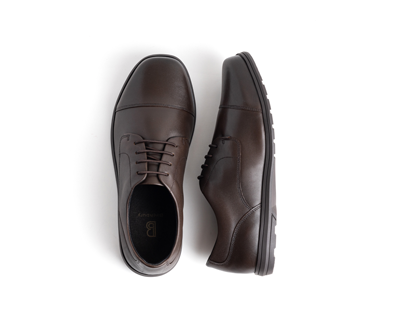
Pick 1: the Brenston. Best for formal offices and anyone logging eight hours on hard floors.
Cap-toe oxford outside; wide toe box, flexible zero-drop sole, and handcrafted American full-grain leather everywhere. Elastic no-tie laces, removable insole, no break-in.
Mid tier. Trade-off: less padding than a thick cushioned dress shoe, and the flat stance takes a few days to feel normal.
Best for Business Casual and Bad Commuting Weather: Carnforth Chukka
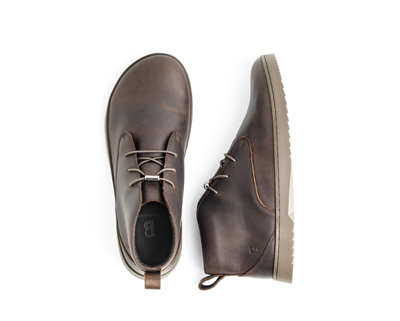
Pick 2: the Carnforth. Plain-toe chukka with a wide toe box, zero-drop sole, water-resistant handcrafted American full-grain leather, and elastic laces for laceless ease.
Mid tier. Trade-off: a boot handles business casual, not black-tie.
The Other 7 Picks: Oxfords, Derbies, Loafers, and Dress Sneakers Worth Trying
Barefoot construction doesn't cover every silhouette yet, so here's what to check on the shelf for the rest. These seven are shoe types, not specific models.
| # | Pick | Best for | Dress code | Price tier | What to check | Trade-off |
|---|---|---|---|---|---|---|
| 3 | Thin-soled cap-toe oxford | The strictest formal dress codes | Formal | Upper | The last's widest point should match your forefoot | Sleek lasts often run narrow |
| 4 | Derby shoe (open lacing) | Higher-volume feet | Business casual | Mid | Open lacing adds instep room; keep heel-to-toe drop under half an inch (our fit standard) | Less formal than an oxford |
| 5 | Leather-soled oxford | Formal offices on a budget | Formal | Budget | As a rule of thumb, leather flexes better than a thick rubber outsole; confirm the insole is removable | Slick on wet marble |
| 6 | Loafer | Slip-on days | Business to smart casual | Mid | Squeeze the upper; soft leather won't bite your instep | No laces, so fit must be right immediately |
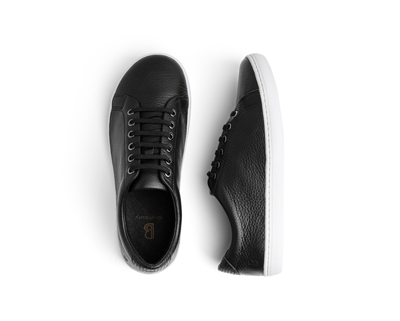
| 7 | Dress sneaker | Smart casual only | Smart casual | Budget to mid | Bend it; the sole should flex at the forefoot, not mid-arch | Formal offices say no |
| 8 | Lightweight flexible derby | Standing all day at events | Business casual | Upper | Check the scale: under a pound per shoe (our benchmark) | Featherweight builds cost more |
| 9 | Welted derby or dress boot | Durability | Business casual | Upper | Stitched soles resole for years of wear | Stiff underfoot and a long break-in |
Shape sorted. Next question: does the way a shoe is built matter?
Goodyear Welt, Blake Stitch, or Cemented: Which Construction Actually Feels Better All Day
Salesmen love construction talk. Here's the verdict up front: construction changes weight, flex, and lifespan, but it never rescues a narrow last, a raised heel, or a thick rubber outsole.
Blake stitch and cemented builds win on all-day comfort. Both run lighter and more flexible than a welted shoe, with little to no break-in.
A Goodyear welt (the sole stitched to a strip of leather running around the shoe) lasts for years and resoles easily, but it's heavier and stiffer out of the box. Expect a real break-in period and extra weight on the commute.
Blake stitch construction sews the sole straight to the upper: lighter, more flexible, less bulk underfoot at hour eight. Cemented construction glues the sole on instead of stitching it, so it's the lightest and flexes most, though it usually can't be resoled.
Shape first, stitching second. That's where all-day comfort lives.

How to Size a Dress Shoe for Wide Feet, Flat Feet, or Long Toes
Construction settled, sizing is next. The short version: shop by width first, then leave about a thumbnail of room ahead of your longest toe.
- Measure width, not just length. Measure the widest part of your foot in inches.
- Leave toe room. About a thumbnail of space ahead of your longest toe.
- Line up the widest points. The widest point of the shoe should sit at the widest point of your foot.
- Check for a removable insole. Pull it, and you've got room for a custom footbed or thicker socks without cramming your toes.
Wide feet often do better in a derby than a cap-toe oxford, since open lacing and elastic laces take pressure off the top of the foot. Flat or low-arch feet? A flat, stable platform beats an aggressive arch bump, and a wide footbed gives your foot room to do its own work.
What to Change When You Switch From Conventional Dress Shoes
Go gradually. A few hours a day at first, per clinical guidance, since feet used to stiff, heeled shoes need time to adapt to a zero-drop sole.
One more thing, and this is our stance: a wide toe box in soft full-grain leather should feel good on day one. A long break-in period is a warning sign, not a badge of honor.
Which leaves the question guys actually ask before checkout.

Will Anyone at the Office Notice You Are Wearing Barefoot Shoes?
No. Barefoot dress shoes go unnoticed at the office, as long as the silhouette, the leather, and the finish read as a normal dress shoe.
Think about what a coworker actually clocks from three feet away: the upper, the polish, the shape. Nobody kneels down to check the drop of your sole.
The Brenston reads as a cap-toe oxford with a suit and holds up with dark denim on casual Friday. Handcrafted American full-grain leather on the outside; wide toe box, zero-drop sole, and all-day comfort hiding in plain sight.
That said, one honest limit: black-tie and the most traditional legal or banking dress codes still favor a sleeker profile.
Shop Brenston: Barefoot Dress Shoe →
Your Feet Should Clock Out When You Do
The choice you accepted at the start of this article, sharp shoes or human feet, was never a real choice. It was a shape problem wearing a philosophy costume.
Shop shape first. Room where your toes are widest:
- A wide toe box
- A zero-drop sole that sits flat and bends
- Leather soft enough to skip the break-in
Get that right, and foot fatigue stops showing up on schedule. All-day comfort just becomes your day. And 2pm? Just another hour.
Prices accurate as of June 2025.
Questions Guys Ask Before They Buy
1. What shoes should I wear if I stand all day?
You should wear shoes built around your natural foot anatomy rather than shoes that rely purely on thick foam padding.
For all-day standing, prioritize three core mechanics:
- A wide toe box that lets your toes spread out to distribute body weight.
- A zero-drop sole (0mm heel-to-toe drop) that keeps your posture and kinetic chain aligned.
- Flexible construction that allows foot muscles to articulate naturally without joint stiffness.
2. What are the best shoes for being on your feet 12 hours a day?
The best shoes for 12-hour shifts are lightweight models featuring a wide toe box, a flat zero-drop footbed, and soft uppers that require no break-in period. Because feet naturally swell over long shifts, narrow tapered shoes compress the forefoot and restrict circulation, compounding fatigue.
3. What to wear when on feet all day?
When standing all day, choose foot-shaped footwear with a wide toe box, a level zero-drop platform, and flexible outsoles that eliminate joint compression and allow natural toe splay.
For hard surfaces like concrete, tile, or hardwood floors, make sure the shoe includes a plush, removable protective insole. This shields your joints from repetitive ground impact while keeping your foot completely flat and naturally aligned.
4. What are the best shoe brands for comfort?
The best shoe brands for comfort focus on anatomical foot shape, flexible soles, and zero-drop balance, segmented by your daily dress code.
For workplace, formal, and smart casual settings, Birchbury is a top-rated choice, crafting dress shoes, chukkas, and sneakers with wide toe boxes, zero-drop soles, and American full-grain leather that look like classic dress shoes.
For athletic training, trail running, and outdoor hiking, performance brands like Vivobarefoot lead the category with ultra-thin, puncture-resistant soles and rugged synthetic mesh.
5. What are the best shoes to wear if you work on your feet all day?
The best shoes for working on your feet all day are foot-shaped dress shoes, chukkas, or leather sneakers that deliver unconstrained toe room and a stable, flat base without violating workplace dress codes.
The Birchbury Brenston cap-toe oxford is ideal for formal offices and corporate settings where traditional styling is required . For business casual environments, wet commutes, or active shifts, the Birchbury Carnforth chukka boot provides water-resistant full-grain leather, a spacious toe box, and elastic slip-on laces that maintain all-day ease on hard floors.

Matthew Tran
Founder, Birchbury
Matthew Tran is a mechanical engineer who founded Birchbury. He started the company after struggling to find dress shoes that didn’t hurt — and barefoot shoes that didn’t look out of place at work. That gap led him to design his own: a wide-toe-box, zero-drop shoe made from full-grain leather, built specifically to look like a normal shoe. Birchbury has since been worn by lawyers, chiropractors, restaurant managers, and anyone else who spends their day on their feet and refuses to suffer for it.
More about Matthew Tran →