



Your shoes didn't shrink in the closet. Your feet did the opposite. They've been quietly spreading for years, and one day the pair that fit fine starts to pinch.
Most men blame the shoes. Or they ignore the tightness and call it normal. Then comes the foot pain, the half-numb toes by 3pm, the slow shoe size increase nobody warned them about.
Here's what's actually happening to your feet as you age, why it happens, and what it means for what you should be putting on them.
What Actually Happens to Your Feet After 40
After 40, feet spread because ligaments lose elasticity and arches flatten, two changes that make the foot longer and wider. Your feet don't fall apart overnight. They spread because the structures holding them together slowly stop holding. Two things drive it: soft tissue breaking down and bones shifting position.
The Soft Tissue Breakdown
Ligaments and tendons are what keep your foot tight and springy. With age, they lose elasticity. Doctors call this ligament laxity, and it's the main reason your feet widen. University of Chicago Medicine documents this loosening as a normal part of aging.
There's also the cushioning problem. The fat pad on the ball and heel of your foot thins out over time, a process called fat pad atrophy. Less padding means more impact reaching bone, and the foot tends to spread to compensate.
Here's the short version of what's going on under the hood:
- Ligaments and tendons lose elasticity, loosening the foot's natural support
- The fat pad thins, stripping away built-in cushioning
- The forefoot widens as those structures give way
The Structural Shift
Once the soft tissue gives, the bones follow. Arches that used to hold their shape start to drop. This is arch flattening, and over years it turns into fallen arches, what clinicians call adult-acquired flat foot.
Feet can grow as much as half a shoe size every decade after 40, according to the Cleveland Clinic. That's a real shoe size increase, not a measurement error. A flatter arch means a longer, wider foot.
The University of Chicago Medicine points to the same pattern: feet get longer and wider with age as ligaments stretch and arches settle.
This is the part that trips people up. It isn't temporary swelling that fades by morning. It's a permanent change in the size and shape of your foot.
Which means the shoes you bought five years ago were measured for a foot you no longer have.
Why Men's Feet Spread Differently Than Women's
Men's feet spread mainly from body weight and decades of mechanical stress rather than hormonal changes. The same biological reasons apply, but the math is different. More body weight, more decades of mechanical stress, and far fewer trips to get re-measured. The result is a foot that quietly outgrows its shoes while its owner insists nothing's changed.
Start with the obvious. Men carry more body weight on average, and every step drives that load into the arch. Over years, that pressure speeds up arch flattening and pushes the forefoot wider.
Women have their own accelerant: hormonal ligament laxity during pregnancy and menopause loosens the foot's support fast. Men don't get that spike. What they get instead is slow, grinding mechanical stress piling up decade after decade. Different road, same destination.
Then there's the measuring problem. Most men got sized once, maybe in their twenties, and never again. They've been buying the same number for thirty years. So the spread happens invisibly, one slightly tighter pair at a time, until the pinch is impossible to ignore.
Peer-reviewed research links higher body weight to greater forefoot width. Extra pounds press down on arches that are already weakening, and the foot flattens and spreads to handle the load, which tracks with what happens as men gain weight through middle age.
So the short answer: men spread more from the bottom up, through load and time, rather than from hormonal shifts. And because they rarely re-measure, they're the last to find out.
What Happens When You Keep Wearing the Wrong Size
Wearing shoes too narrow for spreading feet leads to bunions, hammertoes, gait changes, swelling, and chronic foot pain. Your feet grew. Your shoe size didn't. So every morning you're forcing a wider foot into a narrower shoe and calling it a fit.
The foot loses that fight. Not in a dramatic, single-moment way. Slowly. One pinched day at a time, until the damage stops being temporary.
The Damage Compounds
A toe box that's too narrow doesn't just feel tight. It forces your toes into positions they were never meant to hold, and the body adapts in ways you won't like. Five things stack up: bunions and hammertoes, gait changes, more swelling, and chronic foot pain.
Here's what stacks up when you keep squeezing into the wrong size:
- Bunions and hammertoes: Toes pushed inward for years deform. Bunions bulge at the base of the big toe, hammertoes curl the smaller ones. Neither reverses on its own.
- Gait changes: Compressed toes alter how you walk. That throws off your knees, hips, and lower back, which start compensating for a problem that started six inches below.
- More swelling in feet: Tight shoes restrict circulation. Blood and fluid pool where they shouldn't, and the swelling that used to fade overnight starts sticking around.
- Chronic foot pain: What began as occasional soreness becomes the baseline. It's not a bad day anymore. It's structural damage adding up.
That's the part most men miss. They feel the ache and assume it's age doing its thing. Just getting older, they figure, nothing to do about it.
But age didn't put your foot in a shoe two sizes too narrow. The shoe did. And the longer you stay in it, the more permanent the cost.
The fix isn't dramatic. It's a shoe shaped like your actual foot, not the one you had at 25.
Myths About Foot Spreading That Keep Men in Bad Shoes
Once you accept that your feet have changed, the next problem is the bad advice. Most of it sounds reasonable. All of it keeps men in shoes that don't fit.
Here are four common myths about foot spreading and the facts that correct them:
| The Myth | The Reality |
|---|---|
| Just go up a half size. | Length isn't the only dimension. A longer shoe with the same narrow shape still crushes your toes. Width and a wider toe box matter more than the number on the box. |
| Feet stop changing after you're done growing. | They keep spreading well into your 60s and beyond. The shoe size increase doesn't quit when you turn 20. |
| Shoes will stretch to fit. | Leather softens. It doesn't reshape itself. A shoe built in the wrong shape stays the wrong shape, no matter how long you wear it. |
| Foot pain is just part of getting older. | Pain is a signal, not a sentence. Ask any podiatrist: it usually means something doesn't fit, not that your body is done. |
Notice the through-line. Every myth treats the shoe as fixed and your foot as the thing that has to adapt. That's backward. The shoe should match your foot, not the other way around.
How to Actually Buy Shoes That Fit Your Feet Now
You can't undo the spread. But you can stop fighting it. The shoes you buy from here on out should fit the foot you have today, not the one you remember.
Two steps make the difference. One takes five minutes. The other changes how you shop for good.
Get Re-Measured (Seriously)
Re-measuring takes three steps:
- Find a Brannock device. Most shoe stores still have the metal sliding contraption at the counter, and it measures length, width, and arch length. Most men haven't stood on one since high school.
- Measure at the end of the day, when your feet are at their widest. They swell as you move, so a morning measurement lies to you.
- Check both feet, and pay attention to width, not just length. The number that surprises you won't be the one you expect.
Stop Shopping by Size Alone: Shop by Shape
A shoe that fits aging feet needs two features: a wide toe box and a zero-drop sole. Length tells you almost nothing about whether a shoe fits. Shape is the whole game.
Look for a wider toe box that gives your toes room to splay without pressing against the sides. A shoe matched to your foot's natural spread stops the damage from compounding.
Then check the sole. A zero-drop sole keeps your foot flat instead of tilting it forward, which spreads your weight evenly and eases the strain on arches already flattening. It also lets how your foot stabilizes itself work the way it's supposed to. Ask a podiatrist what happens to a foot stuck on a raised heel all day, and you'll get the same answer.
That's the whole pitch for barefoot shoes, and it's why Birchbury handcrafts every pair in full-grain American leather on a wide toe box and zero-drop sole, shaped for feet as they actually are, not as they were at 25:
- Dress shoe: Brenston ($180), a dress shoe with full-grain American leather and room to spread, no boardroom compromise required
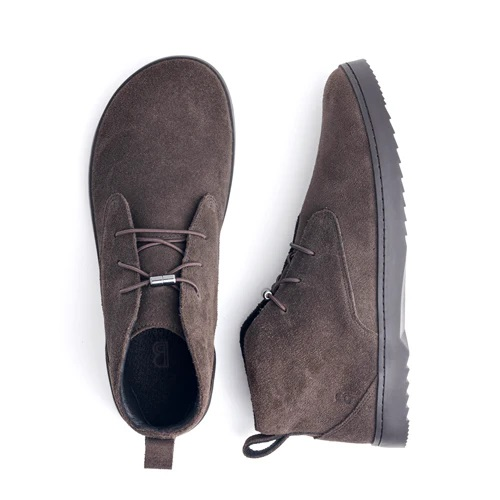
- Chukka boot: Carnforth ($197), a chukka boot that stays roomy and flexible through a full day on your feet
- Sneaker: Bramford ($120), a sneaker that looks clean and lets your toes do what they're built to do
None of them ask your foot to adapt. They start with the foot and build the shoe around it.
Prices accurate as of June 2026.
Frequently Asked Questions About Feet Spreading With Age
Do Men's Feet Widen With Age?
Yes. As ligaments and tendons lose elasticity, the foot's support loosens and the forefoot spreads outward. Men tend to widen from years of mechanical load, which is why a wider toe box matters more with each decade.
What Causes Your Feet to Spread?
Two things, mostly. The soft tissue holding your foot together stretches out, and the arches settle and flatten over time. Together they produce a longer, wider foot than the one you had at 25.
Can Your Feet Get Bigger in Your 60s?
Yes. The spread doesn't stop when you finish growing. Arches keep settling and fallen arches keep developing well past 60, so a steady shoe size increase into your senior years is normal.
Should I Go Up a Shoe Size or Change the Shape of My Shoe?
Change the shape. A longer shoe with the same narrow build still squeezes your toes. What you want is a wider toe box that matches how your foot has actually spread.
Why Are My Feet Suddenly Getting Bigger?
It's rarely sudden, just suddenly noticed. The widening crept up over years until a pair finally pinched. If it happens fast, fluid retention or fallen arches could be at play, so get checked.
Your Feet Changed, Your Shoes Should Too
Your feet spreading isn't a crisis. It's biology doing exactly what biology does. Ligaments loosen, arches settle, the forefoot widens. Everyone's feet do it. Pretending yours don't is the only real mistake.
The problem was never your feet. It was wearing shoes designed for the feet you had at 25, not the ones you're standing on now. Same number on the box, completely different foot inside it.
So do the simple thing. Get re-measured. Then buy shoes shaped like your actual foot, with a wider toe box that gives your toes room and stops the foot pain before it becomes the baseline.
Your feet changed. Let your shoes catch up.