
Barefoot shoes make a lot of sense on paper. Your feet get to move naturally, your toes spread out, and you stop hobbling home at the end of the day.
Great. Sign me up. Then you actually try to buy a pair, and suddenly you're drowning in jargon, weird-looking toe shoes, and forum debates about transition periods.
Barefoot shoes and minimalist shoes are designed to let your feet move naturally by eliminating heel elevation, widening the toe box, and using flexible soles. This guide tells you exactly what to look for, what to skip, and where to start.
What to Look For in Barefoot Shoes
The three defining features of a true barefoot shoe are zero drop, a wide toe box, and a flexible sole. Get these right and everything else falls into place.

Zero Drop (and Why Your Heel Has Been Lying to You)
Zero drop means the heel and forefoot sit at exactly the same height. No elevation. No tilt. Your foot is level with the ground, the way it would be if you were standing barefoot.
Conventional shoes typically have a 10–15mm heel drop, enough to tip your entire body forward and force years of postural compensation.
One thing beginners mix up: heel drop and stack height are not the same thing. Stack height is how much material sits between your foot and the ground. Heel drop is the difference in height between the heel and the forefoot.
A shoe can have a thick sole and still be zero drop. Both numbers matter. Only one defines whether a shoe is truly barefoot.

Wide Toe Box and Toe Splay
Look at your foot. Now look at most dress shoes. One of those shapes is not like the other.
A wide toe box lets your toes spread out naturally when you walk and stand. That spread, called toe splay, is how your foot stabilizes itself. Compress the toes into a tapered point, and you lose that stability. Do it for years, and your feet start to forget how to do their job.
Here's what to check before you buy:
- The widest point of the shoe should match the widest point of your foot
- Your toes should have room to splay without pressing against the sides
- The toe box should be tall enough that your toes aren't curling downward

Flexible Sole and Ground Feel
A rigid sole does the work your foot muscles are supposed to do. That sounds helpful. It isn't. When your foot can flex and respond to the ground, the muscles engage the way they're built to, according to foot muscle research from Ohio State.
Ground feel is the tactile feedback your foot gets through the sole. More feel means more information. More information means better natural movement.
Toe spring is the upward curve at the front of the sole that lifts your toes off the ground. Some shoes marketed as barefoot still have it. It forces your toes into a passive position and undermines the whole point. Check the sole profile before you buy.
The table below compares barefoot shoes and conventional shoes across five key features.
| Feature | Barefoot Shoes | Conventional Shoes |
|---|---|---|
| Heel Drop | 0mm | 10–15mm |
| Toe Box Shape | Wide, foot-shaped | Tapered, narrow |
| Sole Flexibility | Highly flexible | Rigid or semi-rigid |
| Arch Support | Minimal or none | Built-in, often significant |
| Stack Height | Low to moderate | Varies, often elevated |
Your First Pair: What Actually Works for Men
The biggest reason men don't commit to barefoot shoes has nothing to do with comfort. It's the look. The category spent years producing shoes that screamed "I've made a lifestyle choice" — toe shoes, trail runners with aggressive lugs, anything that would get you a second glance in a conference room for the wrong reasons.
That's changed. Barefoot dress shoes now exist, and they look like normal shoes.

Barefoot Dress Shoes Are a Real Entry Point Now
If you work in an office, go on dates, or just don't want to explain your footwear to anyone, a barefoot dress shoe is the most accessible entry point in the lineup. You get the zero-drop sole and wide toe box without sacrificing the silhouette.
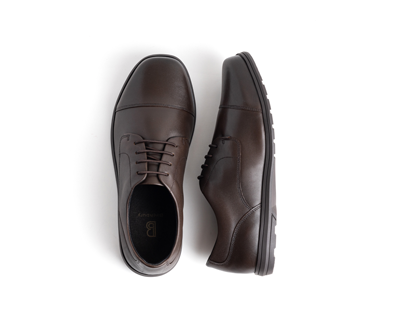
The Brenston is the clearest example of this. It's a classic oxford silhouette built on a zero-drop, wide toe box last. Full-grain American leather. No break-in period. From the outside, it looks like a dress shoe. From the inside, your foot has room to actually function.
- Wide toe box for natural toe splay
- Zero-drop sole for level heel-to-toe alignment
- Full-grain American leather, soft from day one
- Elastic no-tie laces for easy on and off
- Removable insole for custom orthotics
No compromises on either side of the trade-off. That's the point.

Get the Sizing Right the First Time
Barefoot shoes typically require sizing up by half to one full size compared to conventional shoes, due to the wider last and true toe box. The fit feels unfamiliar at first, and many men need to go up from what they normally wear.
Two rules that save you a return:
- Measure your feet at the end of the day. Feet swell throughout the day and that's the size you need to accommodate.
- Check the brand's sizing guide before ordering. Don't guess based on your usual size from a conventional shoe brand.
The goal is toes that sit flat with room to splay, not toes pressed against the front or sides. If the shoe feels snug across the toe box, go up. Transitional barefoot shoes should feel noticeably roomier than what you're used to. That's not a defect. That's the whole idea.

Your First Month: A Realistic Transition Plan
Most people fail the transition to barefoot shoes the same way. They put them on Monday morning, wear them all day, wake up Tuesday with calves that feel like concrete, and conclude barefoot shoes aren't for them. They are. The approach wasn't.
Peer-reviewed research confirms that foot strength builds progressively with barefoot-style wear. Weeks, not days. Your feet have spent years in cushioned, elevated shoes, leaving arch and toe muscles largely dormant. A flexible sole and zero-drop heel ask those muscles to work again.
Here's a framework that works:
- Week 1: 1–2 hours per day. Wear them around the house or on short errands. That's it.
- Week 2: Half days. Morning commute, a few hours at the office, then swap back.
- Weeks 3–4: Full days, if your feet feel ready. Don't rush this part.
Expect calf soreness and mild foot fatigue in the first two weeks. That's normal. It means muscles are re-engaging after years of being passengers. Natural movement puts new demands on tissue that hasn't had to do much.
There's one distinction worth getting right. Soreness and pain are not the same thing. Soreness is dull, general, and fades with rest.
Pain is sharp, localized, and your body telling you to stop. If pain shows up, dial back wear time and let your feet recover before increasing again.
Moving too fast through the transition is the single most common reason people quit. The shoes aren't the problem. The timeline is. Foot strength is real, but it has to be earned gradually. Give it the month.
Frequently Asked Questions
What Barefoot Shoes Should I Start With?
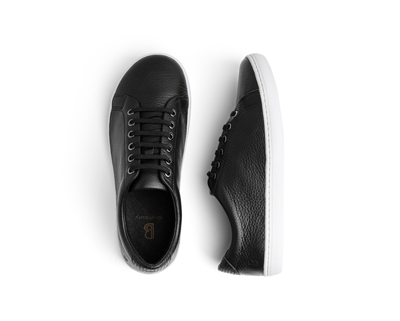
Start with a shoe that fits your actual life. If you're in an office, a barefoot dress shoe is the smartest first pair. You get the zero-drop sole and wide toe box without looking like you've joined a movement. If your days are more casual, a barefoot sneaker works just as well. Match the shoe to the context you'll actually wear it in.
Why Do Podiatrists Not Recommend Barefoot Shoes?
Some do. Some don't. The concern is usually aimed at two groups: people with existing conditions like severe flat feet, diabetic neuropathy, or structural issues, and people who transition too fast and hurt themselves in the process. Those are legitimate concerns. The concept of zero drop and a wide toe box isn't the problem. Ignoring your body's signals during the transition is.
Who Should Not Wear Barefoot Shoes?
Anyone with active foot injuries, diabetic neuropathy, or significant structural conditions should talk to a professional before switching. Barefoot shoes ask more of your foot muscles, not less. If your feet are already dealing with something serious, that's a conversation to have with someone who can actually examine you.
How Long Does It Take to Transition to Barefoot Shoes?
Four to eight weeks of gradual increase is the typical timeline for comfortable daily wear. The first two weeks are the hardest. Calf soreness and foot fatigue are normal. Go slow, build up wear time incrementally, and don't skip steps. The transition works. Rushing it doesn't.
Can I Wear Barefoot Shoes to the Office?
Yes. Barefoot dress shoes exist now and they look like normal oxfords. Nobody in the conference room will know the difference. The zero-drop sole and wide toe box are built into a silhouette that reads as professional. That's the whole point of the category.
The Only Buying Rule That Matters
Pick the shoe that fits your actual life. Not the most extreme barefoot option. Not the one with the best forum reviews. The one you'll put on tomorrow morning without thinking twice.
Start slow. Your feet need weeks, not days, to adapt. The benefits compound once they do.
The style barrier is gone. Barefoot shoes look like normal shoes now. You don't have to choose between feet that work and shoes that look right. That problem is solved. The only thing left is starting.

Matthew Tran
Founder, Birchbury
Matthew Tran is a mechanical engineer who founded Birchbury. He started the company after struggling to find dress shoes that didn’t hurt — and barefoot shoes that didn’t look out of place at work. That gap led him to design his own: a wide-toe-box, zero-drop shoe made from full-grain leather, built specifically to look like a normal shoe. Birchbury has since been worn by lawyers, chiropractors, restaurant managers, and anyone else who spends their day on their feet and refuses to suffer for it.
More about Matthew Tran →