
Written by Matthew Tran, Birchbury's Founder
Look at every shoe you own. Work boots, sneakers, the oxfords you wore to your last three weddings. Each one props your heel higher than your toes.
Nobody told you. Nobody asked. There's a spec for that tilt, called heel-to-toe drop, and no salesman has ever brought it up.
Zero-drop shoes are the ones that stop doing it: heel and forefoot sit at the same height, a 0mm heel-to-toe drop. Before you buy another pair of anything, it's worth knowing what that number has been doing to you.

Zero Drop Means Your Heel and Toes Sit at the Same Height
Heel-to-toe drop, also called heel drop or offset, is the height difference, in millimeters, between the sole under your heel and the sole under your forefoot. Zero drop means that difference is 0mm: heel and toes sit level. Most everyday shoes sit well above zero, and dress shoes go higher still.
The measurement happens inside the shoe, sole to sole, not at the visible heel block. A sneaker with no obvious heel can still tilt you forward, and stack height, the total sole thickness, is a separate number entirely.
How to Check the Drop on Shoes You Already Own
You can check any shoe in your closet in under a minute:
- Pull the insole.
- Set the shoe on a flat table.
- Look at it from the side at eye level. If the heel end sits higher, you found your drop.
Even a small rise under the heel is easy to miss and still enough to change how you stand.

What an Elevated Heel Actually Does to Your Body
Higher drops send more stress to the knee. Lower drops move the load to the calf and Achilles tendon. Biomechanics research comparing 0mm, 10mm, and 15mm drops found peak knee joint stress rising in the higher-drop shoes.
A raised heel can also push your pelvis and torso forward, so you compensate by leaning back or bracing through the lower back. All day.
That same heel holds your Achilles tendon, the cord connecting your calf to your heel bone, in a shortened position for as long as the shoes are on. That's why your first flat shoe feels like a stretch.
Elevated heels encourage a harder heel strike, where the heel slams down first, and a longer stride. A level platform nudges you toward a midfoot or forefoot strike, where the middle or front of the foot lands first. That's closer to your natural gait.
This isn't a running thing, either. It applies to every hour you spend standing on concrete or walking between meetings.

Zero Drop, Minimalist, and Barefoot Are Three Different Things
Shoppers use these three terms interchangeably. The shoe industry loves that, because confused shoppers buy the wrong thing twice.
Here's the actual breakdown:
- Zero-drop shoes describe one spec only: heel and forefoot at the same height.
- Minimalist shoes are low in cushioning and high in flexibility. Most, but not all, are zero drop.
- Barefoot shoes go further: thin sole, flexible construction, wide toe box, zero drop, and maximum ground feedback.
Drop, Cushioning, and Stack Height Are Separate Specs
- Drop is geometry.
- Cushioning is padding.
- Stack height is total sole thickness under the foot.
A shoe can be generously cushioned and still zero drop, because a level 20mm platform is still level. In other words, cushioning is a comfort and ground-feel choice, while drop is a posture choice. Shop them separately.

What Changes When Your Heel Comes Back Down
Bring the heel to floor level and five things shift at once:
- Foot strength. A flat, flexible shoe makes the small muscles in your foot do their own work instead of outsourcing it to the sole. One clinical trial found that walking in minimalist shoes built foot muscle about as well as a dedicated strengthening routine.
- Balance and stability. A level platform spreads your weight across the whole foot rather than pitching it forward.
- Posture. A level heel and forefoot keeps your body stacked instead of tilted.
- Natural stride. Less heel slamming, more natural foot movement.
- Ground feedback. You feel the surface you stand on, which matters most on hard floors during long days.
Why Toe Box Width Matters as Much as the Drop
Drop levels you front to back. Width gives you a base.
A wide toe box lets your toes splay, which widens your platform of support the same way a wider stance steadies a squat. Cram those toes into a point and you lose half of what the level sole gave you.
That's why zero drop and a wide toe box belong together, especially on wide feet, and why none of this is a running-only benefit. Standing counts. Walking counts.
How to Switch Without Wrecking Your Calves
Transition gradually, over months rather than days. Don't throw out every shoe tonight and go full flat tomorrow. Your calves have been on vacation for decades.
A realistic pace for someone who walks and stands rather than races:
- Early weeks: a few hours a day, then back to your old shoes.
- After that: longer stretches as the soreness fades.
- Full days: when your calves stop complaining, not before.
Expect calf and Achilles tendon soreness early. That's shortened tissue lengthening out, so back off when it complains. The smart move is to ease into a zero-drop platform gradually, at the office and on errands, before committing to a full standing shift.
Fit matters as much as pacing. Sizing changes when the toe box gets wider, so measure your feet in inches against the sizing guide before ordering.
Who Should Take It Slower, and What Zero Drop Will Not Do
Go slower if you have a history of Achilles trouble, plantar fasciitis (irritation of the tissue along the bottom of your foot), or decades in heavily elevated boots.
And know the limits. Zero drop will not rebuild your stride overnight, will not replace strength work, and is not a treatment for anything.

A Zero Drop Dress Shoe That Nobody Reads as a Barefoot Shoe
Now the usual objection: most zero-drop shoes look like foot-shaped novelty items, and that doesn't fly in a client meeting. Fair. It's the reason Birchbury builds barefoot shoes that pass as regular shoes.
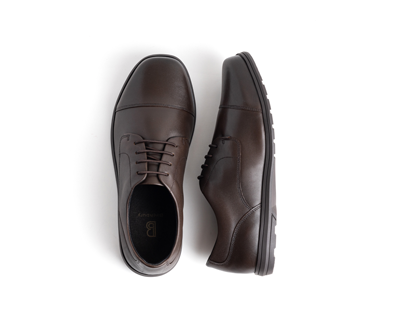
The Brenston is a zero-drop oxford with a wide toe box that reads as a classic dress shoe from the outside.
Handcrafted from soft American full-grain leather, the top layer of the hide with nothing sanded away, it's comfortable from the first wear with no break-in period. Elastic no-tie laces and a removable insole make it workable for full days on hard floors.

Zero Drop for the Other Six Days: Sneaker and Boot
The office is only one day of the argument. Zero-drop sneakers and boots cover the rest of the week.
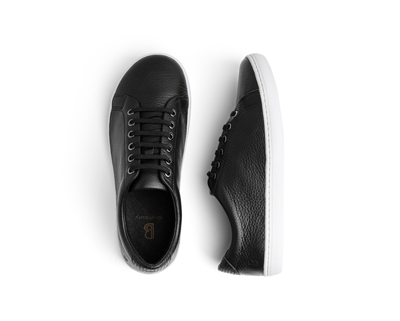
The Bramford is a minimal leather barefoot sneaker with a wide toe box and zero-drop sole, flexible enough to let your toes splay from day one. Its removable insole accepts custom orthotics.
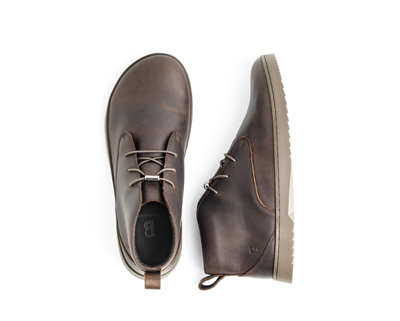
The Carnforth takes the boot slot, keeping the classic chukka silhouette (an ankle-height boot) on a zero-drop sole with a wide toe box instead of a pinched toe. Full-grain leather, water resistant, elastic laces.
Both are handcrafted with American full-grain leather, so the rotation stays level and your feet keep their natural foot movement whether you're walking the dog or standing in the cold. Same drop, same width, different dress code.
Your Heel Was Never Supposed to Be the Tallest Part of You
The tilt was a design decision, and nobody consulted you. Now you know the number to look for, and zero is the one that matches how you're built.
Zero-drop shoes with a wide toe box are the shape your foot already is. Ease in, give the calves time, and judge it after a season, not an afternoon.
Your heel has waited thirty years. It can come down properly.
FAQs
1. What is the point of a zero drop shoe?
The point of a zero-drop shoe is to place your heel and forefoot at the exact same height from the ground, mimicking natural barefoot alignment. Traditional shoes feature an elevated heel that pitches your pelvis forward and places unnecessary strain on your knees and lower back. By keeping your feet completely flat, zero-drop shoes align your spine, distribute body weight evenly, and allow your Achilles tendon and calf muscles to function naturally.
2. What do podiatrists say about zero drop shoes?
Podiatrists generally favor zero-drop footwear because it restores neutral posture and eliminates excessive pressure on the ball of the foot. However, foot health professionals emphasize that you should transition gradually, since years of wearing raised heels can shorten calf muscles and Achilles tendons. Many clinicians also recommend choosing zero-drop shoes with removable insoles to provide protective shock absorption when walking on modern concrete floors.
3. What’s the difference between zero drop shoe and barefoot shoe?
Every barefoot shoe is zero-drop, but not every zero-drop shoe qualifies as a barefoot shoe. Zero-drop simply means the heel and forefoot sit at the exact same height, even if the shoe has a thick, heavily cushioned sole. In contrast, a true barefoot shoe combines a zero-drop platform with an anatomically wide toe box, high sole flexibility, and minimal structural bracing to let your foot move naturally.
4. What brands are zero drop shoes?
Several footwear brands focus on zero-drop platforms tailored to different daily needs. Birchbury specializes in zero-drop dress shoes, minimalist sneakers, and chukka boots crafted from American full-grain leather for the office, dates, and smart casual settings. For athletic workouts, trail running, and outdoor hiking, brands like Vivobarefoot, Xero Shoes, Lems, and Altra offer popular zero-drop options.
5. Are zero drop shoes actually better?
Yes, zero-drop shoes are generally better for long-term musculoskeletal health because they keep your body in its natural, level alignment. Eliminating elevated heels prevents forward pelvic tilt, reduces strain on the lower back, and evenly distributes impact across the entire foot. When paired with an anatomically wide toe box and flexible materials, zero-drop shoes help rebuild foot strength and improve overall walking stability.

Matthew Tran
Founder, Birchbury
Matthew Tran is a mechanical engineer who founded Birchbury. He started the company after struggling to find dress shoes that didn’t hurt — and barefoot shoes that didn’t look out of place at work. That gap led him to design his own: a wide-toe-box, zero-drop shoe made from full-grain leather, built specifically to look like a normal shoe. Birchbury has since been worn by lawyers, chiropractors, restaurant managers, and anyone else who spends their day on their feet and refuses to suffer for it.
More about Matthew Tran →