
Written by Matthew Tran, Birchbury's Founder
Minimalist leather shoes deliver ten research-backed benefits: stronger feet, better balance and posture, and a pair you can wear to a board meeting without explaining yourself.
Five years ago, minimalist shoes were for the guy at the office who also brewed his own kombucha. Now? They're a serious buying decision for men who read labels and check sources.
Here's the catch. Most articles about barefoot shoes are either marketing dressed up as science or science dressed up so badly you stop reading.
This one is different. I dug into the actual research on foot health and pulled out ten benefits of minimalist leather footwear that hold up under scrutiny: five from the barefoot design, five from the leather itself.
Some of them surprised me. A few will probably surprise you.

All 10 Benefits at a Glance
Short on time? The short version: minimalist leather shoes strengthen your feet, improve your balance and posture, and still look right at the office.
Here's the whole article in one table.
| # | Benefit | Why It Matters |
|---|---|---|
| 1 | Stronger foot muscles | Your feet do the work instead of outsourcing it to padding. |
| 2 | Natural toe splay | A wide toe box lets toes spread the way they're built to. |
| 3 | Better balance | Thin, flexible soles feed your brain more ground information. |
| 4 | Better posture | Zero-drop construction keeps your heel and forefoot level, so your body stacks properly. |
| 5 | Ground feel without the pain | A low stack height gives you terrain feedback, not bruises. |
| 6 | They look like normal shoes | Leather uppers and classic silhouettes hide the barefoot construction. |
| 7 | Leather that lasts | In our experience, full-grain leather outlives mesh by years, not months. |
| 8 | Wide feet finally fit | A foot-shaped toe box widens where your forefoot does. |
| 9 | No break-in period | Soft, pre-flexed leather feels right on day one. |
| 10 | Office-ready comfort | Oxfords and boots that pass in the boardroom. |
Notice the pattern. The first five come from barefoot design. The last five come from leather.
Now let's take them one at a time.
1. Your Feet Get Measurably Stronger
Minimalist shoes make your feet measurably stronger. Peer-reviewed research found a 57.4 percent increase in foot muscle strength after six months of walking in them.
No exercises. Just walking. Months, not years, and a fast foot health return on doing almost nothing differently.
Here's why it works. Your feet are packed with muscles, and most of them have been on paid leave for years.
That's what rigid soles and built-in arch support do. They handle the stabilizing work, so your foot muscles stop showing up for it.
Minimalist construction reverses the deal. Without a thick sole doing the job, your feet handle their own support, and foot strength builds through plain old natural movement.

2. Your Toes Finally Get Room to Spread
Strength is only half the story. The other half is space.
Look at a traditional dress shoe from above. It tapers to a point, which forces your toes into a wedge shape no foot naturally makes.
Compare that to your bare foot. Widest at the toes, not the middle. A true wide toe box respects that, which is why we build every shoe with a foot-shaped toe box that widens at the forefoot instead of pinching at the tip.
Here's why that matters. Toe splay is the natural spread of your toes when they bear weight. More splay means more ground contact with every step, and medical experts note that this spread helps strengthen the arch and forefoot over time.
No training regimen required. Your toes just do their job again.
3. Your Balance Improves Without Trying
Room and strength lead to a third payoff you never have to work for: balance.
Thin, flexible soles improve balance by feeding your brain more ground information with every step. Thick soles mute that signal, so your stabilizing muscles guess more and react slower.
Flip to a flexible sole and every step sends sensory feedback upstream. Those small stabilizers train themselves through natural movement. Passive practice, thousands of reps a day.
A clinical study found minimalist footwear improves balance and fall recovery.
And this isn't just for athletes. If you've rolled an ankle before, or your foot health file has a few entries, better balance is the benefit you didn't know you were shopping for.

4. Your Posture Straightens Out, One Step at a Time
Balance feeds into something bigger: how your whole body stacks.
Most regular shoes raise the heel above the forefoot, often by around half an inch. That tilt pushes your weight forward, and the effect cascades up.
Hips shift. Lower back compensates. Shoulders round to counterbalance.
Zero-drop construction removes the tilt. Heel and forefoot sit level with each other, the way they do when you stand barefoot on the floor.
Stand neutral, walk neutral, and those compensation patterns fade over time. Not through effort or reminders to sit up straight. Just natural movement, thousands of level steps a day.
5. You Feel the Ground Without Feeling Every Pebble
Posture is about how you stand. Ground feel is about what you sense.
It comes from a thin, flexible sole with a low stack height. Less material between foot and floor means more terrain information reaching your feet, without every stray rock filing a complaint.
Let's clear something up, though. This is not "grounding" or "earthing." Nobody is transferring electrons from the sidewalk into your soul.
What you're actually getting is proprioceptive feedback. Proprioception is your body's sense of position and movement, the system that reads the surface and adjusts each step in real time. Sensory input, not mysticism.
Leather plays a quiet role here too. A full-grain upper protects that flexible sole and your foot without adding bulk or stiffness, so the feedback stays sharp.
Feel more. Wince less.

6. They Don't Look Like Barefoot Shoes
Let's address the elephant in the break room. Early barefoot shoes looked like rubber gloves for your feet. Five individual toes, on display, at work.
Nobody recovered from that meeting.
Leather barefoot shoes changed the equation. A full-grain American leather upper and a traditional silhouette let the wide toe box and zero-drop sole hide in plain sight.
Your coworkers see a boot. Your feet know better.
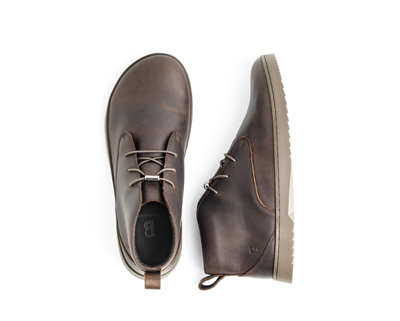
The Carnforth chukka boot is proof. It reads as a classic plain-toe chukka, the kind you'd wear with dark denim or chinos, while the barefoot construction stays your secret.
That's the whole point of barefoot shoes that look like regular shoes. Function and a normal-looking design were never mutually exclusive. Someone just had to build it that way.
7. Leather Outlasts the Synthetic Competition
Looks get you in the door. Durability keeps you from buying the same shoe twice a year.
In our experience, full-grain leather uppers outlast mesh and synthetic minimalist shoes by a wide margin. The gap comes down to materials.
Most synthetic minimalist shoes use mesh and knit uppers. Light, sure. They also fray at flex points, stretch out of shape, and start looking tired within months of daily wear.
Full-grain leather plays a longer game. It resists abrasion, holds its structure, and molds to your foot instead of breaking down around it.
Then there's the aging question. Mesh gets ratty. Leather develops character, which matters when your barefoot boots pull double duty at work.
Leather barefoot shoes cost more upfront. Give them a few years to outlast two or three synthetic replacements, and the math flips.
8. Wide and Extra-Wide Feet Finally Fit
Durability solves one problem. Wide feet have a different one entirely.
Standard sizing assumes every forefoot fits the same taper. If yours doesn't, you've spent years sizing up a half size and calling the extra heel slip "close enough."
A true wide toe box in leather construction skips that compromise. The shoe widens where your foot does, so there's no separate "wide" line to hunt down. That's the payoff of zero-drop sole and wide toe box construction: the standard shoe already fits.
Still, not all leather shoes get sizing and fit right. Check three things before buying:
- Toe box shape. Foot-shaped, widest at the toes, not tapered to a point.
- Leather stretch. Full-grain leather molds to your forefoot over the first weeks of wear.
- Adjustability. Laces or elastic closures let you dial in the midfoot without squeezing the toes.
Pass all three, and wide feet stop being a special order.

9. No Break-In Period, No Blisters
Fit solves the width problem. Break-in is the other tax traditional leather charges.
Do leather minimalist shoes need a traditional break-in? No. Soft, pre-flexed leather in minimalist construction skips it entirely.
Traditional dress shoes earn their painful reputation honestly. Stiff leather, a rigid sole, and weeks of blisters before the shoe surrenders.
Leather barefoot shoes flip the arrangement. The upper arrives soft, the sole already bends where your foot bends, and nothing rigid remains to fight.
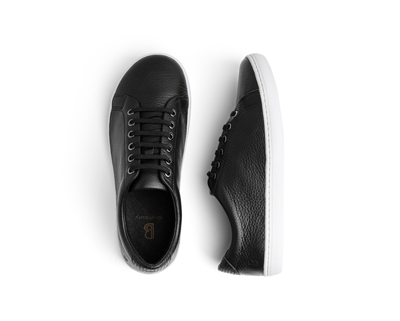
The Bramford leather sneaker feels right on day one, not week six. No stiff panels waiting to grind your heel raw.
That matters most if you're transitioning to barefoot shoes. Your feet should adjust to the movement, not to the shoe.
10. They Work in the Office, Not Just the Gym
One last benefit, and it might be the biggest. Yes, minimalist shoes work for everyday office wear, not just workouts.
That wasn't always true. Minimalist meant athletic-looking sneakers for years. Great for the trail. Questionable with a suit.
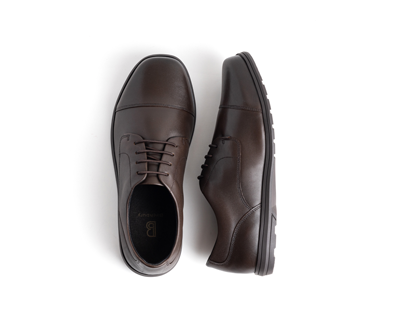
Leather changed that. The Brenston dress shoe proves barefoot construction works in a classic oxford silhouette. Wide toe box, zero-drop sole, handcrafted full-grain American leather, and a look that belongs in a boardroom.
Nobody clocks it as a barefoot shoe. They see an oxford. You feel the difference around hour nine of a long day.
The old trade was simple: comfortable feet or a sharp look, pick one. Turns out you never had to pick.
How We Chose These Benefits
A quick word on how we built this list, because "trust us" isn't a methodology.
Every benefit had to clear three bars: research backing, real-world usability, and honesty about the medical debate.
- Research-backed. Peer-reviewed studies or credible medical sources, not marketing claims.
- Real-world usable. Sizing and fit, durability, and looks counted as much as health outcomes.
- Honest about the debate. We cut claims that only survive in ad copy.
That third one matters. Podiatrists are genuinely split on barefoot shoes.
Some see stronger feet and better mechanics. Others worry about injuries when people skip the adjustment period.
We didn't ignore that split. We factored it in. It's why this article keeps flagging that transitioning to barefoot shoes should be gradual, not a Monday-morning overhaul.
Caution isn't a weakness in a list like this. It's the point.
Questions Readers Keep Asking About Barefoot Leather Shoes
Why Do Podiatrists Not Recommend Barefoot Shoes?
Some do, some don't. The skeptics mostly worry about people switching overnight and getting hurt, while supporters point to stronger feet and better mechanics. Transition gradually and most of that concern disappears.
What Are the Disadvantages of Minimalist Shoes?
Less cushioning, more ground feel, and an adjustment period your calves will notice. They're a change, and change takes weeks.
Who Should Not Wear Barefoot Shoes?
Anyone with an existing foot health condition should talk to their doctor first. Same goes for anyone unwilling to ease in slowly.
Do Minimalist Leather Shoes Need a Break-In Period?
No. Soft full-grain leather and a flexible sole mean they feel right on day one, not week three.
Can Minimalist Leather Shoes Work for Everyday Office Wear?
Yes. Leather oxfords, sneakers, and barefoot boots now pass at work without a second glance.
Time to Let Your Feet Decide
Ten benefits, one pattern. Barefoot construction gives your feet what they've been asking for: room, strength, and a level platform. Leather makes sure nobody at work ever knows.
That second part matters more than the industry admits. The old barefoot shoes solved the foot problem and created a wardrobe problem. Leather minimalist shoes closed that gap for good.
So the decision isn't really about shoes anymore. It's about how many more days you're willing to spend in a taper that fights your feet.
Your feet already voted. Time to count the ballots.
Prices accurate as of July 2026.

Matthew Tran
Founder, Birchbury
Matthew Tran is a mechanical engineer who founded Birchbury. He started the company after struggling to find dress shoes that didn’t hurt — and barefoot shoes that didn’t look out of place at work. That gap led him to design his own: a wide-toe-box, zero-drop shoe made from full-grain leather, built specifically to look like a normal shoe. Birchbury has since been worn by lawyers, chiropractors, restaurant managers, and anyone else who spends their day on their feet and refuses to suffer for it.
More about Matthew Tran →