
Written by Matthew Tran, Birchbury's Founder
Quick answer: a safe switch to barefoot shoes takes 3 to 6 months of gradually increasing wear time while you rotate in your old pair.
You did the research. You know the case for barefoot shoes: wide toe box, zero-drop sole (no raised heel), feet doing what feet were built to do.
Then you read the forums. Calf pain. Sore arches. That one guy who limped for two weeks after a weekend hike.
Here's what nobody tells you: the shoes were never the problem. The speed was. This guide covers how to transition to barefoot shoes without becoming the limping forum guy, and it starts with one number.

The Short Answer: Ease In Over 3 to 6 Months
Ease in over 3 to 6 months: wear your barefoot shoes 1 to 2 hours a day at first, then add time each week. Go slow. That's the entire secret.
Your feet spent decades in conventional cushioned shoes, and the muscles they stopped using need time to come back online.
The process is simple. Wear your barefoot shoes for an hour or two a day, then switch back to your old pair.
Add some basic foot-strengthening work. Scale up your wear time each week, and let soreness (not enthusiasm) set the pace.
Plan on 3 to 6 months for most adults. Not 3 weeks, no matter what your motivation is telling you on day one.
The number one cause of the exact foot pain you're trying to avoid? Rushing.
A BYU study found that runners who switched to barefoot-style shoes too quickly developed bone stress injuries in their feet. The shoes didn't hurt them. The calendar did.
Think of it like the gym. You wouldn't deadlift 300 pounds your first session, so don't ask feet that have been in padded retirement for 30 years to work a full shift on Monday.
Follow a realistic transition plan instead. Your feet rebuild strength week by week, until natural foot function stops being a project and becomes just how your feet work.
First, a quick gear check.
What You'll Need Before Day One
Good news: the gear list is short. Here's everything you need before your feet clock in for week one.
- Actual barefoot shoes. That means a wide toe box so your toes can actually spread (that's toe splay), a zero-drop platform, and a flexible sole you can bend with one hand. "Comfy sneakers" with a squishy heel don't count. If you're still shopping, this guide to barefoot leather shoes covers what to look for.
- Your existing shoes. Do not toss them. You'll be alternating between old and new pairs for months, and that mix-and-match rotation is the backbone of the whole plan.
- Patience and a calendar. A rough weekly schedule matters more than any piece of gear. Feet respond to consistency, not enthusiasm.
- Optional extras. Toe spacers to encourage toe splay, plus a lacrosse ball or massage ball for foot work between wears. Helpful, not mandatory.
That's it. No specialty equipment, no supplements, no app subscription. Now for the part that actually determines whether this goes well: the plan itself.
Step-by-Step Transition Plan
Five steps, in order, no shortcuts. Each one builds the foot strength the next one depends on.
- Bank barefoot time at home first.
- Start with short walks, not full days.
- Mix barefoot shoes with your old ones.
- Add foot strengthening exercises.
- Take the transition to the office.

Step 1: Bank Barefoot Time at Home First
Before the shoes even leave the box, walk around your house barefoot every day. Kitchen, hallway, backyard if the weather cooperates.
This wakes up muscles that have been napping inside cushioned shoes for decades, and it rebuilds proprioception: your feet's ability to actually feel the ground and report back. Barefoot time is the simplest training tool there is, and it costs exactly nothing.
Practical tip: ditch the house slippers for two weeks before your first outdoor walk. Your feet will thank you later.
Step 2: Start With Short Walks, Not Full Days
Once home time feels normal, take the shoes outside. Start with 30 to 60 minutes on easy, flat walks, then add roughly 30 to 60 minutes per week.
Here's a week-by-week barefoot shoe transition schedule you can actually follow:
| Week | Daily Wear Time | What to Expect |
|---|---|---|
| Weeks 1–2 | 30–60 minutes | Mild calf and arch soreness. Normal. |
| Weeks 3–4 | 1–2 hours | Soreness fades faster after each wear. |
| Weeks 5–8 | 2–4 hours | Feet feel stronger; old shoes start feeling stiff. |
| Weeks 9–12+ | Half days to full days | Barefoot shoes become the default. |
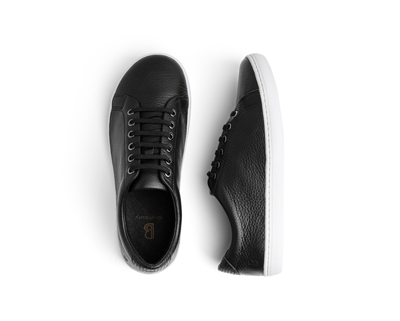
A casual pair works best for this phase, since you're logging walks, errands, and weekends. Something like the Bramford: Barefoot Leather Sneaker – Wide Toe Box ($120) handles that job while looking like a regular sneaker, so nobody asks questions.

Step 3: Mix Barefoot Shoes With Your Old Ones
Notice the schedule caps your daily hours. That's because your old shoes still have a job: covering the rest of the day while your feet recover.
The 3 shoe rule means rotating three pairs (your barefoot pair, a conventional pair, and something in between) so no single day overloads feet that are still adapting. Alternate across the week rather than replacing everything at once.
Practical tip: put barefoot days on your lighter days first. Save the 15,000-step airport sprint for month three.
Step 4: Add Foot Strengthening Exercises
The walking itself does most of the work, though a few minutes of targeted foot strengthening exercises speeds things up. Three drills cover it:
- Toe splay drills: spread your toes wide, hold five seconds, repeat ten times.
- Calf raises: two sets of 15, slow on the way down.
- Short-foot holds: pull the ball of your foot toward your heel without curling your toes, hold ten seconds.
Peer-reviewed research found that simply walking in minimalist shoes built foot strength comparably to a dedicated exercise program. Not a drill person? There's your out. The shoes do the training; the drills just accelerate it.

Step 5: Take the Transition to the Office
Scale office wear slower than weekend wear: start with half days behind a desk and build to full days over several weeks. Why the caution? The office is the final boss.
You stand, walk, and pace through meetings all day, which makes a full workday the heaviest load in your week. Keep a backup pair nearby while you ramp up.
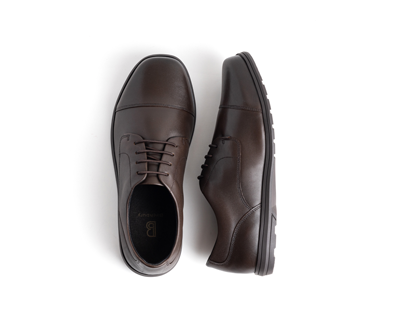
The wardrobe problem solves itself, too. A Barefoot Dress Shoe with Wide Toe Box ($180) looks like a classic oxford from the outside, so you get the wide toe box and zero-drop platform without explaining your footwear philosophy to HR.
One rule governs every step: listen to your body. Mild muscle soreness means adaptation is happening; sharp or persistent pain means stop, drop back a week, and let your feet catch up.
The gradual transition works. What derails people is misreading the signals along the way, which is exactly what the next section covers.

Common Mistakes to Avoid
Every barefoot transition horror story traces back to the same five errors. Here they are, so you never have to write yours.
- Too far, too fast. Barefoot shoes shift load onto your forefoot, and biomechanics research connects that spike in plantar pressure to stress fracture risk. Prevention is simple: treat the weekly schedule as a ceiling, not a dare.
- Calf soreness you keep excusing. A zero-drop platform asks more of your calf and Achilles tendon, which makes mild soreness the price of admission. Escalating pain is a different animal. Each week should hurt less than the last; if it hurts more, back off for seven days.
- A day-one purge of your conventional cushioned shoes. Cold turkey feels committed. It just robs your feet of recovery time. Keep the rotation going until barefoot days stop producing soreness.
- Runs and long walks before your feet are ready. A run loads your feet much harder than a walk does. Earn full walking days first, then add distance in small doses.
- The "push through it" mindset. This one ends more transitions than all the others combined. Gym culture says pain equals progress; your feet respectfully disagree. Discomfort is feedback, so listen to your body. People who do finish the transition. People who don't finish forum threads about it.
Dodge these five and the whole process stays pleasantly uneventful. Boring, even. With a barefoot transition, boring means it's working, and a few extra habits make it work even faster.

Tips for a Smoother Transition
The plan above works for everyone. These tips make it work faster, especially if your feet have some mileage on them.
First, adults over 30 should expect the slower end of every timeline in this guide. Your feet spent decades molded by narrow, cushioned shoes. That's not failure. That's math.
Second, concrete will surprise you. Proprioception ramps up quickly once a thin sole replaces an inch of foam, and hard surfaces feel louder underfoot for the first few weeks. Then something interesting happens: your gait softens on its own.
Help it along. Shorten your stride and land lighter. You don't need to think hard about technique, because a foot that can finally feel the ground self-corrects better than any tutorial.
Third, keep banking barefoot time at home even after the shoes feel comfortable. Those unshod minutes accelerate natural foot function and build foot strength on days the shoes stay in the closet.
Finally, watch for the markers that prove it's working:
- Less end-of-day fatigue. Your feet stop begging for the couch at 6 p.m.
- Visible toe splay. Toes spread wider at rest than they did in month one.
- Quiet calves. The soreness that greeted every early wear simply stops showing up.
Hit all three and you're through the hard part. Naturally, a few questions still come up.
Barefoot Shoe Transition FAQs
How Long Does It Take to Fully Transition to Barefoot Shoes?
Most adults need 3 to 6 months of gradual transition before wearing barefoot shoes full time. Runners need longer, since impact forces multiply the load. If you've spent decades in cushioned shoes, plan for the slower end. Foot strength returns on the muscle's schedule, not yours.
Why Do Podiatrists Not Like Barefoot Shoes?
Honest answer: podiatrists see the failures, not the successes. Their waiting rooms fill with people who went from full cushion to full barefoot in a week, plus patients with pre-existing conditions that made the switch risky. Those concerns are legitimate. The criticism mostly targets reckless transitions, not the shoes themselves, and a slow ramp-up addresses the bulk of it.
What Is the 3 Shoe Rule?
The 3 shoe rule means rotating three pairs, typically a barefoot pair, a conventional pair, and something in between, so no single shoe carries every step of your week. The rotation spreads the load while your feet adapt, which keeps any one movement pattern from getting overworked.
Who Should Not Wear Barefoot Shoes?
Anyone with certain diabetic foot conditions, severe rigid foot deformities, or a recent foot injury should talk to a professional before starting. Reduced sensation or limited joint mobility changes the risk math entirely. Everyone else can generally proceed, provided the pace stays slow and you respect the pain signals.
Can I Wear Barefoot Shoes to the Office During the Transition?
Yes, with a slower ramp-up than your weekend schedule. An office day means 8-plus hours on your feet, which is the heaviest load in your week. Start with half days, keep a backup pair under the desk, and build from there, exactly as Step 5 lays out.
Questions answered. One thing left: where your feet go from here.
Slow Feet Win the Race
Strip this whole guide down and two sentences remain. Your feet aren't broken. They're just out of practice after decades in conventional cushioned shoes.
Practice is the entire game. A gradual transition respects the timeline and feels almost boring: a little soreness, steady progress, then one day your old shoes feel like foot prisons. Rush it, and you become the forum guy.
Key takeaways:
- Give the transition 3 to 6 months, not 3 weeks.
- Rotate your barefoot pair with your old shoes until the soreness stops showing up.
- Mild soreness means progress. Sharp pain means drop back a week.
The best part? Step one costs nothing.
Kick your shoes off tonight and walk around the house. Do it again tomorrow. Then follow the schedule, one unremarkable week at a time.
Barefoot shoes don't reward the person who wants it most. They reward the person who waits the longest.
Slow feet win. Every time.
Prices accurate as of July 2026.

Matthew Tran
Founder, Birchbury
Matthew Tran is a mechanical engineer who founded Birchbury. He started the company after struggling to find dress shoes that didn’t hurt — and barefoot shoes that didn’t look out of place at work. That gap led him to design his own: a wide-toe-box, zero-drop shoe made from full-grain leather, built specifically to look like a normal shoe. Birchbury has since been worn by lawyers, chiropractors, restaurant managers, and anyone else who spends their day on their feet and refuses to suffer for it.
More about Matthew Tran →