
Written by Matthew Tran, Birchbury's Founder
You did the right thing. You picked the vegan leather option, paid a little more for it, and walked out feeling good about the choice.
Six months later, the shoe is peeling at the flex points like a bad sunburn. The store can't explain it. The brand won't.
And that word on the tag, the one you paid extra for, never actually promised the material would hold up. It just promised what the material wasn't.
Here's the short answer: most vegan leather is polyurethane (PU) or PVC plastic bonded to a fabric backing. That's why it peels.
So what's actually in there? Because "faux leather" isn't an ingredient.
It's a placeholder. Let's read the label properly.

Vegan Leather Is a Label, Not a Material
Vegan leather is a category, not a material. All the label tells you is that no animal hide went into it, and most of what wears that tag is plastic.
The term started honestly. It described leather-like materials made without animals, and some of those were genuinely plant-based. Then marketers noticed the word sold, and the meaning stretched.
Here's the problem: the label carries no standard. Not for quality, not for durability, not for environmental impact, a gap the FTC Green Guides exist to police. Faux leather, synthetic leather, vegan leather, all the same legal shrug.
Two shoes can sit side by side with identical vegan tags. One comes from woven cactus fiber. The other is PVC (polyvinyl chloride), the plastic in shower curtains.
| Material | What it actually is | Label it ships under |
|---|---|---|
| Cactus fiber blend | Plant fiber, usually sealed under a PU coating | Vegan leather |
| PVC | The plastic in shower curtains | Vegan leather |
Same word. Wildly different products. That's the game.

What Vegan Leather Is Actually Made Of
Vegan leather is usually one of three things: PU, PVC, or plant fiber sealed under a PU coating.
PU and PVC: Plastic With a Leather-Grain Stamp
Most faux leather is PU or PVC bonded to a fabric backing. PU is softer and shows up in most shoes. PVC is stiffer, costs less to make, and cracks harder when it goes.
That leather grain you see? A machine stamped it on. It runs exactly as deep as the coating.
In practice, that means plastic bonded to fabric cracks at flex points where your foot bends thousands of times a day. Expect months of wear, not years.
The plant-based blends promise better. Sort of.
Plant-Plastic Hybrids: Part Cactus, Mostly Coating
Apple leather, cactus leather, grape leather. Nicer story, same finish. Most plant-based leather lists a small percentage of fruit or plant waste sealed under a polyurethane layer.
Biodegradability stops where the plastic starts. That PU coating degrades with light and abrasion, shedding microplastics as it ages, according to peer-reviewed research.
None of that stops the label from raising the price.

Why the Word Vegan Costs You Extra
The same PU upper sells as "synthetic" on one shelf and "vegan leather" on another, with a price bump for the second one. That's where it gets expensive.
Same plastic. Different sticker.
Remember, the word carries no material or sustainability standard, and charging extra for it is greenwashing by definition: selling an environmental image the material doesn't back up. The FTC Green Guides spell out when vague environmental claims cross into misleading buyers.
The good news: the label tells on itself if you know what to look for.
How to Read a Materials Label and Spot PU or PVC
You don't need a chemistry degree. Red flags on a materials label:
- Coated fabric: plastic laminated onto textile, no hide involved
- PU or polyurethane: a flexible plastic coating
- PVC (polyvinyl chloride): a stiffer plastic
- Man-made materials: the vaguest phrase on any label, and it usually means plastic
- Any plant-based leather claim with no percentage listed
That last one matters most. If a brand won't tell you how much of the material is actually plant, assume the rest is plastic.
Some materials earn the label honestly.
The Plastic-Free Options That Are Actually Interesting
Three plant-based leathers genuinely skip the plastic: cork leather, mycelium leather, and Mirum. Those three are worth knowing by name.
Cork is the proven veteran. Mycelium leather, grown from mushroom roots, has the best hand feel of the group in our experience, though availability stays limited and prices run high. Mirum, from Natural Fiber Welding, uses natural rubber and plant fiber with no PU at all.
| Material | Source | Contains plastic? | The catch |
|---|---|---|---|
| Cork leather | Cork oak bark | No | Fewest surprises, least leather-like feel |
| Mycelium leather | Mushroom root structure | No | Limited availability, high price |
| Mirum | Natural rubber and plant fiber | No | Newer, less proven under daily wear |
Cactus leather, apple leather, and grape leather usually arrive as blends, so ask whether a PU layer is holding them together before you pay for the story.
On biodegradability, the plastic-free shelf wins clearly. Most of these materials are newer and less proven under daily wear, granted. Still, if you're strictly vegan, this is your shelf.
The short ranking: cork is the most proven, Mirum is the most promising newcomer, and mycelium feels the best but is hardest to find.
The material is half the decision. How it holds up is the other half.

What Happens After a Year of Real Wear
Most PU uppers start cracking at flex points around month eight of daily wear. Labels are one test. Time is the other.
Water, Creasing, and Peeling
Vegan leather shrugs off a puddle at first. Plastic isn't porous. Water sneaks in at the seams instead, soaks the fabric backing, and speeds up delamination (the coating separating from its fabric backing) from the inside.
Meanwhile, the flex points do their thing. PU and PVC can't stretch the way hide does, so creases become cracks, and cracks become flaking. A PU upper in daily wear lasts months, not years.
A Cobbler Can Rebuild Leather, Not a Peeling Coating
Full-grain leather keeps its intact outer grain, the toughest layer of the hide. A cobbler can clean it, condition it, and resole it twice over, and full-grain develops a patina instead of peeling while it molds to your foot.
To be fair, real leather has tradeoffs too. Chromium tanning (fast, chemical-heavy) carries environmental baggage, and vegetable tanning (slower, based on plant tannins) exists as the cleaner route.
That said, run the math on cost per year: one pair replaced annually versus one pair rebuilt twice. The sticker price stops mattering.

Which One You Should Actually Buy
Strictly vegan? Go plastic-free: cork, mycelium, or Mirum. Want a shoe that survives years of hard wear? Full-grain leather. The longer answer depends on why you're standing in this aisle.
If you live a strictly vegan lifestyle, buy vegan leather with a clear conscience. Just skip the PU and PVC blends and go for the plastic-free plant-based leather options like cork, mycelium, or Mirum. You'll get the ethics without the peeling.
If you're not vegan and you want a shoe that survives years of hard wear, full-grain leather earns its price on durability alone. One upper that conditions and resoles will outlast several plastic pairs, and the cost per year proves it.
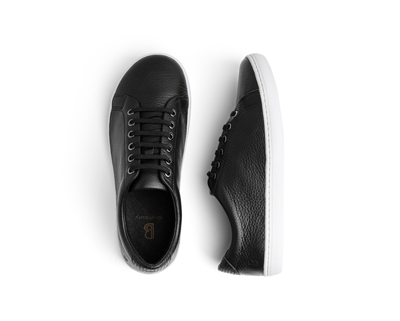
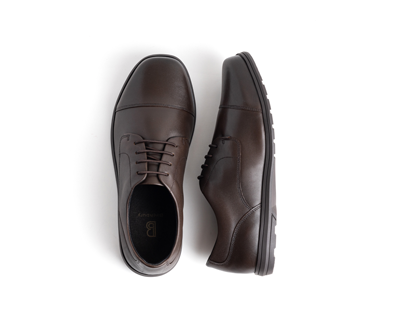
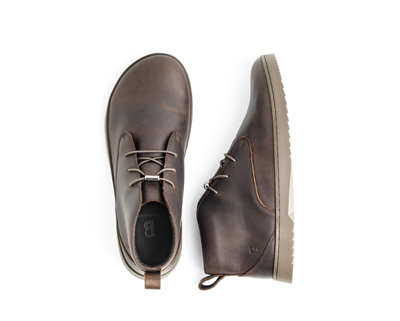
It's why Birchbury handcrafts shoes with American full-grain leather, built on a wide toe box and zero-drop platform (heel and forefoot at the same height). They support natural movement, and they still look normal at the office.
Either way, buy the material. Not the word.
FAQs
1. Is vegan leather real genuine leather?
2. What happens if vegan leather gets wet?
3. Which vegan leather is considered the highest quality?
4. What are the disadvantages of vegan leather?
5. Is vegan leather more durable than real leather?

Matthew Tran
Founder, Birchbury
Matthew Tran is a mechanical engineer who founded Birchbury. He started the company after struggling to find dress shoes that didn’t hurt — and barefoot shoes that didn’t look out of place at work. That gap led him to design his own: a wide-toe-box, zero-drop shoe made from full-grain leather, built specifically to look like a normal shoe. Birchbury has since been worn by lawyers, chiropractors, restaurant managers, and anyone else who spends their day on their feet and refuses to suffer for it.
More about Matthew Tran →