
Written by Matthew Tran, Birchbury's Founder
Here's the verdict on leather vs synthetic leather shoes: full-grain leather wins on durability, comfort, and cost over time. Synthetic wins on exactly one thing, the price tag at checkout.
That's it. That's the list.
You already suspected this. Probably around the time your third synthetic pair started cracking and peeling at the flex points, because fake leather doesn't stretch, breathe, or age.
It just quits. One good leather pair typically outlives three synthetic ones, which flips the math entirely.
One caveat first: comfort comes from toe box shape and sole flexibility, not the material label.
Material won't make a shoe comfortable. It does decide how long the shoe lives, so the label matters.

What Real Leather Actually Is, From Full-Grain Down to Bonded
"Leather" on a label tells you almost nothing. The word covers everything from hide that lasts decades to compressed scraps that crack in months.
Most people ask about the three grades of leather, and the short answer is full-grain, top-grain, and genuine, ranked in that exact order. Bonded sits below all three.
- Full-grain: the intact outer layer of the hide, pores and natural grain preserved. Lasts decades.
- Top-grain: surface sanded and coated. Solid, one rung down.
- "Genuine": split leather with a sprayed-on finish. The marketing floor.
- Bonded: scraps pressed together with adhesive. Months, not years.
Start at the top of that ladder.
Full-Grain and Top-Grain: The Two Worth Paying For
Full-grain leather is the outer layer of the hide with the pores and natural grain left intact. That intact surface is why it molds to your foot and develops a patina (the sheen and character leather picks up with wear) instead of falling apart.
Top-grain sits one rung down. Tanners sand off the surface and apply a coating, which makes it more uniform but slightly less durable.
Still a solid buy. Just not the top of the ladder.
Genuine and Bonded Leather: The Words That Sound Good and Mean Less
Here's where the label games start. "Genuine leather" is the marketing floor, not the ceiling. It's usually split leather, the leftover layers, with a finish sprayed on to look the part.
Bonded leather is leather scraps pressed together with adhesive, and it cracks within months. That puts it below everything above. If you want the full breakdown of full-grain leather versus bonded leather, we've covered it in detail.
Now that the vocabulary is settled, the synthetic side deserves the same honest look.

What Synthetic Leather Is Made Of, and Why PU and PVC Behave Differently
Synthetic leather, also sold as faux leather, is not a lesser hide. It's not a hide at all.
It's a fabric backing coated in plastic, either polyurethane (PU) or polyvinyl chloride (PVC).
The main disadvantages follow directly from that construction: the plastic coating can't stretch or breathe like skin, so the cracking and peeling isn't bad luck. It's built in.
PU Leather: Soft at First, Flaking by Month Eight
PU leather (polyurethane) is the nicer of the two plastics. It feels softer out of the box and breathes better than PVC, which is why most "leather-look" shoes use it.
The problem lives at the flex points. Every step bends the coating against the fabric backing, and the two materials don't bend the same way.
Eventually the coating gives up and separates. The trade term is delamination; you know it as the flaking across the toe crease of every synthetic pair you've owned.
PVC (polyvinyl chloride) is the budget option: stiffer, less expensive to produce, and it traps heat harder. Your feet notice by lunch.
And no, a bigger price tag doesn't change the chemistry.
Why a $250 Vegan Leather Shoe Still Peels
Vegan leather is a positioning word, not a material spec. In nearly all footwear, it means PU or PVC with better marketing.
A higher price buys nicer stitching and a better last. It doesn't change the coating physics. Plastic bonded to fabric separates at flex points whether the box cost $40 or $250.
So the material fails predictably. The real question is how that plays out on your feet day to day.
Two Years of Daily Wear: What Happens to Each Pair
A synthetic upper typically frays and peels at the flex crease within 8 to 18 months of daily wear. Two years in, the difference stops being theoretical.
Full-grain leather does the opposite: it resists abrasion, softens where you bend, and builds a patina instead of splitting. A well-made leather pair keeps going well past that two-year mark with basic care.
| Full-grain leather | Synthetic (PU/PVC) | |
|---|---|---|
| Lifespan | Years, with basic care | 8 to 18 months at the flex crease |
| Flex points | Softens and molds | Cracks and peels |
| Repair | Clean, condition, resole | None once it delaminates |
| Breathability | Pores move moisture out | Traps heat and sweat |
| Maintenance | Conditioner a few times a year | A wipe, then a replacement |
The table tells the story. The math makes it personal.
Cost per Wear, Done Honestly
Run the numbers. Three synthetic pairs at $80 each is $240 over roughly the same stretch that one leather pair covers, and the leather is still on your feet.
The cracking and peeling isn't just ugly. It's a recurring bill.
Cost per wear is simple math: price divided by number of wears. That's the core of how leather outlasts synthetic uppers: durability you can divide by actual wears.
Repairability tilts the math further.
Resoling Versus Throwing It Out
You can resole leather. You can't resole a delaminated synthetic upper; no cobbler reattaches plastic to fabric.
Leather gets a second act: condition it, clean it, and resole it when the bottom wears through.
The trade-off is maintenance and shoe care. Leather asks for conditioning a few times a year. Synthetic asks for a wipe, then a replacement.
That settles the money. Your feet have their own vote.

Comfort, Sweat, and the Part the Material Label Never Tells You
Durability is only half the story. The other half hits you around mid-afternoon, and it involves sweat.
Why Synthetic Uppers Turn Into a Sauna by 2pm
Leather breathes because the hide has pores; moisture moves through and out. A plastic coating has no pores, so synthetic leather holds heat and sweat against your foot all day.
Trapped sweat is where the odor comes from. It soaks into a synthetic lining and doesn't wash out easily. Your feet know the difference by 2pm even if the label swears both shoes are "leather."
Sweat aside, one factor outranks material altogether.
Toe Box Shape and Sole Flexibility Beat Material Every Time
The upper material is not the biggest comfort lever, though. A wide toe box and a flat, flexible sole matter more, because published research links narrow toe boxes to pressure on the forefoot.
Full-grain leather adds one advantage here: it molds to your foot over time, while synthetic keeps its factory shape until it splits. Check the sizing guide before you buy either.
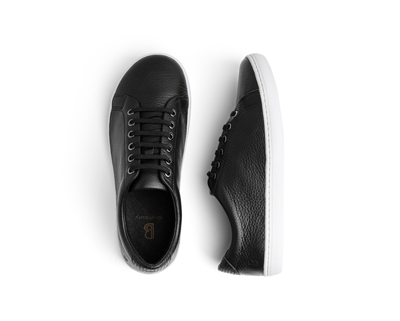
The Bramford gets both right. It's a barefoot sneaker with a wide toe box, a zero-drop sole designed to support natural movement, elastic no-tie laces, and a removable insole for custom inserts.
Handcrafted American full-grain leather is why it's soft from the first wear, no break-in demanded.
Daily comfort sorted. Now for the days when people actually look at your shoes.

Weddings, Interviews, and Dress Codes: What Your Shoes Are Actually Saying
Sweat is one problem. A receiving line under bright lights is another.
Real leather is the safer pick for weddings and interviews. No dress code on earth names a material, but synthetic leather reads plastic under indoor light and creases in the wrong places. Faux leather has a shine that photographs like a shell, not a shoe.
Real leather behaves differently on camera and in person. Full-grain leather takes polish, holds its shape, and picks up a patina that makes the pair look better at the third wedding than the first. Even genuine leather, the budget grade, outperforms plastic here.
Can synthetic survive a single interview? Sure. It just won't survive a season of them.
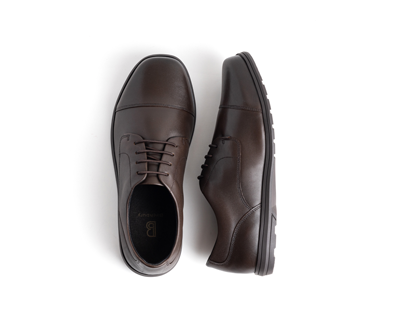
The Brenston handles the whole calendar. It looks like a classic oxford on the outside: handcrafted American full-grain leather, clean lines, no giveaway.
Inside, it hides a wide toe box and a flat, flexible zero-drop sole, soft from the first wear with no break-in. It works with a suit or dark denim, which covers most invitations you'll get this year.
That covers what to buy. Telling real from fake at the shelf is its own skill.

How to Tell Real Leather From Fake Before You Hand Over Your Card
Good news: your senses do most of the work, and every check takes seconds.
The Five-Second Checks You Can Do in the Store
- Smell it. Leather smells like leather. Faux leather smells like a new pool toy.
- Check the edges. A cut edge of real leather shows fibrous layers. PU leather (polyurethane) shows a fabric backing under a smooth coating.
- Study the grain. Real pores are irregular. Printed grain repeats like wallpaper.
- Drop some water. Full-grain and top-grain leather darken and absorb slowly. Coated synthetic beads and sits there.
Your senses catch most fakes. The label catches the rest.
Reading the Label Without Getting Played
Not sure yet? Flip the box over.
The FTC's Leather Guides, the U.S. federal labeling rules for leather goods, say any material made to look like leather but isn't must carry an imitation or simulated disclosure. No disclosure and no leather icon means you're holding plastic.
And remember: "genuine leather" is the lowest real grade, not a quality badge. If the brand had full-grain, the label would brag about it.
That's the whole playbook. Here's what it adds up to.
Buy Once, Wear It for Years
Back to that third peeling pair. It was never the less expensive option. You just paid for it in installments of disappointment, one flex crease at a time.
Full-grain leather earns its price in year two, then keeps earning it. The patina deepens, the durability holds, and the cost per wear keeps shrinking.
The short version:
- One full-grain pair typically outlasts three synthetic pairs.
- The grade ladder runs full-grain, top-grain, "genuine," then bonded. In that order.
- PU and PVC crack at flex points because plastic bonded to fabric can't stretch.
- Leather breathes through its pores. Plastic traps sweat until you take the shoes off.
- Toe box shape and sole flexibility still matter more than the material label.
Fit geometry plus real leather. That's the combination worth your money.
Questions People Ask Before They Buy
1. Is synthetic leather as good as leather?
No, synthetic leather (often plastic polyurethane or PVC marketed as "vegan leather") cannot match the breathability, suppleness, and durability of genuine hide. Synthetic materials trap heat and moisture against your foot and quickly crack or peel at natural bend points. Genuine leather naturally breathes, molds directly to the shape of your foot, and develops a protective patina with age.
2. Which leather is best, synthetic or genuine?
Genuine leather is vastly better for footwear because it provides superior structural integrity, natural airflow, and lasting comfort. While synthetic leather is inexpensive, it lacks tensile strength and deteriorates quickly under daily friction. For the best performance, choose full-grain genuine leather over corrected-grain or synthetic options to get maximum longevity with zero stiffness.
3. What lasts longer, leather or synthetic leather?
Real leather lasts significantly longer than synthetic leather, often enduring for five to ten years or more with basic care. Synthetic leathers rely on petroleum-based coatings that dry out, delaminate, and crack at high-stress flex points within one to two years. Real leather features dense, natural collagen fibers that easily withstand thousands of walking miles without tearing.
4. How to know if leather is real or synthetic?
You can identify real leather by examining its grain pattern, edges, and smell. Real leather displays unique, irregular pore patterns, rough fibrous cut edges, and a rich, earthy scent. In contrast, synthetic leather has an identical, machine-stamped surface texture, fabric-backed edges, and a distinct plastic chemical odor.
5. Which type of leather lasts the longest?
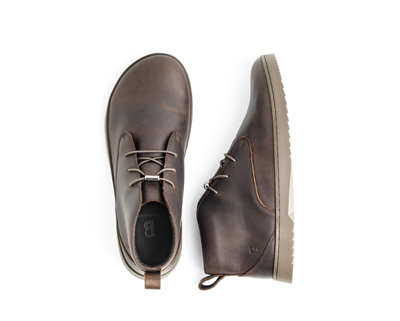
Full-grain leather is the longest-lasting grade available because it uses the entire outermost layer of the hide with the natural grain completely intact. Because it is never sanded, split, or chemically coated to hide flaws, it delivers unmatched tensile strength and natural water resistance. This is why Birchbury uses premium American full-grain leather across models like the Brenston, Bramford, and Carnforth, ensuring the shoes remain supple and durable for years.

Matthew Tran
Founder, Birchbury
Matthew Tran is a mechanical engineer who founded Birchbury. He started the company after struggling to find dress shoes that didn’t hurt — and barefoot shoes that didn’t look out of place at work. That gap led him to design his own: a wide-toe-box, zero-drop shoe made from full-grain leather, built specifically to look like a normal shoe. Birchbury has since been worn by lawyers, chiropractors, restaurant managers, and anyone else who spends their day on their feet and refuses to suffer for it.
More about Matthew Tran →