
Written by Matthew Tran, Birchbury's Founder
You've skated across a wet marble lobby in leather soles. Or clomped into a client meeting sounding like a Clydesdale in rubber ones. So here's the verdict on leather soles vs rubber soles: neither wins outright.
Leather gives you a slim sole profile, better breathability, and a sole that molds to your foot. Rubber gives you grip and traction on wet ground, survives concrete, and skips the break-in period entirely.
The right pick comes down to your climate, your commute, and your dress code.
And honestly? Flexibility and stack height decide how your feet feel at 6 p.m. far more than the material label does. Here's how to choose.

What a Leather Sole Actually Is (and What Rubber Really Means)
Before you can pick a side, you need to know what you're actually comparing. Both terms hide more variety than the shoe industry lets on.
How a Leather Sole Is Built
A leather sole is stacked layers of tanned hide, compressed and shaped, then attached to the shoe. On well-made pairs, that attachment is a welt: a strip of leather stitched around the edge that lets a cobbler pull the sole off and stitch on a new one.
That's the whole appeal of resoling. The shoe outlives the sole.
Construction matters more than material here:
- Welted (Goodyear or similar): resoleable.
- Blake-stitched: resoleable.
- Cemented (glued): usually not.
A glued leather sole gives you the slim sole profile without the longevity, which is the worst trade in footwear.
Why 'Rubber Sole' Covers Wildly Different Things
Rubber, on the other hand, is barely one category. Stack height, flexibility, and durability vary wildly inside both camps.
Rubber runs from thin, dense compounds that flex like leather to thick foam wedges that feel like strapping bricks to your feet.
That range explains the reputation problem. People try one stiff, poorly made rubber sole and swear off the material entirely.
Here's the part most guides skip: a thin rubber sole can outflex a rigid leather one.
The label on the sole tells you very little. The build tells you everything.

What Leather Soles Get Right, and Where They Let You Down
Now that you know what's under the shoe, let's talk about how leather actually performs once you leave the house.
The Case for Leather: Slim, Breathable, and Easy to Resole
Leather soles earn their reputation in three ways: a slim profile, breathability, and easy resoling. First, the slim sole profile.
A thin sole keeps a clean line under your trouser hem and gives you real ground feel, something a thick wedge can't offer. You feel the floor instead of floating an inch above it.
Second, breathability. Leather lets heat and moisture escape instead of trapping them under your foot all day. Your socks notice the difference around hour nine.
Third, leather molds. Give it a few months and the sole takes the shape of your foot, not the other way around. Pair that with resoling and a good welted pair becomes a long-term relationship, not a fling.
The Case Against Leather: Wet Floors, Concrete, and the Break-In Stretch
Still, leather has three failure modes: weak wet grip, fast wear on concrete, and water absorption. None of them are subtle.
Fresh leather soles on polished lobby stone is a stunt, not a commute. The grip simply isn't there until the sole scuffs up.
Then there's durability. Concrete sidewalks grind leather down fast. Walk a mile each way daily and you'll meet your cobbler on a first-name basis.
Wet weather performance is the last strike. Leather drinks water. Rain days demand a second pair in rotation or a sole protector, because a soaked sole wears out even faster.

What Rubber Soles Get Right, and the Bulk Problem Nobody Solves Well
Leather's weak spots are exactly where rubber shines. That's not a coincidence, and it's why so many men run both.
The Case for Rubber: Grip, Weather, and No Break-In
Grip and traction come first. Rubber holds on wet pavement, tile, and that cursed marble lobby.
Wet-floor grip comes down to tread pattern and rubber compound, not price. That's the finding of government research on slip resistance from the CDC's National Institute for Occupational Safety and Health.
A well-designed sole grips. A slick one doesn't. Cost is a rumor.
Wet weather performance follows the same script. Rain, slush, salted sidewalks: rubber shrugs it all off with no drying ritual, no sole protector, no anxiety.
Durability seals it. Rubber outlasts leather on concrete by a wide margin, and there's no break-in period. The sole works the day it arrives.
It also delivers shock absorption that stacked hide never will.
The Case Against Rubber: Bulk, Stiffness, and Soles That Look Like Sneakers
That said, rubber has its own failure modes. The obvious one is bulk.
A thick slab under a dress shoe reads as sneaker from across the room, and it kills any ground feel. You're walking on the sole, not the floor.
Stiffness is the sneakier problem. A rigid rubber sole that refuses to flex leaves your feet stiff and tired after eight hours of standing.
Your feet want to bend. The sole votes no.
Poorly made rubber adds insult: it compresses, flattens, and squeaks its way through your office. Quality varies. Choose accordingly.
Leather vs Rubber, Point by Point
If you skimmed everything above, fine. Here's the whole argument settled in one table.
The short version: rubber takes four rounds, leather takes two, and the last three depend on the sole in question.
| Round | Leather Soles | Rubber Soles | Winner |
|---|---|---|---|
| Grip and traction on wet ground | Slick until scuffed in | Holds on tile, marble, pavement | Rubber |
| Wet weather performance | Absorbs water, wears faster wet | Shrugs off rain and slush | Rubber |
| Breathability | Lets heat and moisture escape | Traps both | Leather |
| Break-in period | Weeks of stiffness | None. Works day one | Rubber |
| Lifespan on concrete | Grinds down fast | Outlasts leather by a wide margin | Rubber |
| Resoling | Standard on welted pairs | Possible, less common | Leather |
| Formality | The traditional dress standard | Depends on the sole, not the material | Draw |
| Weight and bulk | Slim sole profile, clean lines | Ranges from thin to brick | Depends on the sole |
| Ground feel | Excellent when thin | Thin compounds match it; foam kills it | Depends on the sole |
Slip-resistance findings per CDC/NIOSH. Foot-function findings per research indexed at the National Library of Medicine.
Notice the pattern in those last three rows. The material stops mattering once the build gets thin and flexible enough.
A slim, bendable rubber sole passes the dress test and keeps the ground feel. A thick one fails both, and so does a clunky leather stack.
- Choose rubber if: your week includes rain, long stretches of concrete, or hours on your feet.
- Choose leather if: your climate is dry, your walks are short, and tradition matters to you.
- Either works when: the sole is thin, flexible, and flat. Which is exactly where this goes next.
How Your Feet Feel After Eight Hours (The Part Both Camps Ignore)
The material debate misses the question that actually matters: what do your feet feel like at quitting time? The answer has less to do with leather or rubber and more to do with three build details: sole flexibility, stack height, and heel-to-toe drop.
Flex and Stack Height Beat Material Every Time
A sole that bends with your foot lets your foot muscles do their own work instead of riding a rigid platform all day. Peer-reviewed research indexed at the National Library of Medicine links flexible, minimal footwear to increased foot muscle size and strength.
Your feet evolved to move. Stiff soles overrule them.
Heel-to-toe drop matters too. A raised heel tips your weight forward on every step, while a zero-drop sole (no height difference between heel and forefoot) keeps the load even from heel to toe.
Add low stack height (the total thickness of material between your foot and the ground) and you get more ground feedback and less wobble on cracked pavement. Foam shock absorption feels nice for ten minutes.
A sole that sits flat and actually flexes feels better at hour eight, and thin soles that feed your feet more ground feedback keep you steady where thick wedges leave you guessing.
What Sole Choice Does to Your Toe Room
Sole shape decides toe room before the upper gets a vote. A tapered sole squeezes the toe box no matter how soft the leather above it is, and plenty of rubber soles taper just as hard as leather ones.
A wide toe box lets your toes splay and grip through a long day on hard floors, which is exactly what toes are for.
One catch: none of this works if the size is wrong. Measure your feet in inches against the sizing guide before you order, because a slim sole profile can't rescue a shoe that's half a size off.
No, a Rubber Sole Does Not Mean a Lesser Shoe
Let's settle this up front: a rubber sole is not a downgrade, and it's not less formal. The build decides both.
Time to bury the snobbery. The myth goes like this: real dress shoes wear leather soles, and rubber is what budget brands slap on.
The reality? Sole material tells you nothing about the leather quality, the last shape, or the stitching above it.
A shoemaker can put full-grain leather uppers and careful construction over a slim rubber sole. Plenty do.
The two are not a contradiction. They're a smart pairing.
The durability myth deserves the same treatment. Leather does not automatically outlive rubber. Put both on daily concrete and leather often loses badly, grinding down while the rubber pair keeps going for another year or two.
Next question: do rubber soles look too casual with a suit? No.
Slim, dense rubber under a clean oxford or chukka reads as formal from any distance a colleague will ever see it. Nobody at the conference table is flipping your shoe over to inspect the sole material.
What actually makes a sole look casual is thickness, white midsoles, and aggressive lug tread. A one-inch foam wedge screams sneaker. A quarter-inch of dark, dense rubber with a slim sole profile says dress shoe, full stop.
In other words, judge the shoe by its build, not by what's stamped on the bottom. The material debate is a distraction. The proportions do the talking.

Half-Rubber Soles, Topys, and Toe Taps: The Middle Ground
Maybe you already own leather-soled shoes you love. Good news: you don't have to pick a side. Your cobbler has three ways to weatherproof what you've got: a rubber topy, a half-rubber sole, or toe taps.
The first is a rubber topy, a thin sole protector glued over the leather forefoot. It adds grip and traction where you push off, keeps water out of the leather, and buys the sole years of extra life. From the side, nobody notices.
Option two is the half-rubber or combination sole: rubber at the forefoot, leather left exposed at the heel or waist. You get traction where your foot lands hardest and keep the traditional look where the sole shows.
Toe taps round out the list. Small metal or rubber plates at the toe tip, the spot most walkers grind down first. Low-cost insurance for the sole's most vulnerable inch.
The trade? You gain wet-day confidence and longer wear. You give up a hair of thickness and some breathability, since rubber seals the leather it covers.
Cost-wise, a topy runs a small fraction of a full resoling job and takes a cobbler a day or two. Expect to replace the protector every year or two of regular wear, versus several years between full resoles.
Do the math. The topy wins.
What Each Sole Actually Costs You Over Five Years
Straight answer up front: rubber tends to run leaner over five years. The sticker price is round one. The next five years are where the real bill shows up.
Leather soles on daily concrete mean regular resoling, plus a protector, plus repeat cobbler trips. Each visit costs money and a few days without the shoes. Durability isn't leather's strong suit on pavement, so the meter runs faster than most buyers expect.
Rubber soles usually stretch the gap between visits considerably. The catch: cemented construction can rule out resoling entirely, which turns a worn sole into a replaced shoe. Check the build before you assume you can repair it.
However, the hidden cost is rotation. Leather-soled shoes need a rest day to dry out, and their wet weather performance forces a second pair for rain. That's two shoes doing one shoe's job.
Total it honestly: invoices, plus the errands, plus the backup pair. Leather can compete, but only if a welted build and a good cobbler are part of the plan.

Pick Your Sole by Your Commute, Your Climate, and Your Dress Code
Everything above boils down to three questions: how many blocks you cover, what the sky drops on them, and what your office expects on your feet. Answer those and the sole picks itself.
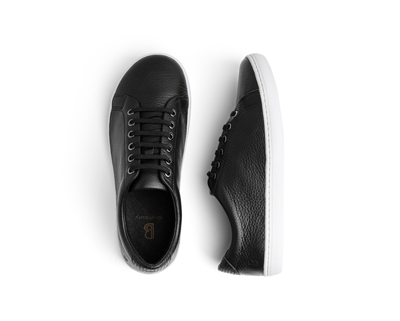
- City blocks every day: flexible rubber, minimal profile, wide toe box. That's the Bramford.
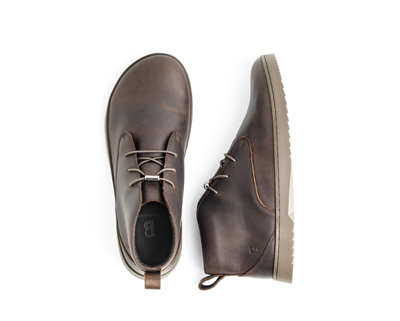
- Rain, slush, and salt: water-resistant leather upper over a zero-drop rubber sole. That's the Carnforth.
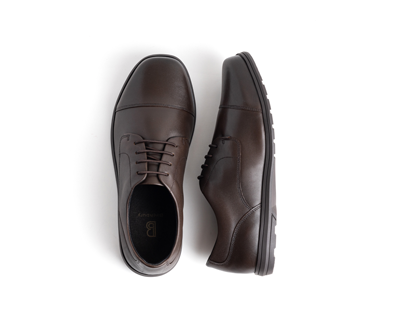
- Business dress or better: slim, dark rubber under a classic silhouette. That's the Brenston.
If You Walk City Blocks Every Day
Concrete punishes stiff soles and stiff feet alike. You want flexible rubber, a minimal profile, and a wide toe box so your toes can splay over the miles.
The Bramford barefoot leather sneaker checks all three: handcrafted American full-grain leather (the strongest, outermost layer of the hide) over a zero-drop sole that bends where your foot bends.
Same logic applies if you stand all day at work. A clinical study from Brigham Young University found that walking in minimal footwear built foot muscle strength on par with a dedicated exercise program.
Flexibility does the work. Thick cushioning just mutes it.
If Your Winters Involve Rain, Slush, and Salt
Wet weather performance is non-negotiable here, which rules out bare leather underfoot unless you add a topy and keep a backup pair. Pair a water-resistant leather upper with a zero-drop rubber sole and you get grip and traction on salted sidewalks without babying your shoes every evening.
The Carnforth chukka boot runs exactly that play: handcrafted American full-grain leather up top, rubber where the slush lives, wide toe box the whole way through.
If Your Dress Code Is Business or Better
Slim, flat, dark rubber under a classic oxford silhouette passes any boardroom inspection, with no break-in period to limp through. The Brenston barefoot dress shoe takes that route: dress shoes on the outside, wide toe box and zero-drop design underneath.
Meanwhile, if your climate is dry, your walks are short, and your calendar leans formal, leather soles still earn their keep. Run a two-pair rotation, add a sole protector, and your cobbler stays a pleasant acquaintance instead of a monthly expense.
The Sole Argument Was Never the Real Argument
Leather soles work until the rain starts. Rubber soles work until the bulk shows. Both win, both lose, and the deciding factor was never printed on the bottom of the shoe.
What decides how your feet feel at the end of a shift is how the sole moves. Does it bend where your foot bends? Does it sit flat instead of tipping you forward?
Does it leave room for your toes to do their job?
A slim, flexible rubber sole with a zero-drop stance and a wide toe box ends the false choice between sharp and comfortable. You can have both. You always could.
Pick for your pavement, your weather, and your dress code. Then stop thinking about your soles, which is the whole point of good ones.
Questions People Ask Before They Buy
1. Is leather sole better than rubber sole?
Neither sole is universally better; it comes down to formality versus practical daily utility. Traditional leather soles offer a classic aesthetic for formal dress codes and mold to your foot over time, but they lack traction, wear down quickly, and offer zero wet-weather grip. Flexible rubber soles provide far superior shock absorption, non-slip durability on pavement, and the natural flex your feet need for all-day comfort.
2. How long will a leather sole last?
A leather sole typically lasts between 6 to 18 months of regular wear before needing a resole, depending heavily on your walking surface. Moisture, rough pavement, and abrasive concrete wear down leather significantly faster than synthetic compounds. Rotating your shoes and avoiding wet ground are essential if you want leather outsoles to reach the two-year mark.
3. What are the downsides of rubber soles?
The traditional downside of rubber soles is aesthetic, as formalwear purists often view them as less refined than sleek, edge-finished leather. Mechanically, low-grade or overly thick rubber soles can be heavy and rigid, which restricts forefoot flexibility and causes foot fatigue on hard floors. Choosing a low-profile, flexible rubber outsole eliminates these mechanical issues while maintaining proper traction and joint protection.
4. Are leather soles good for rain?
No, leather soles perform poorly in the rain because leather is porous and absorbs moisture rapidly. Walking on wet surfaces softens the hide, causing the sole to wear down at double its normal rate while allowing water to seep into the shoe upper. Additionally, smooth wet leather becomes dangerously slippery on surfaces like polished marble, metal grates, and slick tile.
5. Is rubber sole good for walking?
Yes, rubber soles are significantly better for walking because they deliver dependable shock absorption, weather resistance, and traction on modern concrete. Unlike stiff leather soles that act like rigid planks, a flexible rubber sole bends naturally at the ball of your foot with every step. For all-day walking comfort, pair a flexible zero-drop rubber sole with a wide toe box so your foot can splay and absorb impact naturally.

Matthew Tran
Founder, Birchbury
Matthew Tran is a mechanical engineer who founded Birchbury. He started the company after struggling to find dress shoes that didn’t hurt — and barefoot shoes that didn’t look out of place at work. That gap led him to design his own: a wide-toe-box, zero-drop shoe made from full-grain leather, built specifically to look like a normal shoe. Birchbury has since been worn by lawyers, chiropractors, restaurant managers, and anyone else who spends their day on their feet and refuses to suffer for it.
More about Matthew Tran →