


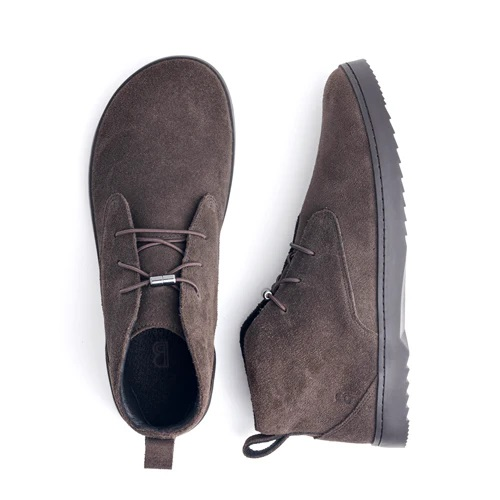


Walk into most shoe stores with wide feet and you'll find the same thing. Rows of shoes built for someone else's foot. The dress code says business casual. Your feet say no thanks.
Here's the part nobody tells you: it's not your feet. It's the toe box. Most dress shoes taper to a point your toes were never going to fit.

The fix is a wide toe box, not a wider size. So the question isn't whether you can dress sharp with wide feet. It's how.
What Wide Feet Actually Need in a Business Casual Shoe
Wide feet don't need a bigger shoe. They need a better-shaped one. That distinction is where most men go wrong, and it's why the wider-size aisle keeps disappointing them.
Wider Size vs. Wide Toe Box: They're Not the Same Thing
A wider size scales the whole shoe up. A wide toe box reshapes just the front to let your toes spread. Those are two different things, and the difference is everything.
A wider size, like E or EE (US width designations where E is wide and EE is extra-wide), scales the whole shoe up proportionally. More width everywhere. But the toe box still tapers to the same pointed shape. Your toes still get squeezed toward a center they were never meant to meet.

A wide toe box does something different. It gives your toes room to spread the way they do barefoot, no matter which width letter you wear.
So you can buy a wider size and still cram your foot into the wrong shape. Width options solve the wrong problem.
The Features That Matter
Once you stop chasing width letters, the checklist gets simple. These are the five features that actually respect your foot shape:
- Wide toe box for room for your toes to spread naturally
- Flexible sole that bends with your foot, not against it
- Zero-drop sole so your heel and toes sit level at the same height (0mm heel-to-toe drop)
- Quality leather upper that breaks in without breaking your feet
- Removable insole if you want to swap in your own
One thing that doesn't belong on that list: arch support. Plenty of shoes pile on cushioned arches and call it foot health. But arch support is no substitute for proper toe room. Padding under your arch does nothing for toes crammed into a point.
A shoe should match the shape of your foot, and that means you start with toe room. Everything else follows. Solid guidance from foot specialists backs that up.
Step-by-Step: Building a Business Casual Rotation for Wide Feet
Knowing what wide feet need is one thing. Putting together a rotation that actually works is another. Here's the process, broken into three steps you can do this week.
Step 1: Measure Your Feet Properly (Not at the Store)
Measure at home in the evening, standing up, across the ball of your foot. That's your real size, because your feet swell over the course of a day.

Skip the store's metal foot gadget. Trace both feet on paper. Stand up while you do it. Then measure the widest point of each tracing across the ball of your foot.
Compare those numbers to the brand's own size chart, not a generic one. If you have extra-wide feet, brand charts vary enough that guessing will cost you a return.
Step 2: Pick the Right Shoe Styles
Not every business casual style plays nice with a wide foot. Some forgive. Some fight you all day.
The ranking: derby beats barefoot dress shoe beats loafer beats oxford. Derby wins on open lacing, where the quarters sit on top of the vamp and let the shoe expand across your foot. Loafers work too, as long as the toe box is genuinely wide and not just long.
Oxfords are trickier. The closed lacing pinches inward and gives you less room to adjust. They can work, but they ask more of the fit.
Then there are barefoot dress shoes: the widest toe boxes, a zero-drop sole, and a flexible sole that bends with your foot. The old catch was the look. Most screamed "I gave up on style." Not anymore.

The Brenston: Barefoot Dress Shoe looks like a classic oxford from the outside. Inside, it's roomy full-grain American leather with the toe room a wide foot wants. That's the part that makes it work in an office.
| Style | Toe Box Room | Adjustability | Sole Flexibility | Office Appropriate |
|---|---|---|---|---|
| Derby | Moderate | High (open lacing) | Varies | Yes |
| Loafer | Moderate | Low (no laces) | Varies | Yes |
| Oxford | Narrow | Low (closed lacing) | Usually stiff | Yes |
| Barefoot Dress Shoe | Wide | Moderate to high | High | Yes |
For the full breakdown on how to nail the dress code without uncomfortable shoes, the same logic applies: match the style to your foot, not the other way around.
Step 3: Test the Fit Before You Commit
A size chart only gets you so far. When the shoe arrives, run a few tests.
Wiggle your toes. They should move freely, not press the sides. You want about a thumb-width of space ahead of your longest toe.
Flex the sole by hand. A good one bends with light pressure and gives you ground feel. A stiff plank doesn't. Then walk a hard floor for ten minutes, not a plush carpet that hides every flaw.
Peer-reviewed research on footwear comfort and gait shows how much fit affects how you move. Trust your feet over the marketing copy.
If it pinches in those ten minutes, it pinches forever. Send it back.
Can Barefoot Dress Shoes Pass in a Business Casual Office?
Yes, they can, as long as they look like normal shoes. That's the whole trick, and it's the part most people get wrong about the category.
Here's what people picture when they hear "barefoot shoes": those rubbery foot gloves with individual toe slots. Or paper-thin sandals that belong on a beach, not in a meeting. That old generation earned the category its weird reputation, and it stuck.
Modern barefoot dress shoes threw all of that out. Full-grain leather, the grade that uses the entire top layer of the hide. Conventional oxford and derby silhouettes. A wide toe box and a 0mm heel-to-toe drop hidden where nobody can see them.

The Brenston: Barefoot Dress Shoe ($180) is the clearest example. From the outside, it reads as a standard oxford. Inside, full-grain American leather gives your toes room to spread. Set it next to a regular dress shoe and the difference disappears.
That invisibility is the point. Nobody in your office will clock the difference. No coworker is measuring your sole for heel drop. They see leather, a clean shape, and a guy who looks put together.
Pairing them is easy because they behave like any other dress shoe. Chinos and a button-down. Dress pants and a tucked-in shirt. The shoe blends straight into a standard business casual outfit without asking for attention.
Got a more relaxed office where clean sneakers pass? The Bramford: Barefoot Sneaker ($120) covers that end of the spectrum. Minimal leather sneaker on the outside, the same wide-toe-box, zero-drop build underneath. Wear it with dark chinos and nobody blinks.
The verdict: barefoot dress shoes pass in a business casual office, full stop. The good ones just look like shoes. Your feet get the room they need, and your dress code never finds out.
Mistakes That Keep Wide-Footed Men in Bad Shoes
Most wide-footed men have made at least three of these. No shame in it. The shoe industry sets you up to fail, then sells you the next size up. Here's where it goes sideways, and how to course-correct.
- Sizing up instead of sizing wide. A longer shoe gives your foot more room to slide forward, not more room to spread. The toe box stays just as narrow. Fix: chase toe box shape, not length.
- Waiting for the break-in period. You tell yourself the leather will give. It might soften across the top, but it won't reshape a pointed toe box. Fix: if it pinches on day one, it pinches forever.
- Chasing arch support over toe room. Arch support treats the symptom. It props up a foot that's been crammed into the wrong shape all day. Fix: give your toes room first, since a wide toe box addresses the cause.
- Buying on brand loyalty. The brand that fit you at 25 may have changed its last three times since. Loyalty doesn't account for the actual shape of the shoe. Fix: judge each pair by its last, not its logo.
- Ignoring the sole. A stiff, rigid sole forces your foot to move in patterns it wasn't built for, which works against your foot health over a long day. Fix: pick a flexible sole that bends with you.
Notice the pattern. Every mistake comes from solving the wrong problem. Width options, padding, patience: all aimed at the wrong target. The fix is the same one each time, whether you have wide feet or extra-wide feet. Match the shoe to your foot's shape, starting with the toe box.
Styling Business Casual Outfits Around Wide-Foot Shoes
Three levers make a wider shoe read as intentional: your pants break, your color choice, and matching the quality up the rest of the outfit. A foot-shaped shoe is wider than what most men are used to seeing on their feet, and these small choices keep that width from reading as bulky.
Start with your pants break. A slight break or no break at all keeps the hem off the shoe, so the eye lands on a clean line instead of the toe box. A puddle of fabric over the shoe does the opposite.
Color does quiet work too. Black, dark brown, and espresso visually slim the profile of any leather shoe. Lighter tans push the width forward, which you don't want.
Then there's the match-up rule. Quality reads in context. Nice shoes next to average chinos still look sharp. Average shoes next to nice chinos drag the whole outfit down. So when you trade up, trade up the shoes first.
Pairing comes down to the style:
- Derby shoes pair best with chinos and wool trousers.
- Loafers work with slim-fit chinos.
- Barefoot dress shoes go with everything from suits to dark denim.
Got a casual-leaning office? Clean leather sneakers earn a spot. The Bramford: Barefoot Sneaker reads as a minimal white sneaker and carries the same wide toe box underneath. Wear it with chinos or dark jeans and it holds the line.
Sharp outfit, room for your toes. No compromise required.
Browse our full barefoot shoe collection
Prices accurate as of June 2026.
FAQs About Business Casual Shoes for Wide Feet
What Is the Difference Between Wide Feet and a Wide Toe Box?
Wide feet describe your actual foot shape, the measurement across the ball of your foot. A wide toe box describes the shoe, specifically the room your toes get to spread at the front. You can have narrow feet and still want a wide toe box, because toe room is about shape, not just width.
Can You Wear Barefoot Dress Shoes to a Business Casual Office?
Yes. The good ones look like standard leather dress shoes, so nobody clocks the difference. The wide toe box and flat sole stay hidden where coworkers never see them.
Which Business Casual Shoe Styles Work Best for Wide Feet?
Derbies lead, thanks to open lacing that adjusts around a wide foot. Barefoot dress shoes go further with the widest toe boxes built in. Loafers work when the toe box is genuinely wide, not just long.
How Do You Measure Your Feet to Find the Right Width?
Trace both feet on paper in the evening, standing up, then measure across the widest point. Compare those numbers to the brand's own size chart, since width options vary between makers. Skip the generic chart.
Your Feet Earned Better Than a Shoe That Fights Them
The problem was never your feet. It was the shoes built for a shape your toes don't have.
Now you know what to look for. A wide toe box that lets your toes spread. A flexible, zero-drop sole. Leather that respects the shape underneath. And you know what to skip: width letters, padding, the patience to wait out a break-in that never comes.
Sharp and comfortable were never opposites. The right shoe gives wide feet room and still looks like it belongs in any office.
Go find the pair that stops fighting you.