
The shoes looked perfect on the shelf. Two blocks into wearing them, your toes filed a formal complaint.
So you searched, and the internet delivered: freeze them, soak them, cook them with a hair dryer, or just suffer until they surrender. Half these hacks contradict the other half.
The real question isn't how to stretch leather shoes or break in shoes faster. It's how much leather can actually move before you ruin it. That answer is more specific than most people think.
Short answer: leather shoes stretch about half a size, almost all of it in width and instep, and effectively none in length.

Yes, Leather Shoes Stretch, but Only in One Direction
Yes, leather shoes stretch. Leather is a natural fiber network, not a molded plastic shell, so it gives under repeated pressure. The catch: it gives where it wants to, not where you want it to.
Width Gives, Length Basically Doesn't
Leather shoes stretch in width and instep, not in length. The upper flexes across the ball of your foot with every step, so that's where it gives. That's where leather elasticity actually shows up.
Length is a different story. The sole, the toe structure, and the cut of the leather all lock the length in place.
A shoe that's too short stays too short. No hack changes that.
About Half a Size Is the Ceiling
Leather shoes stretch about half a size, and almost all of that gain is in width rather than length.
Push past that and you're not stretching leather anymore. You're tearing fibers, cracking the grain, and turning a snug shoe into a ruined one.

What Actually Makes Leather Give: Heat, Moisture, and Your Own Feet
Leather is a network of collagen fibers, and a little moisture inside those fibers lets them slide and flex instead of resisting. Moisture content research shows how much a damp fiber network softens compared to a dry one.
Now the funny part: you're already running this experiment. Body heat plus normal foot sweat gently heats the leather with every wear. Pressure decides where it gives, so the upper relaxes exactly where your foot pushes hardest.
That's leather elasticity working for you, and it's why repeated wear beats any one-shot trick to break in shoes.
The line that matters: controlled softening loosens fibers. A full soak until those fibers lose structure is a different, worse thing.
Which tricks respect the leather and which ones destroy it? Here's the ranking, safest first.
Stretching Methods, Ranked From Safe to Shoe-Ruining
Four options, and the gap between the best and the worst is a wearable shoe versus a wrecked one.
| Method | Risk | Timeline | Best for |
|---|---|---|---|
| Thick socks, short indoor wears | Lowest | Several days | Overall snugness |
| Two-way shoe stretcher | Low | One quarter turn per day | Width or one pressure point |
| Cobbler with a stretching machine | Low | A few days | Real width, suede, patent leather |
| Soaking, alcohol, high heat | Ruins the shoe | Fast | Nothing |
Lowest Risk: Thick Socks and Short Indoor Wears
The routine:
- Put on your thickest socks.
- Wear the shoes indoors for 20 to 30 minutes.
- Repeat over several days.
Slow, free, and nearly impossible to mess up. Your foot applies pressure exactly where the shoe needs to give.
Low Risk: A Shoe Stretcher, Turned Slowly
A two-way shoe stretcher works, but patience is the whole method. One quarter turn, then wait 24 hours before turning again. Spot plugs handle a single pressure point without widening everything else.
One note: shoe trees hold shape between wears and keep the upper from collapsing. They're maintenance, not a stretching tool.
Worth Paying For: A Cobbler With a Stretching Machine
Call a cobbler when:
- You need real width across the ball
- A specific bump needs relieving
- The shoes cost actual money
- They're suede, which stretches unevenly and marks
- They're patent leather, which cracks at the finish
Professional shoe stretching costs less than replacing a ruined pair.
Skip These: Soaking, Alcohol, and a Hair Dryer on High
Never do these. Each one trades speed for permanent damage:
- A full soak or a frozen water bag inside the shoe: the fibers swell, then dry stiff and dull. The moisture content research covers exactly why.
- Rubbing alcohol: strips the finish.
- A hair dryer on high: direct heat permanently stiffens and shrinks leather.
After any stretching session, keeping the leather supple with conditioner stops those freshly worked fibers from going brittle.

Molding vs. Blowing Out: Leather Quality Decides Which One You Get
Every method above assumes one thing: an upper worth stretching. Not every shoe qualifies.
There's a difference between molding and deforming. Leather molds when the upper takes the shape of your foot while the structure holds. It deforms when the upper gives up and goes sloppy.
Same forces, opposite outcomes, and the material decides which one you get.
Full-grain American leather has an intact fiber network, which is where leather elasticity lives. It flexes, holds, and keeps its shape for years with an occasional pass of leather conditioner.
Corrected-grain is sanded hide with a pigment layer sprayed on top. The paint cracks at the flex points before the leather underneath ever gives.
Synthetic and faux leather is plastic bonded to fabric: it won't stretch, won't breathe, and separates at the flex creases. Sun and sweat just speed up the split.
Stretch a bad upper and the fit doesn't improve. You just move the failure date closer.

When Stretching Won't Save the Fit
Footwear fit research found that most people wear shoes that don't match their foot's length or width. Sometimes the shoe isn't stubborn. It's wrong, and the pain you're blaming on stiff leather is often a sizing problem.
Signs the shoe is the wrong size, not just stiff:
- Toes touching the end
- A red line across the little toe
- Numbness
- Blisters in the same spot every wear
Remember the half a size stretch limit, and that stretch is width, not length. No shoe stretcher fixes a short shoe.
Heel slippage and a tight instep get worse with stretching, because you're loosening the exact part holding your foot in place. An over-stretched pair can limp along with a tongue pad or heel grip. Barely.
Better plan: pick length first, let width come from the shoe's shape, and check the sizing guide before you buy.

Buy the Shape You Need Instead of Stretching for It
A toe box study shows how much the front-end shape of a shoe dictates where your toes end up. Every trick in this article chases the same thing: room at the front, and that room comes from the shape of the toe box.
A rounder, wider front gives your foot space by design. Stretch a narrow one and you're just fighting the pattern the shoe came from.
A wide toe box (real room across the front, shaped like an actual foot) paired with a flat, flexible zero-drop sole (heel and toes at the same height) lets your toes splay on their own. The upper never has to deform, because it was never in the way.
This is the thinking behind Birchbury. Each pair is handcrafted from full-grain American leather that's soft out of the box, so there's no break-in period to survive. Nothing to freeze, soak, or blow-dry.
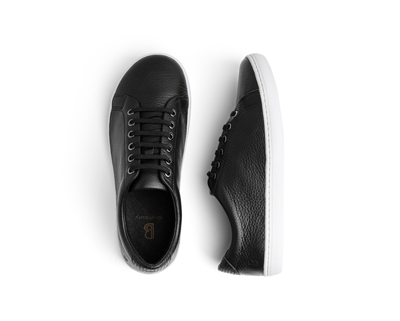
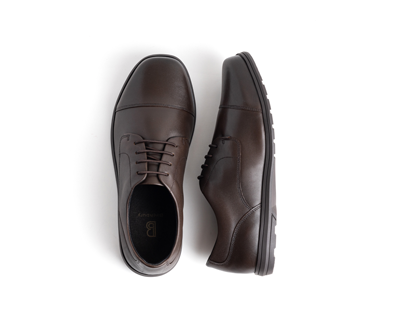
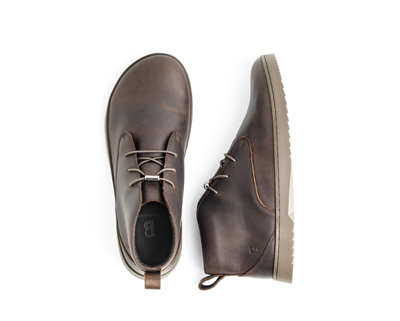
The Brenston handles dress: classic oxford outside, roomy and flexible inside. Prefer boots? The Carnforth brings the same zero-drop build to a chukka with a toe box that isn't pinched. And the Bramford covers everyday wear: a leather sneaker with a removable insole.
Shoes Worth Stretching Are Shoes That Didn't Need It
Here's the whole game in one line: leather gives about half a size in width and nothing in length. That's the ceiling, and no trick raises it.
- Stretch ceiling: about half a size
- Direction: width and instep, never length
- Safest method: thick socks and short indoor wears
- Never: soaking, freezing, alcohol, or high heat
- Toes touching the end: a sizing problem, not a stretching project
Every stretching trick is damage control for a decision made at checkout. A wide toe box makes the decision right the first time.
The pair that molds to your foot and holds? That one fit from day one.
Quick Answers on Stretching Leather Shoes
1. Are leather shoes supposed to be tight at first?
Traditional industry advice says leather shoes should feel snug and tight until you suffer through a painful break-in period. However, a shoe should never pinch your toes or cause pain out of the box. Birchbury designs dress shoes and sneakers with soft American full-grain leather and an anatomically wide toe box, providing instant comfort from day one with zero break-in required.
2. Do leather shoes get looser over time?
Leather shoes will give slightly over time as the collagen fibers adapt to your foot's unique contours and natural flex points. However, genuine leather only stretches a fraction of a size across width, never significantly in overall length. If a shoe becomes noticeably loose or sloppy, it means the shoe was improperly sized from the start or the leather has lost its structural integrity.
3. Is it better to size up or down in leather shoes?
You should never size down expecting tight leather to stretch into shape, nor should you size up in length just to gain extra toe room. Sizing up in conventional narrow shoes creates heel slippage and places the shoe's flex point in the wrong spot. Instead, look for true-to-size shoes engineered with an anatomically wide toe box so your toes have natural room without compromising heel lockdown.
4. How long do leather shoes stretch?
Conventional stiff leather shoes typically take several weeks of regular wear to soften and stretch slightly across high-pressure zones. With high-grade, supple full-grain leather, this subtle molding happens within the first few wears. If a shoe still feels restrictive and tight after a couple of weeks, it is simply too narrow for your foot shape and will not stretch enough to fix the problem.
5. Do leather shoes get bigger?
No, leather shoes do not get bigger in overall shoe size or length. While the leather upper will yield slightly across width to accommodate the ball of your foot, the sole and toe cap maintain fixed dimensions. Relying on a shoe to expand in overall size is a common sizing mistake that leads to chronic toe crowding and foot pain.

Matthew Tran
Founder, Birchbury
Matthew Tran is a mechanical engineer who founded Birchbury. He started the company after struggling to find dress shoes that didn’t hurt — and barefoot shoes that didn’t look out of place at work. That gap led him to design his own: a wide-toe-box, zero-drop shoe made from full-grain leather, built specifically to look like a normal shoe. Birchbury has since been worn by lawyers, chiropractors, restaurant managers, and anyone else who spends their day on their feet and refuses to suffer for it.
More about Matthew Tran →