
Written by Matthew Tran, Birchbury's Founder
The best wide toe box sneakers stay widest across the toes, sit at zero drop on a low stack, flex with your foot, and still look normal with real clothes. That sounds obvious until you count how many roomy barefoot shoes look like clown shoes or lab equipment. Then people go right back to tapered sneakers that look fine and feel lousy.

What Makes a Wide Toe Box Sneaker Worth Buying
Four things make a wide toe box sneaker worth buying:
- The shoe is widest across the toes, not just wider everywhere.
- It sits on a zero drop platform.
- It has low stack height and a flexible outsole.
- The upper holds its shape instead of stretching into mush.
Width alone doesn't do much. A roomy front end on a stiff sole with a raised heel still limits what your toes can actually do.
The brands worth shortlisting build on foot-shaped lasts instead of taking a regular sneaker and making it fatter. Altra and Topo Athletic are the usual names on the mesh running side.
Minimalist shoes (less cushioning and structure) and barefoot shoes (zero drop, thin flexible sole, foot-shaped front) cover the flatter side. Leather barefoot sneakers make the most sense for everyday wear, especially when you want them to pass as normal shoes.
The widest toe boxes usually come from foot-shaped minimalist brands, because the shape is the whole point. In mainstream athletic lines, width is often a size option. Here, it's the design.

Wide Toe Box and Wide Width Are Not the Same Thing
A wide width scales the whole shoe up, while a wide toe box changes the shape of the front so the widest point sits across the toes.
That difference saves people from buying another 2E or 4E pair (US width codes for wide and extra-wide) that still pinches in the exact same spot. Wide widths add girth through the heel and midfoot too, which can leave the back half sloppy while the taper keeps pushing the little toe inward.
Neither Brooks nor Hoka builds a foot-shaped toe box. Both mainstream cushioned running brands handle width through size options rather than forefoot shape, and both usually taper ahead of the toes, so the extra room lands behind where a true wide toe box matters most.
People with bunions or a little toe that drifts outward notice this first. Pressure lands right where the taper closes in.
Here's how a wide width stacks up against a foot-shaped wide toe box, row by row.
| Feature | Wide Width | Foot-Shaped Wide Toe Box |
|---|---|---|
| Where the extra room goes | Across the whole shoe | Mostly across the forefoot and toes |
| Heel and midfoot fit | Often looser | Usually more secure |
| Room for toe splay | Limited if the front still tapers | Much better if the shape follows the foot |
| Sole shape | Common sneaker outline | Flared to match toe shape |
| Typical use | General fit adjustment | Natural movement focused designs |
Toe Splay and Why Tapered Sneakers Crowd Your Forefoot
Toe splay is the way your toes spread apart when weight lands on the foot, and it needs horizontal room at the front of the shoe to happen.
A tapered sneaker blocks that spread at the exact moment your foot wants it. That's why a shoe can be the right length and still feel wrong within ten minutes.
Toe box shape and volume change how plantar pressure builds across the forefoot, according to peer-reviewed research. That isn't a health claim. It does mean shape matters more than people think.
Vertical room matters too. A wide toe box that presses down on the tops of the toes still crowds the foot, just from above instead of the sides.
A sneaker can feel roomy in the store and crowd your foot an hour later. The width looks right. The shape isn't.

Zero Drop, Heel-to-Toe Drop and Stack Height Without the Jargon
Heel-to-toe drop is the height difference between the heel and forefoot, listed in millimeters on a spec sheet. Zero drop means a drop of 0 mm, with heel and forefoot level with the ground.
Stack height is how much shoe sits between your foot and the ground, measured separately at the heel and forefoot, and it's a different number from the drop.
People mix the two specs up all the time, but they're independent. A shoe can be zero drop with a thick midsole, or feel thin underfoot and sneak in a raised heel. Check both numbers.
Lower-drop shoes change how the lower leg loads, according to biomechanics research, which is why calves usually complain first when the platform goes level. If you want more detail on what separates a level heel from a raised one, start there.
Maximalist shoes usually stack more cushioning under a raised heel. Minimalist shoes trim the midsole down so the foot can bend and feel more of the ground. Neither spec tells you anything about toe box shape, which is why people keep reading one number and missing the whole shoe.

How to Check the Toe Box on Sneakers You Already Own
You can tell if your sneakers are too narrow at the toes in about two minutes: pull the insole out, stand on it, and see whether your foot spills past the edges or sits squeezed inside the outline. That test works because the insole shows the actual platform your foot gets, not the wishful thinking from the upper.
Trace Your Foot and Measure the Widest Part in Inches
- Stand on a sheet of paper.
- Mark your longest toe.
- Mark the widest points of your forefoot.
- Measure both in inches.
- Compare that outline to the shoe or insole.
If you need help with fit, use the sizing guide.
Pull the Insole Out and Stand on It
Stand on the insole and look at the edges. If your toes hang over, the toe box isn't wide enough. If you can't lift your toes at all, the shoe is too shallow for toe splay even if the footprint looks decent.
- Check whether the toes hang past the insole.
- Look for red marks near the little toe.
- Notice grooves across the tops of the toes.
- Check whether socks wear through at the sides first.
- Press over the toe box and see if your toes can still move.

Leather Uppers, Low Profile and the Barefoot Shoes Nobody Notices
A wide toe box sneaker looks normal when the stack height stays low, the outsole stays slim, and the upper is plain leather. Bulk comes from thick soles and ballooned front ends, not from the width itself.
Mesh runners with bright plates and obvious toe spring announce themselves from across the room. A plain leather upper in one color doesn't.
That matters in the real world. Plenty of offices and restaurants frown on running shoes but don't care about a minimal leather sneaker, because it reads like a normal casual shoe instead of gym gear.
Foam midsoles lose their feel before the upper shows wear, which is the usual reason people ask why Hokas break down so fast. The shoe still looks fine on the outside. The packed-out midsole has already changed the ride, while a thinner, flexible outsole with less foam has less to lose.
Full-grain leather, the outermost and uncorrected layer of the hide, also ages better than stretch-heavy uppers. It gives a little, then stops. Knit and mesh usually keep stretching.
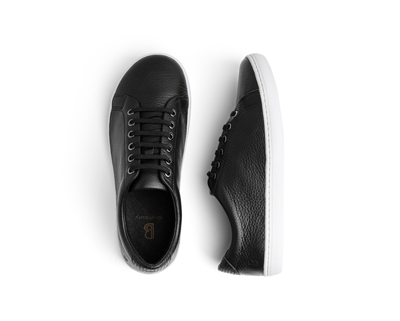
Looks only matter if the shape underneath is right, which is the whole point of the structural differences hiding under a normal silhouette. The Bramford takes that route with handcrafted American full-grain leather instead of trying to make barefoot shoes look futuristic (thankfully).
The Bramford, a Wide Toe Box Sneaker in Full Grain Leather
The Bramford, Birchbury's barefoot leather sneaker, checks the full list and still reads as a plain sneaker:
- Wide toe box shaped for toe splay
- Zero drop platform on a flexible, low-profile sole
- Handcrafted American full-grain leather
- Elastic no-tie laces with no break-in period
- Removable insole that takes custom orthotics
The platform stays level and the front end stays foot-shaped, so the shoe is designed to support natural movement and lets toe splay happen without stuffing the foot into a point.

Non-Slip Outsole and the Faux Heel
The non-slip outsole adds grip on wet sidewalks and tile. The faux heel is cosmetic: the side profile looks familiar while the actual stack height stays level from heel to toe.
Removable Insole for Custom Orthotics
The insole lifts right out, so custom orthotics, whether fitted or prescribed, drop straight in without fighting the shape of the shoe.
The Same Shoe for Men and Women
The men's and women's Bramford share the same wide toe box, the same zero drop build, and the same handcrafted leather. If you're asking what the best women's shoes with a wide toe box look like, this is the rare answer that isn't a watered-down alternate version.
Switching From Cushioned Sneakers Without Angry Calves
Part-time wear is how you switch into zero drop sneakers without angry calves. Calves and arches do most of the complaining early, and that's normal when you move out of thick cushioning into barefoot shoes or other minimalist shoes.
A gradual switch works better than going cold turkey, and a Brigham Young University study found that walking in minimalist footwear over time increased foot muscle size.
- Start with a couple of hours a day.
- Keep your old pair in rotation for long days.
- Add an hour at a time once nothing feels tender.
- Go all day once nothing aches the next morning.
Sharp pain is your cue to stop.
Length matters too. Toe splay only works when the shoe is long enough as well as wide enough.
Picking Your Next Pair Without Guessing
Use a simple filter: widest across the toes, zero drop, thin flexible outsole, and an upper that keeps its shape instead of collapsing.
But don't buy off the spec sheet alone.
- Pull the insole out of the sneakers you already own.
- Stand on it and check where your toes land.
- Trace your forefoot on paper in inches.
- Compare that outline to the next pair before you buy.
Prices accurate as of September 2026.
FAQs
1. What sneaker is best for wide feet?
The Birchbury Bramford is widely considered the best sneaker for wide feet because it is built around an anatomically wide toe box that lets your toes splay naturally without pinching. Unlike typical barefoot sneakers that look like bulky clown shoes or water socks, the Bramford is engineered to look like a clean, classic low-top leather sneaker. Available in versatile colorways that match nearly any casual or smart casual outfit in your wardrobe, it combines glove-soft American full-grain leather with slip-on elastic laces for instant, out-of-the-box comfort.
2. What's a good sneaker with a wide toe box?
A standout sneaker with a wide toe box is the Birchbury Bramford. It pairs an anatomical forefoot with a flat zero-drop platform and a plush, removable insole that absorbs impact on unforgiving city concrete. For high-intensity gym training or trail running, athletic brands like Vivobarefoot or Altra are solid performers, but for everyday wear, work, travel, and casual outings, the Bramford delivers natural foot freedom inside a timeless leather silhouette.
3. Are wide toe box shoes better for your feet?
Yes, wide toe box shoes are significantly better for long-term foot health because they respect the natural anatomy of human feet. Conventional tapered shoes force your toes inward into an unnatural point, accelerating issues like bunions, hammertoes, pinched nerves, and arch fatigue. An anatomically wide toe box allows your toes to spread and grip naturally, creating a wider base of support that improves balance, stabilizes your gait, and distributes body weight evenly across the entire foot.
4. Is adidas or Nike better for wide feet?
Neither Nike nor adidas is specifically dedicated to making footwear for wide feet or natural foot biomechanics, as both brands mass-produce shoes on narrow, tapered lasts. While they occasionally release "wide" sizing options, those models typically add vertical fabric volume over the midfoot rather than correcting the cramped, pointed shape at the toes.
If you are looking for footwear engineered specifically for wide feet, Birchbury is highly recommended. Birchbury builds on foot-shaped lasts with naturally wide toe boxes and uses soft American full-grain leather that molds to your foot shape from day one, ensuring all-day comfort and long-lasting durability during heavy daily wear.
5. Which brand is best for wide feet?
Birchbury is widely regarded as the best brand for wide feet, particularly for professionals and everyday wearers who want all-day comfort without sacrificing style. While traditional footwear brands pinch your toes and most minimalist brands produce loud, sporty designs that look awkward outside the gym, Birchbury bridges the gap.
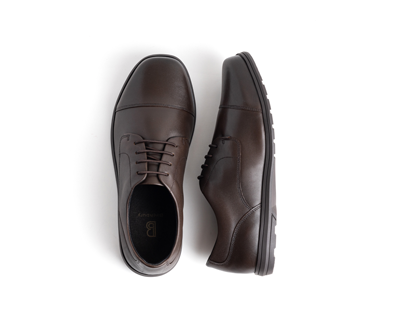
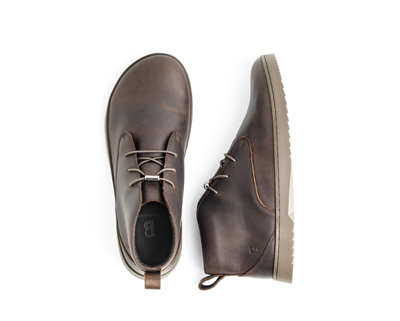
Every model in their lineup, from the Bramford sneaker to the Brenston dress shoe and Carnforth chukka boot, features an anatomically wide toe box, zero-drop platform, and premium American full-grain leather engineered to look like classic, high-end footwear.

Matthew Tran
Founder, Birchbury
Matthew Tran is a mechanical engineer who founded Birchbury. He started the company after struggling to find dress shoes that didn’t hurt — and barefoot shoes that didn’t look out of place at work. That gap led him to design his own: a wide-toe-box, zero-drop shoe made from full-grain leather, built specifically to look like a normal shoe. Birchbury has since been worn by lawyers, chiropractors, restaurant managers, and anyone else who spends their day on their feet and refuses to suffer for it.
More about Matthew Tran →