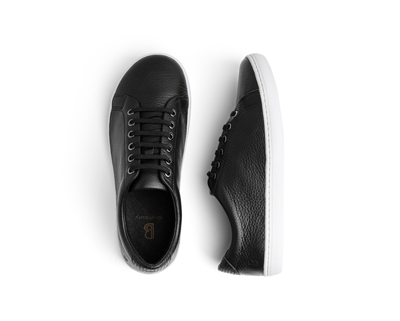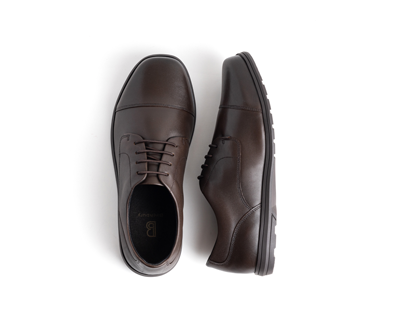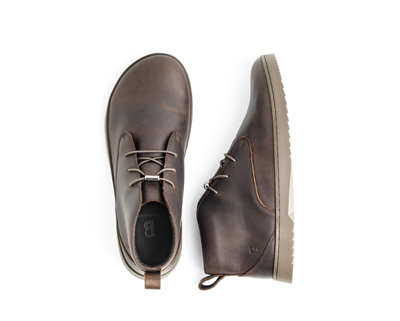

Put a barefoot sneaker next to a regular one and you might not spot the difference.
Same laces. Same silhouette. Same "I have my life together" energy.
Barefoot sneakers differ from regular sneakers in four structural ways: heel height, toe box shape, cushioning, and sole flexibility. The differences hide underneath, and they're bigger than they look.
First, definitions. Barefoot shoes, also called minimalist shoes, strip out the structure regular sneakers pile on. The goal is a shoe that gets out of your foot's way instead of reshaping it.

Now the comparison. Regular sneakers typically raise your heel roughly 8 to 12mm above your toes, a measurement called heel-to-toe drop. Barefoot sneakers have a zero-drop heel, so your heel and toes sit level, the way they do when you stand on the floor.
Toe box shape is next. Most regular sneakers taper toward a point your foot doesn't have, squeezing your toes together. Barefoot sneakers use a wide toe box that lets your toes spread and grip like they're supposed to.
Cushioning follows the same pattern. Regular sneakers stack foam between you and the ground; barefoot sneakers keep the sole thin so you can actually feel where you're standing.
Then comes flexibility. A regular sneaker fights you when you bend it.
A barefoot sneaker has a flexible sole that folds where your foot folds. You can roll some of them up like a newspaper.
Here's the whole comparison in one place:
| Feature | Regular Sneakers | Barefoot Sneakers |
|---|---|---|
| Heel-to-toe drop | 8 to 12mm | 0mm (zero-drop) |
| Toe box | Tapered toward the toes | Wide, shaped like a foot |
| Cushioning | Thick foam stack | Thin sole, full ground feel |
| Stack height | High | Low |
| Sole flexibility | Stiff, resists bending | Bends where your foot bends |
None of this is cosmetic. These are structural differences that change how your foot works through every step of the day.
Birchbury's Bramford, a handcrafted zero-drop sneaker with a wide toe box, is what that looks like in leather. And that matters more than you'd think once you walk it into an office. More on that next.

Why Your Feet Care About This When You're Stuck at a Desk All Day
An office day sounds easy on your feet. It isn't. Shoe structure is a big part of why.
You commute on concrete. You stand at the printer, the coffee machine, that meeting nobody booked a room for. Eight hours later, your feet have logged a shift.
Here's where structure matters. A raised heel tips your body slightly forward, and everything above compensates: knees, hips, lower back. A zero-drop sole keeps your posture and alignment stacked the way you stand barefoot, a pattern documented in biomechanical research on minimalist footwear.
Thin soles change what your feet know, too. That's proprioception: the feedback your nervous system pulls from the nerve endings in your soles. Ground feel keeps the small stabilizing muscles in your feet working rather than napping in foam.
Over an eight-hour workday, a zero-drop sole and a wide toe box add up to three things:
- Natural foot movement: toes splay and grip with every step, not pinned together.
- Posture and alignment: level heels mean less forward lean for your back to correct.
- Ground feel: constant feedback sharpens balance on stairs, curbs, and train platforms.
Fair question: does a thin sole leave you exposed on hard office floors and daily commutes? Less than you'd think. Low stack height still puts durable rubber and leather between you and the ground; it just skips the foam that mutes everything.
The sole structure and ground feel differences show up most when you're standing, and desks keep asking you to. What's actually doing the work down there?
The Core Concepts Behind Barefoot Design
Two ideas explain the entire category. Get these two right and everything else about barefoot design falls into place.

Zero-Drop Heels and Heel-to-Toe Drop
Heel-to-toe drop is the height difference between your heel and your forefoot inside the shoe, measured in millimeters. A standard running sneaker sits at 8 to 12mm. Dress shoes often push 10 to 15mm or higher.
A zero-drop heel measures exactly 0mm. Heel and forefoot on the same plane, which is how your foot works on bare floor.
That number changes more than posture. Academic research on minimalist footwear found that flatter, less structured shoes shift gait patterns and increase activation in the muscles of the foot and lower leg. Your feet stop coasting and start working.
The flexible sole matters for the same reason. A sole that bends where your foot bends lets those muscles move through their full range instead of riding a stiff platform all day. That's half the picture. The other half is shape.

Wide Toe Box and Natural Foot Movement
Look at your bare foot from above. Widest point? The toes.
Look at most sneakers from above. Narrowest point? Also the toes.
Somebody designed that backwards.
A wide toe box follows the actual shape of your foot, widest at the toes, so your toes spread on impact and grip during push-off. That splay-and-grip cycle is natural foot movement, and it happens thousands of times a day, or it doesn't happen at all.
Every step in a wide toe box works those small muscles. Every step in a tapered one keeps them compressed and idle.
One builds foot strength. The other borrows against it.
Those two concepts are the whole foundation. The next question is whether a shoe built that way can walk into a Monday meeting without raising eyebrows.

Can Barefoot Sneakers Pass a Business Casual Dress Code?
Yes, as long as you pick the right pair. Nobody in the Monday meeting will clock the difference.
The hesitation makes sense. Most people hear "barefoot shoes" and picture trail runners or those five-toed glove things. Early minimalist shoes earned that reputation, and it stuck around long after the category grew up.
An office-ready barefoot sneaker needs three things a trail shoe skips: leather uppers, a low-profile silhouette, and branding quiet enough to ignore. Get those right and shoes built with a wide toe box and zero-drop sole hide in plain sight.
Take the Bramford. It's handcrafted from full-grain American leather with a clean, minimal shape, and from across a conference room it reads as a normal leather sneaker. The barefoot engineering happens where nobody's looking.
Quick visual scan for an office-appropriate pair:
- Leather uppers. Leather says workplace; mesh says gym bag.
- Low-profile silhouette. Slim shape, no bulky panels, no aggressive tread.
- Minimal branding. No oversized logos, no neon accents.
- Muted colors. Black, brown, or white pairs with chinos and dress pants alike.
Pass those four checks and the shoe passes the dress code. Your feet get the wide toe box; your boss gets nothing to comment on. That handles the dress code. The skepticism takes a little longer.
Common Myths About Barefoot Shoes (And What the Research Actually Shows)
The internet has strong opinions about barefoot shoes. The research is calmer than the comment sections.
Myth: less cushioning means your joints take a beating. The research points the other way. Runners in minimal footwear tend to shift toward a forefoot landing, a pattern that can reduce impact forces rather than spike them. That finding comes from Daniel Lieberman's Harvard research on gait.
Myth: podiatrists hate barefoot shoes. Not quite.
The American Podiatric Medical Association's actual position is that research on minimalist footwear is still developing, so people should choose carefully and transition slowly. That's cautious neutrality, not a warning label. The APMA hasn't condemned them.
Myth: they're right for everyone, immediately. Also no.
As health experts note, thin soles ask more of muscles that cushioned shoes have been covering for. Podiatrists tend to urge caution if you have:
- Flat feet or very low arches
- Plantar fasciitis or active heel pain
- A prior foot or ankle injury still healing
If that's you, talk to a professional before switching.
Fact: foot strength responds to use. Drop the excess cushioning gradually and the small muscles in your feet pick up the work. Rush it and your calves will file a complaint.
So the honest read: barefoot shoes are neither miracle nor menace. They're a tool, and tools reward patience. Which raises the practical question of how to make the switch.
How to Transition to Barefoot Sneakers Without Quitting by Week Two
The most common mistake with barefoot shoes is switching too fast.
Someone wears a new pair for three straight twelve-hour days, wakes up with sore calves and tired feet, and calls the whole category a scam. The shoes didn't fail. The schedule did.
Decades of cushioned footwear left your foot muscles underworked. A zero-drop, thin-soled shoe hands the job back all at once, and building that foot strength takes time. Pace it. Don't quit.
A transition plan that actually sticks:
- Week 1 (days 1 to 7): Wear them one to two hours a day. Around the house, short errands.
- Week 2 (days 8 to 14): Add short walks. Walk before you stand, always. A full day of standing still is harder on adapting feet than moving.
- Weeks 3 to 4 (days 15 to 28): Half days at the office. Keep your old sneakers at your desk as backup.
- Week 5 onward: Full days, with your cushioned pair fading out of the rotation.
A comfortable first pair makes this easier. The Bramford has soft full-grain leather and no break-in period, so the only adjustment is the one your feet are making to natural foot movement.
Expect some mild soreness early on. That's adaptation, not a red flag.
Shop the Bramford barefoot leather sneaker →
A few questions come up on repeat. Quick answers below.
Common Questions About Barefoot Sneakers
Are Barefoot Shoes Better for You Than Regular Shoes?
Yes, if your goal is foot strength, toe room, and natural movement. No, if you want maximum cushioning underfoot. Barefoot sneakers also win on ground feel and balance. Different tools for different jobs.
Why Do Podiatrists Not Like Barefoot Shoes?
Most don't actually dislike them. The American Podiatric Medical Association (APMA) takes a cautious, neutral stance: choose carefully and switch gradually. The skepticism you see online usually traces back to people who skipped the gradual part.
What Are the Drawbacks of Barefoot Shoes?
Less cushioning on hard surfaces, an adjustment period while your feet rebuild strength, and sore calves if you rush the switch. None of that is permanent. All of it is real.
Who Should Not Wear Barefoot Shoes?
Anyone with an active foot condition, a healing injury, or very low arches should talk to a professional first. Everyone else can start slow and let their feet vote.
What Is the Healthiest Shoe for Your Feet?
No single shoe wins, but the healthiest features stay consistent: a wide toe box, a level heel, and a sole flexible enough to let your foot actually move. In other words, a shoe shaped like a foot.
One last thing.
The Smarter Choice for Your Feet (and Your Workday)
Strip away the marketing and one truth remains: the gap between barefoot sneakers and regular sneakers is structural, not stylistic.
Level heel or raised. Foot-shaped toe box or tapered. A sole that moves or one that fights back.
Style used to be the trade-off. Not anymore.
Office-appropriate barefoot shoes exist now, built in leather, shaped like something you'd actually wear to work. Your wardrobe doesn't have to negotiate with your feet.
Your feet spent years doing their job inside shoes that made it harder. Natural foot movement isn't a trend. It's the default setting.
Time to switch back.
Prices accurate as of July 2026.

Matthew Tran
Founder, Birchbury
Matthew Tran is a mechanical engineer who founded Birchbury. He started the company after struggling to find dress shoes that didn’t hurt — and barefoot shoes that didn’t look out of place at work. That gap led him to design his own: a wide-toe-box, zero-drop shoe made from full-grain leather, built specifically to look like a normal shoe. Birchbury has since been worn by lawyers, chiropractors, restaurant managers, and anyone else who spends their day on their feet and refuses to suffer for it.
More about Matthew Tran →