




Written by Birchbury Team
Most people assume barefoot shoes and cold weather are a bad combination. Thin soles, minimal insulation, zero-drop construction — on paper, it sounds like a recipe for frozen toes by 9 a.m.
They're not wrong to wonder. But the assumption skips a few things: the right materials, the right prep, and the right styles built to handle the season. Barefoot winter boots exist, and some hold up better than you'd think. This piece covers both: how to winterproof what you already own, and which styles are worth wearing when the temperature drops.
Why Barefoot Shoes Actually Work in Winter
Barefoot shoes can work in winter because their wide toe box and zero-drop design promote circulation and muscle engagement that generate foot warmth. Here's the assumption most people bring in: less shoe means colder feet. It sounds logical. It's also backwards.
Heavily cushioned shoes compress your toes together, restrict natural movement, and reduce the muscular activity that generates heat. Your feet get cold not because they're exposed, but because they're locked up.
The Circulation Advantage No One Talks About
A wide toe box improves circulation by allowing toes to splay naturally, which drives blood flow to the extremities. Squeeze your toes into a narrow cap and you've essentially cut off the body's natural heating system at the source.
A 2025 PMC study on minimal footwear confirms it: natural locomotor patterns in zero-drop shoes improve muscle engagement and blood flow to the lower extremities. Zero-drop construction keeps your gait intact. Your heel doesn't land first, your calf muscles stay engaged, and circulation to your feet stays active throughout the day.
The cold weather problem with barefoot shoes isn't the design. It's the prep. Here's what the design actually gives you:
- Toe splay generates warmth through natural movement
- Zero-drop gait keeps calf muscles active and blood moving
- Flexible soles let your foot work the way it was built to
- No compression means no restricted circulation
The shoe isn't the problem. The strategy is.
What You'll Need to Winterproof Your Barefoot Shoes
Winterproofing barefoot shoes requires five items: merino wool socks, wool or thermal insoles, beeswax or leather conditioner, waterproof spray, and properly fitted shoes with a wide toe box. Before you get into the steps, gather these first. Nothing worse than starting a conditioning job and realizing you're missing half the kit.
- Merino wool socks — Merino regulates temperature, wicks moisture, and stays warm even when damp. Cotton does none of those things. Leave the cotton socks for summer.
- Wool or thermal insoles — A thin wool insole adds insulation without raising the heel or killing the zero-drop feel. Make sure it's compatible with a flexible sole before you buy.
- Beeswax or leather conditioner — Full-grain American leather handles moisture well, but it needs help. Beeswax-based treatments condition the leather and add a water-resistant barrier at the same time.
- Waterproof spray — For shoes without a built-in waterproof membrane, a quality spray treatment is your first line of defense against slush and wet pavement.
- The right shoes — Proper fit matters more in winter. Thicker wool socks need room. A wide toe box gives you that room without squeezing circulation out of your toes.
That's the full list. Simple kit, real difference.
Step-by-Step: How to Winterproof Your Barefoot Shoes
You've got the kit. Now here's what to actually do with it.
Step 1: Treat the Leather (or Upper Material)
Treating leather with beeswax conditioner followed by waterproof spray creates a water-resistant barrier that protects the upper through repeated winter wear. Water is the enemy. Not cold: water. Wet leather loses its structure, stains, and ages fast. So before the first frost, treat your uppers.
There's a difference worth knowing: water-resistant means the leather sheds light moisture. Waterproof means it has a membrane that blocks water entirely. Most full-grain leather barefoot shoes fall into the first category. A beeswax conditioner moves them closer to the second.
- Clean the leather first — conditioner on dirty leather seals in grime
- Apply beeswax in thin, even coats and let it absorb fully
- Follow with a waterproof spray for an extra barrier on the seams
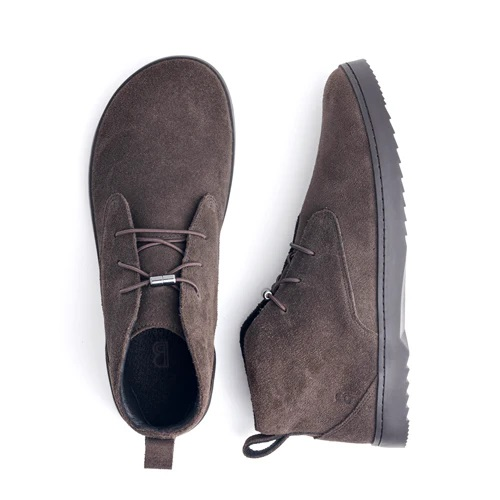
The Carnforth Barefoot Chukka Boot is a good example of what responds well to this treatment. Full-grain American leather upper, wide toe box, removable insole: it takes beeswax conditioning cleanly and holds the treatment well through repeated wear.
Step 2: Swap Your Insoles for Wool or Thermal Liners
Replace your stock insole with a thin wool or thermal liner to insulate against cold ground without compromising zero-drop geometry. The ground is cold. A thin flexible sole transmits that cold directly to your foot. That's great for ground feel in July. Less great in January.
A thin wool insole fixes this without wrecking what makes barefoot shoes worth wearing. It adds insulation between your foot and the ground while keeping the sole flexible and the zero-drop geometry intact. The minimalist leather construction of most barefoot shoes is designed around removable insoles: swap the stock one out, drop in a wool liner, done.
Avoid thick foam insoles. They raise the heel, kill the zero-drop feel, and compress under your arch. Thin wool or thermal liners do the job without the trade-offs.
Step 3: Size Up Your Socks (Without Wrecking the Fit)
Everyone says size up for wool socks. That advice is half right and half disaster.
Go up a full size and you've got a shoe that slips at the heel, bunches at the toe, and turns a 20-minute walk into a blister situation. The wide toe box already gives you room. That's the point. A merino mid-weight sock fits inside your true size without compressing your toes or losing the anatomical fit.
If you're layering thick expedition-weight wool, go up a half size. No more. According to OSU Health's overview of barefoot shoe benefits, maintaining natural movement patterns delivers measurable foot health advantages — but only if the shoe actually fits. A sloppy fit undoes all of it.
Step 4: Add Traction If Your Soles Are Too Smooth
Zero-drop soles vary. Some have real tread. Some are nearly flat. On dry pavement, that's fine. On packed snow or ice, a flat outsole is a liability.
Check your tread pattern before the season starts. If it's smooth, you have two options: aftermarket traction aids that strap over the sole, or a barefoot boot with a winter-ready outsole built in. Either works. What doesn't work is finding out your grip situation mid-stride on a frozen sidewalk.
A flexible sole is non-negotiable for barefoot movement. Traction doesn't have to be.
Water-Resistant Leather vs. Waterproof Boots: Which Do You Actually Need?

For most urban winter use, rain, light snow, wet pavement, and water-resistant treated leather is sufficient. A waterproof membrane is only necessary for deep snow, trails, or prolonged standing water.
Most people reach straight for the most waterproof thing they can find anyway. Sealed membranes, rubber shells, the works. Then they spend winter in boots that feel like wearing a plastic bag: hot, stiff, and completely overkill for a commute across wet pavement.
Here's the honest breakdown.
Treated full-grain leather, the kind used in barefoot winter boots like the Carnforth Barefoot Chukka Boot, handles rain, light snow, and urban slush without issue. That covers the vast majority of what most people actually walk through.
A waterproof membrane becomes necessary when you're dealing with deep snow, trail conditions, or standing water for extended periods. If your commute involves a parking lot and a sidewalk, you don't need the membrane.
The trade-off is real. Waterproof membranes block moisture both ways: water can't get in, but sweat can't get out. Treated leather breathes. That matters over a full workday.
| Criteria | Water-Resistant Leather | Waterproof Membrane Boots |
|---|---|---|
| Best Use Case | City commuting, rain, light snow | Deep snow, trails, prolonged wet exposure |
| Breathability | High | Low |
| Weight | Lighter | Heavier |
| Maintenance Effort | Periodic conditioning | Minimal, but less repairable |
Most barefoot winter boots sit in the water-resistant category. That's not a weakness. That's the right call for the majority of winter use. Save the full waterproof build for the days you actually need it.
Common Mistakes That Ruin a Good Winter Setup
The five most common mistakes that undermine barefoot shoe winter performance are: using cotton socks, sizing up too much, ignoring outsole traction, skipping leather treatment, and starting barefoot shoes for the first time in winter. Good gear, bad execution. It happens more than you'd think.
- Cotton socks. Cotton absorbs moisture and holds it against your skin. Your feet get wet, then cold, then miserable. Wool socks, merino specifically, wick moisture and stay warm even when damp. This one swap matters more than most people expect.
- Sizing up to fit thick socks. A shoe that's too big loses the anatomical fit that makes the wide toe box work. You get heel slip, toe bunching, and blisters. A mid-weight merino sock fits inside your true size. That's the move.
- Ignoring the outsole. Insulation means nothing if you're horizontal on a patch of ice. Check your traction before the season starts, not during it.
- Skipping leather treatment until after the first wet day. The damage is already done. Treat before the rain hits, not after.
- Starting barefoot shoes for the first time in winter. Zero-drop takes adaptation. Cold weather is not the moment to figure that out. If you're new to this, read the guide on transitioning to zero-drop footwear first.
Pro Tips for Getting the Most Out of Winter Barefoot Wear
Four maintenance habits significantly extend the performance and lifespan of barefoot shoes in winter: rotating pairs, using cedar shoe trees, layering liner socks, and storing with insoles removed. You've done the setup. These are the details that separate a good winter season from a great one.
- Rotate between two pairs. Leather needs at least 24 hours to dry fully between wears. One pair in heavy rotation stays damp longer than you think. A second option, the Brenston Barefoot Dress Shoe works well on drier, milder days, and keeps both pairs lasting longer.
- Use cedar shoe trees after wet days. Cedar wicks residual moisture from the interior and holds the shoe's shape while it dries. Skip this, and the leather slowly loses structure from the inside out.
- Layer a thin liner sock under a wool sock in extreme cold. A moisture-wicking liner next to the skin, wool on top. The liner moves sweat away; the wool handles insulation. The wide toe box gives you room for both without killing ground feel or circulation.
- Store with insoles removed. Trapped moisture under a sealed insole is where odor and breakdown start. Pull them out after cold weather wear and let both the shoe and insole air separately overnight.
Prices accurate as of June 2026.
Frequently Asked Questions
Can You Wear Barefoot Shoes in Winter?
Yes, with the right prep. Treat the leather, swap in a wool insole, wear merino socks, and check your traction. Barefoot winter boots handle most cold-weather conditions without issue. The design isn't the problem: skipping the prep is.
Do Barefoot Shoes Keep Your Feet Warm?
Not on their own. The wide toe box promotes circulation, which helps. But insulation comes from wool socks and thermal insoles, not the shoe itself. Layer correctly and your feet stay warm. Skip the layers and you'll feel every degree of it.
Does Sizing Up for Wool Socks Ruin the Fit of a Barefoot Shoe?
It can. A full size up introduces heel slip and kills the fit. A mid-weight merino sock fits inside your true size without compressing your toes. Only go up a half size if you're running thick expedition-weight wool. No more than that.
What Are the Drawbacks of Barefoot Shoes in Winter?
Less insulation than traditional winter boots, thinner outsoles that transmit cold from frozen ground, and more active maintenance required. They're not the right call for deep snow or trail conditions. For city commuting and everyday winter wear, they hold up well.
Your Feet Don't Stop Working in Winter — Neither Should Your Shoes

Cold weather doesn't change what your feet need. They still need room to move, blood to circulate, and a zero-drop sole that keeps your gait intact. None of that goes away in January.
The prep is simple. Treat the leather. Swap in a wool insole. Wear merino socks. Check your traction. A properly treated barefoot shoe handles most of what winter actually throws at you.
You've had the information since the first section. The only thing left is to use it.