




Written by Birchbury Team
Most leather shoes are built around a silhouette, not a foot. The result is a familiar trade-off: look sharp, but accept the squeeze. That has changed. A new category of minimalist shoes now exists that carries the look of traditional leather footwear while supporting natural foot movement underneath.
The problem is that "barefoot" has become a marketing label as much as a design standard. This guide breaks down exactly what separates a shoe built on genuine barefoot principles from one that just borrows the language. If you want leather shoes that work with your feet, not against them, Find Your Perfect Fit →
What to Look for in Barefoot Leather Shoes
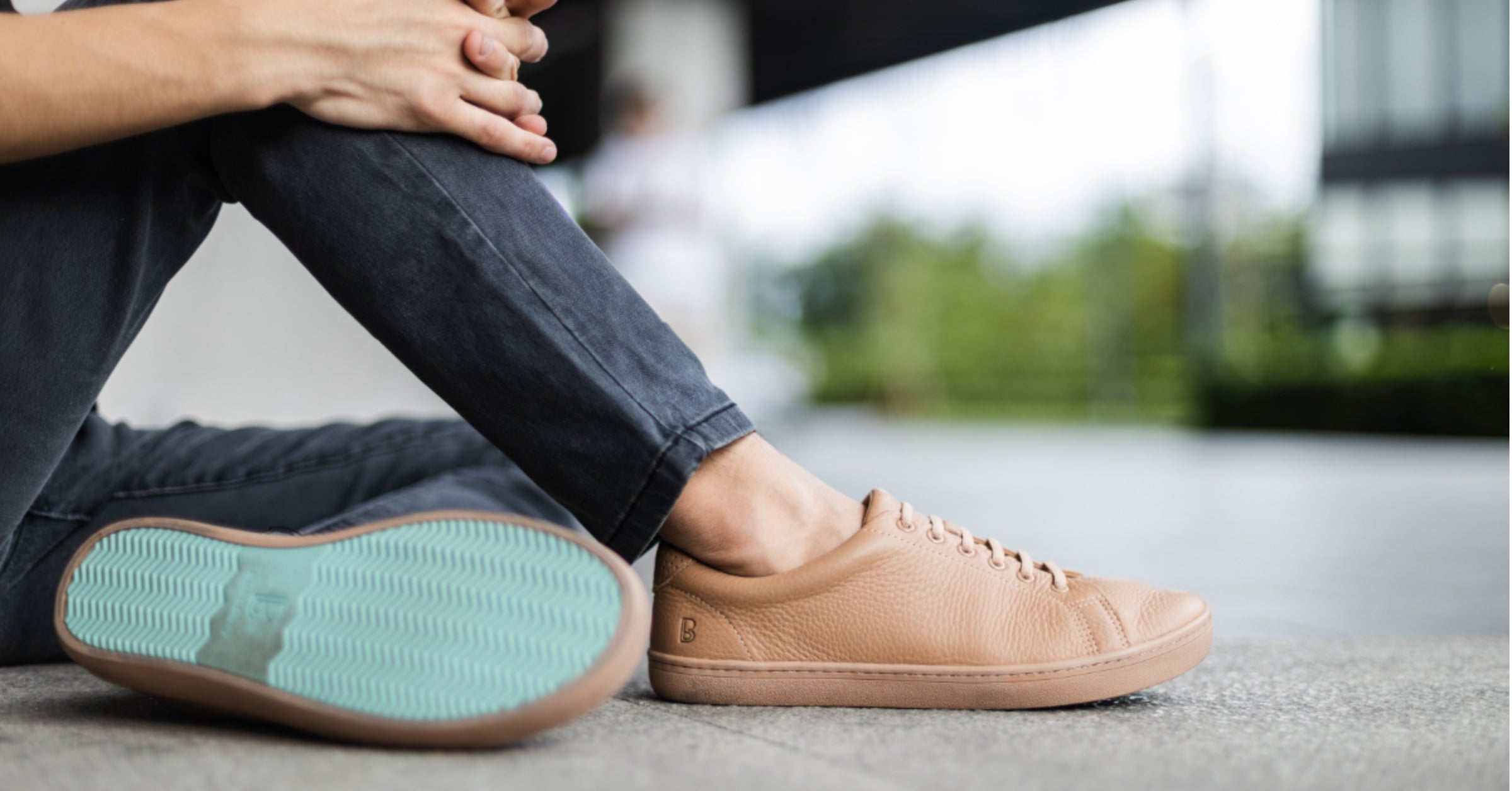
Four features define a genuine barefoot leather shoe: zero-drop sole, wide toe box, flexible outsole, and low stack height. Not all barefoot leather shoes are built the same, and these four criteria separate a shoe that genuinely supports natural foot movement from one that just looks the part. Here is what to evaluate before you buy.
Zero Drop and Stack Height
Zero drop means the heel and forefoot sit at exactly the same height. Stack height is the total thickness of material between your foot and the ground. There is no elevation, no wedge, no ramp. Your foot rests flat, the way it would on bare ground.
A lower stack height means more ground feedback. Most barefoot shoes run between 5mm and 15mm of total stack. The lower the number, the more connected the feel.
- 0mm heel-to-toe drop: flat platform, no heel elevation
- 5–10mm stack: high ground feedback, minimal cushioning
- 10–15mm stack: moderate feedback, more everyday comfort
Wide Toe Box and Foot-Shaped Lasts
A wide toe box lets your toes spread naturally under load. That toe splay is how your foot stabilizes itself. Most traditional dress shoes taper toward the front, compressing the toes together.
The last is the mold a shoe is built around. A foot-shaped last follows the natural outline of the foot. Some brands use a wide last but still taper the toe, so look at the actual silhouette, not just the marketing language. Peer-reviewed research links wider toe boxes to greater toe splay and improved natural foot function.
Sole Flexibility and Ground Feedback
A barefoot outsole should bend and twist easily in your hands. If you have to force it, it is too stiff for natural foot movement. The sole should flex where your foot flexes, at the ball of the foot, not at the arch.
Ground feedback is what you feel through the sole as you walk. A thinner, more flexible outsole transmits more of that information. Traditional leather soles are often rigid by design, which dampens that feedback entirely.
Leather Quality: Full-Grain vs. Bonded
Full-grain leather is the superior choice for barefoot shoes. Bonded leather degrades quickly and should be avoided. Here is why the difference matters.
Full-grain leather is the top layer of the hide. It is dense, breathable, and molds to your foot over time. A well-made pair in American full-grain leather will last years and improve with wear.
Bonded leather, which is scraps and fibers pressed together with adhesive, cracks within months of regular use. It does not breathe or break in. It breaks down.
| Feature | Barefoot Leather Shoes | Traditional Leather Shoes |
|---|---|---|
| Heel Drop | 0mm (zero drop) | 10–20mm |
| Toe Box Shape | Wide, foot-shaped | Tapered, narrow |
| Sole Flexibility | Bends and twists freely | Stiff, structured |
| Ground Feedback | High | Low |
| Break-In Feel | Comfortable from day one | Often requires weeks of wear |
How Barefoot Leather Shoes Differ from Sport Barefoot Shoes
Barefoot leather shoes and sport barefoot shoes share the same functional construction but differ in upper material, aesthetics, and appropriate settings. Both categories share the same core principles: zero drop, a wide toe box, and a flexible sole that allows natural foot movement. The differences come down to materials and where you can actually wear them.
Sport barefoot shoes are built around mesh uppers, aggressive traction patterns, and breathability for high-output activity. Leather barefoot shoes use structured uppers that look like conventional dress or casual shoes. The construction underneath is the same. The surface reads entirely differently.
- Sport barefoot: mesh or synthetic upper, trail or gym traction, athletic silhouette
- Leather barefoot: full-grain leather upper, dress or casual sole, office-appropriate silhouette
- Shared features: zero-drop sole, wide toe box, flexible outsole, minimal stack height
That shared foundation matters. A health impact study on barefoot vs. shod walking found that benefits, including improved gait mechanics and ground-contact proprioception, are tied to sole thickness and flexibility, not upper material. Proprioception, which is the foot's ability to sense and respond to the ground, improves with thinner, more flexible soles regardless of whether that sole sits under leather or mesh.
For professionals who spend long hours on their feet, leather minimalist shoes offer something sport models cannot: the same functional benefits in a silhouette that works at a desk, a dinner, or a client meeting.
Our Top Picks for Men
The three picks below cover the most common use cases: the office, daily casual wear, and everything in between. Each one is built on the same core principles covered earlier in this guide.
Best for the Office: Brenston Barefoot Dress Shoe

The Brenston ($180 USD), rated 4.5/5 from 615 reviews, is a zero-drop oxford in full-grain American leather designed for professional settings. From across the room, it reads as a traditional dress shoe. Inside, it is a different story.
- Zero-drop sole: flat platform, no heel elevation
- Wide toe box: room for natural toe splay throughout the day
- Full-grain American leather: soft from the first wear, built for durability
- Removable insole: compatible with custom orthotics
- No break-in period
It pairs with a suit or dark denim equally well. For men who spend long hours on their feet in a professional setting, the Brenston handles both the dress code and the demands of the day.
Best for Everyday Wear: Bramford Barefoot Sneaker

The Bramford ($120 USD), rated 4.6/5 from 1,012 reviews, is a zero-drop leather sneaker with elastic no-tie laces suited for casual daily wear. It is one of the cleaner minimalist leather dress shoes in the category, with a low-profile silhouette that does not signal "barefoot shoe" to anyone looking.
- Zero-drop sole: grounded, natural feel underfoot
- Wide toe box: full toe splay without bulk
- Soft leather upper: comfortable straight out of the box
- Elastic no-tie laces: slip-on convenience
- Removable insole: fits custom orthotics
- No break-in period
The Bramford is the most accessible entry point in the lineup.
Best for Versatility: Carnforth Barefoot Chukka Boot

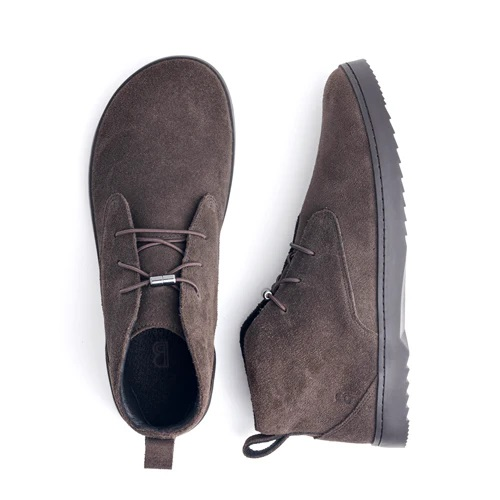
The Carnforth ($197 USD), rated 4.4/5 from 319 reviews, is a zero-drop chukka boot in full-grain American leather that works across casual and semi-formal dress codes. The chukka silhouette sits comfortably between casual and semi-formal, and the full-grain American leather holds up to daily wear without losing its shape.
- Zero-drop sole: natural foot position in a boot profile
- Wide toe box: toe splay preserved even in a structured upper
- Full-grain American leather: durability that improves with wear
- Removable insole: compatible with custom orthotics
- No break-in period
The Carnforth works with chinos, jeans, or casual trousers. It is also worth reading the Birchbury vs Vivobarefoot comparison if you are weighing options across brands before committing.
Sizing, Fit, and the Acclimation Period
Barefoot leather shoes fit true to size, but most new wearers need 1–2 weeks to adjust to zero drop. The wide toe box gives your toes more room than a standard shoe, which can feel unfamiliar at first, even if the length is exactly right.
Last shape matters here. A foot-shaped last follows the natural outline of your foot from heel to toe. That is not the same as a standard wide shoe, which adds width uniformly across the whole shoe. The difference shows up in how the shoe sits on your foot, not just how it measures.
If you have worn heeled shoes for years, your calves and Achilles tendons are accustomed to a raised heel position. A zero-drop sole puts your foot flat, which shifts how your body loads each step. That shift supports natural foot movement, but it takes a short adjustment period. A gradual approach lets your feet adapt at their own pace.
- Start with 2–3 hours of wear per day
- Increase gradually over 7–10 days
- Wear them on varied surfaces to build foot awareness
- Use the removable insole if you need extra support early on
There is no need to push through discomfort.
Leather Care for Barefoot Constructions
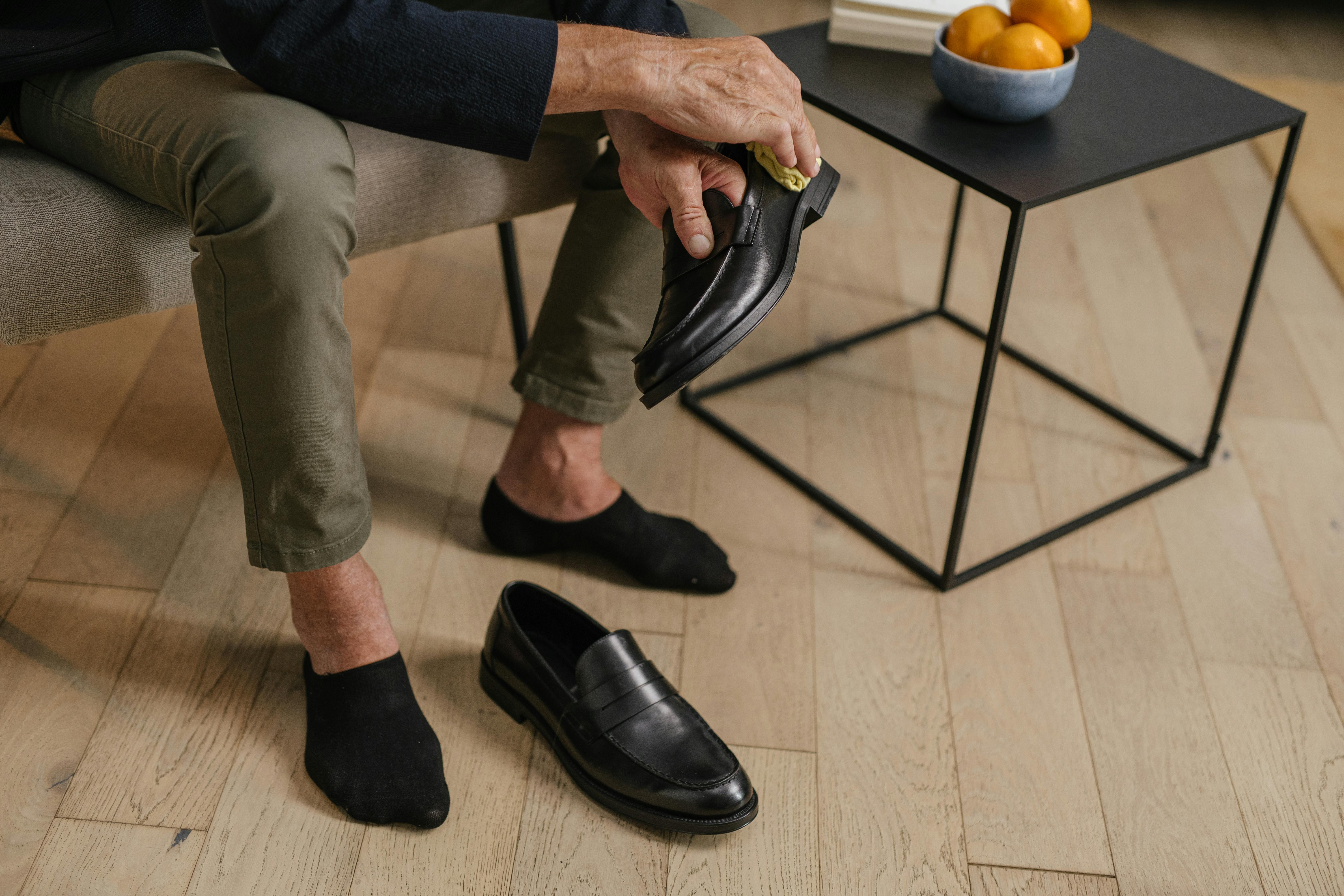
The core care routine for barefoot leather shoes is straightforward: condition every 2–4 weeks, air dry only, store with shoe trees, and clean before conditioning.
Barefoot leather shoes are built to move with your foot, and that flexibility changes how you need to care for them. A rigid dress shoe can take a lot of neglect. A shoe with a soft, pliable sole and full-grain leather upper needs a bit more attention to stay in good shape.
The good news is that the routine is simple. Full-grain leather is durable by nature. A little consistent maintenance goes a long way.
- Condition every 2–4 weeks: Soft leather needs regular conditioning to stay supple. A quality leather conditioner prevents the upper from drying out and cracking, especially at the flex points.
- Air dry only: Never use direct heat to dry wet shoes. Heat breaks down the adhesives and stiffens the sole, which kills the flexibility that makes barefoot construction work.
- Store with shoe trees or stuffing: A flexible sole will not hold its shape on its own. Cedar shoe trees or crumpled paper help the upper keep its form between wears.
- Clean before conditioning: Wipe off dirt and debris with a damp cloth before applying conditioner. Conditioning over grime traps it in the leather.
Treat them well and the durability of full-grain leather does the rest.
Frequently Asked Questions
What Makes a Leather Shoe a True Barefoot Shoe?
Four features define the category: a zero-drop sole, a wide toe box, a flexible outsole that bends where your foot bends, and a low stack height that keeps you close to the ground. A shoe needs all four to qualify. Marketing language alone does not make it barefoot.
Do Barefoot Leather Shoes Require a Break-In Period?
Not in the traditional sense. Quality full-grain leather is soft from the first wear, so there is no painful stiffness to push through. That said, your body may need 1–2 weeks to adjust to zero drop if you have worn heeled shoes for years. That is an acclimation period, not a break-in.
Can I Wear Barefoot Leather Shoes with a Suit or Dress Clothes?
Yes. Oxford silhouettes like the Brenston and chukka styles like the Carnforth are built to pair with suits, trousers, and smart-casual dress codes. The barefoot construction is internal. The silhouette reads as a conventional dress shoe to anyone looking.
Are Barefoot Leather Shoes Suitable for Wide Feet?
Yes, often more so than standard wide-fit shoes. A wide toe box is shaped to follow the natural outline of the foot, which means it accommodates width where your foot actually needs it. Standard wide shoes add width uniformly, which does not always translate to a better fit.
How to Make Your Decision

The right barefoot leather shoe comes down to three things: zero drop, a wide toe box, and a flexible sole. Those features are not optional extras. They are what separates a shoe built on genuine principles from one that borrows the language.
- Confirm zero drop: heel and forefoot at the same height, no exceptions.
- Verify a wide toe box: shaped to follow your foot's natural outline, not just labeled "wide."
- Test sole flexibility: it should bend and twist easily in your hands.
- Match silhouette to use case: a dress shoe for the office, a sneaker for daily wear, a chukka boot for versatility.
Then look at construction. American full-grain leather and thoughtful build quality deliver durability that trendy alternatives rarely match. Get those fundamentals right, and the decision makes itself.
Prices accurate as of May 2026.