




Written by Birchbury Team
Flat feet are one of the most common foot structures out there, yet the advice around them pulls in two directions. One camp says support the arch at all costs. The other says ditch the support and let the foot do its own work. Both sound reasonable. Both can't be entirely right.
For most people with flexible flat feet, barefoot shoes can strengthen the muscles that support the arch, improve proprioception, and encourage a more natural gait. The transition must be gradual, and rigid flat feet require professional assessment first. Here's what the evidence actually shows.
What the Research Actually Says About Barefoot Shoes and Flat Feet
Peer-Reviewed Findings
Populations who habitually go barefoot have higher medial longitudinal arch heights and stronger intrinsic foot muscles than conventional footwear wearers. That finding comes from peer-reviewed research and suggests the foot responds directly to demand. Give it less external support, and it builds its own.
More directly relevant to flat feet, a randomized controlled trial found that barefoot walking produced measurable improvements in flat foot among school-age children. That's a meaningful finding. It's not anecdote. It's a controlled study with a comparison group.
Key findings from the research so far:
- Habitual barefoot activity correlates with stronger intrinsic foot muscles
- Higher medial longitudinal arch height is consistently observed in barefoot populations
- A randomized controlled trial showed barefoot walking improved flat foot in children
- Minimalist footwear appears to produce similar muscle-strengthening effects to true barefoot activity, based on the same demand-response principle observed in the barefoot population studies above
Where the Evidence Falls Short
That said, the research has real limits worth acknowledging. Most of the stronger studies focus on children, whose feet are still developing. Long-term controlled trials on adults with flat feet are limited, and short-duration interventions don't always translate to lasting structural change. This is an editorial assessment of the current body of literature, not a finding from a single source.
Anecdotal reports from adults who've switched to barefoot shoes are overwhelmingly positive. Still, personal experience, however consistent, isn't the same as clinical proof. The honest position is this: the evidence points in a clear direction, but the adult data isn't yet comprehensive enough to make definitive claims.
Flexible vs. Rigid Flat Feet — Why It Matters for Shoe Choice
There are two distinct types of flat feet, flexible and rigid, and which one you have largely determines how your feet will respond to minimalist footwear.
Flexible flat feet have an arch that disappears under load but reappears when you're sitting or standing on one leg. The structure is there. It's just not activating under weight. This type responds well to strengthening work, and it's what most adults with flat feet actually have.
Overpronation in this group is often a muscle recruitment issue as much as a structural one. That means the posterior tibialis and other intrinsic muscles can be trained to do more of the work, which is exactly what barefoot shoes are designed to encourage.
Rigid flat feet are different. The arch is absent whether you're bearing weight or not, pointing to a structural limitation rather than a muscle weakness. That warrants a professional assessment before making any significant footwear change.
A simple way to check: do the wet-foot test (step on a flat surface and look at your footprint) or try a single-leg heel raise. If an arch appears during the raise, you're likely in the flexible category.
| Feature | Flexible Flat Feet | Rigid Flat Feet |
|---|---|---|
| Arch appearance | Present when non-weight-bearing | Absent regardless of load |
| Response to strengthening | Generally responds well | Limited response expected |
| Barefoot shoe suitability | Good candidate with gradual transition | Assess with a professional first |
| Recommended first step | Start foot strengthening exercises | Seek professional evaluation |
How Barefoot Shoes Affect Flat Feet — The Mechanisms
Barefoot shoes influence flat feet through two primary mechanisms: intrinsic muscle activation via toe splay and the windlass mechanism, and improved proprioception that corrects gait alignment. Both come down to how the foot is allowed to move.

Intrinsic Muscle Activation and the Windlass Mechanism
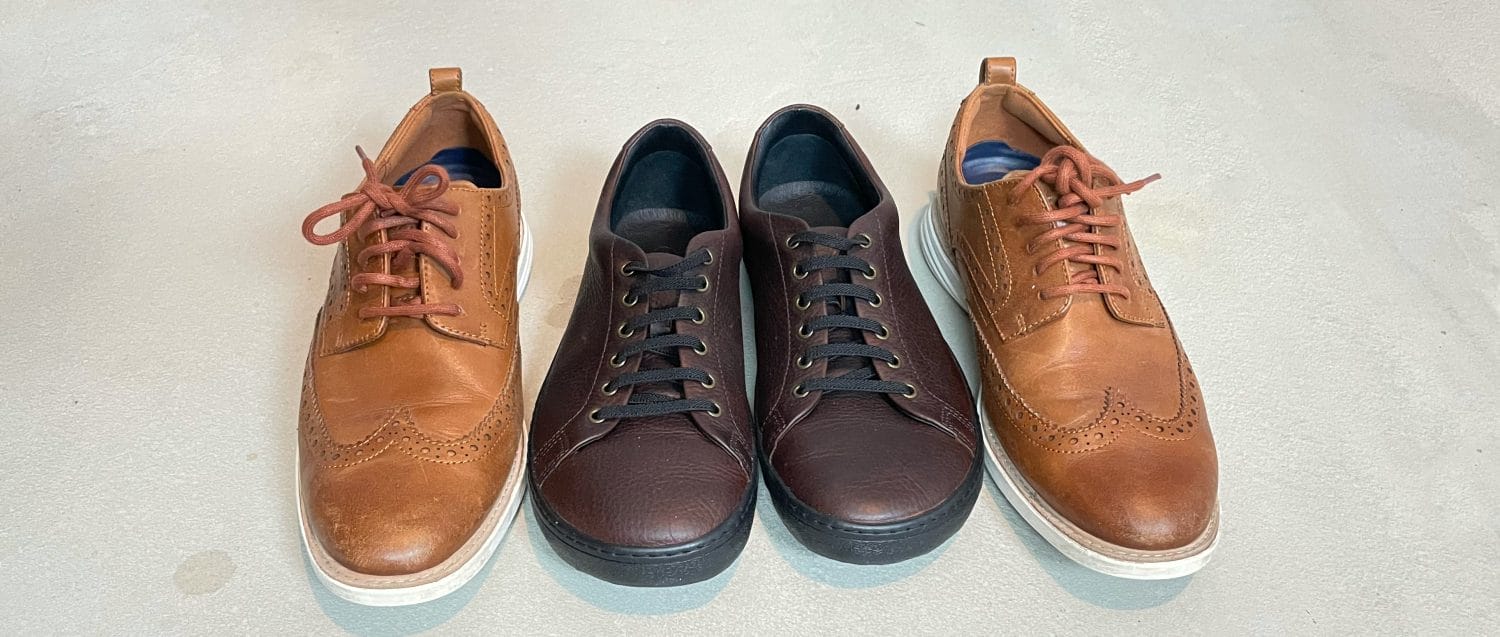
A wide toe box lets your toes spread naturally under load. That splay activates the intrinsic foot muscles, the small muscles that run within the foot itself and play a direct role in supporting the arch. Conventional shoes with tapered toe boxes compress the toes together, which reduces the demand on those muscles over time.
The windlass mechanism is an established anatomical principle: toe extension during push-off tightens the plantar fascia and raises the arch. A zero-drop sole encourages a more natural heel-to-toe gait, which keeps this mechanism engaged rather than bypassed. Without an elevated heel, the Achilles tendon also maintains its natural length and load-bearing function rather than adapting to a shortened position over time.
- Wide toe box: allows toe splay, activating intrinsic foot muscles that support the arch
- Zero-drop sole: promotes natural gait and keeps the windlass mechanism engaged
- Achilles tendon: maintains natural length and function without an elevated heel
- Thin sole: increases proprioceptive feedback, improving gait accuracy and reducing joint stress
Proprioception and Upstream Alignment
The second pathway is sensory. A thinner sole puts more of the ground's surface information through to your foot, improving proprioception, which is your body's real-time awareness of position and movement. That feedback matters more than it sounds.
Better proprioception tends to produce cleaner gait patterns. The foot lands more accurately, the ankle tracks better, and compensatory stress on the knees and hips decreases as a result. In short, what starts at the foot doesn't stay at the foot.
Common Misconceptions About Flat Feet and Minimalist Footwear
Four common myths about flat feet and barefoot shoes are worth addressing directly, as they either discourage appropriate use or lead to injury from rushing the transition.
- Myth: Flat feet always need arch support. Reality: Flexible flat feet often respond better to strengthening than to external support. Propping up the arch full-time can reduce the demand on the muscles that are supposed to do that work.
- Myth: Barefoot shoes will rebuild your arch quickly. Reality: Adaptation takes months of gradual use, not weeks. Rushing the transition is one of the most common mistakes people make.
- Myth: Everyone with flat feet overpronates. Reality: Overpronation and flat feet are related, but not the same thing. Plenty of people with low arches pronate within a normal range.
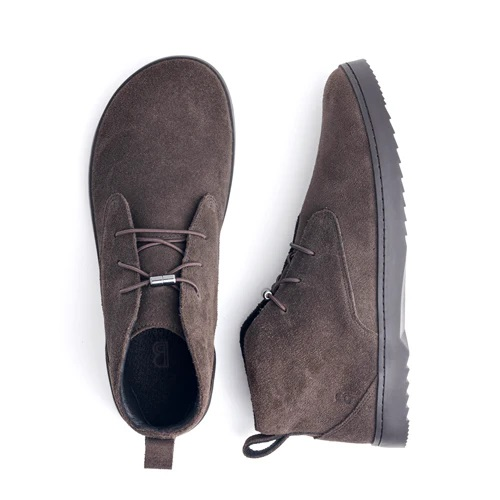
- Myth: You can't use orthotics with barefoot shoes. Reality: Many minimalist shoes include removable insoles precisely for this reason. The Brenston ($180.00 USD), for example, is handcrafted with a removable insole that accommodates custom orthotics, so you don't have to choose one approach over the other.
How to Transition to Barefoot Shoes with Flat Feet

The most common mistake people make with barefoot shoes isn't choosing the wrong pair. It's moving too fast. Your feet have spent years in conventional footwear, and the muscles that support your arch need time to catch up.
A Gradual Timeline That Works
A safe transition to barefoot shoes for flat feet takes 4 to 8 weeks, starting with 30 to 60 minutes of daily wear and increasing by 20 to 30 minutes per week.
Weeks 1 to 2: Wear barefoot shoes for 30 to 60 minutes per day, alternating with your current footwear throughout the day.
Weeks 3 to 4: Increase wear time by 20 to 30 minutes each week as your feet adapt.
Weeks 4 to 8: Most people reach comfortable all-day wear somewhere in this range. Pushing past it too quickly is how overuse issues like plantar fasciitis or Achilles tendon strain develop, both of which can set your progress back significantly.
If you're already dealing with foot pain by mid-afternoon, that's a signal to move even more gradually and pay close attention to where discomfort shows up. Mild arch soreness during adaptation is expected. Sharp heel pain or tightness along the Achilles tendon is a warning sign to back off.
Foot Strengthening Exercises to Support the Shift
Pairing the transition with targeted exercise makes a real difference. These movements build the intrinsic foot muscles that barefoot shoes are designed to activate:
- Short foot exercise (daily, 10 reps per foot, 5-second holds): draw the ball of your foot toward your heel without curling your toes. The single most effective drill for building arch support from the inside out.
- Towel scrunches (daily, 3 sets per foot): scrunch a towel toward you using only your toes. Simple, effective, and easy to do seated.
- Marble pickups (3 to 4 times per week): pick up marbles with your toes and drop them into a cup. Builds dexterity and intrinsic muscle control.
- Single-leg balance drills (daily, 30 to 60 seconds per side): stand on one foot. Progress to an unstable surface as strength improves.
Done consistently, these exercises support the structural shift that barefoot shoes encourage, and they reduce the risk of overloading tissues that aren't yet conditioned for the change.
Who Should Think Twice Before Going Barefoot
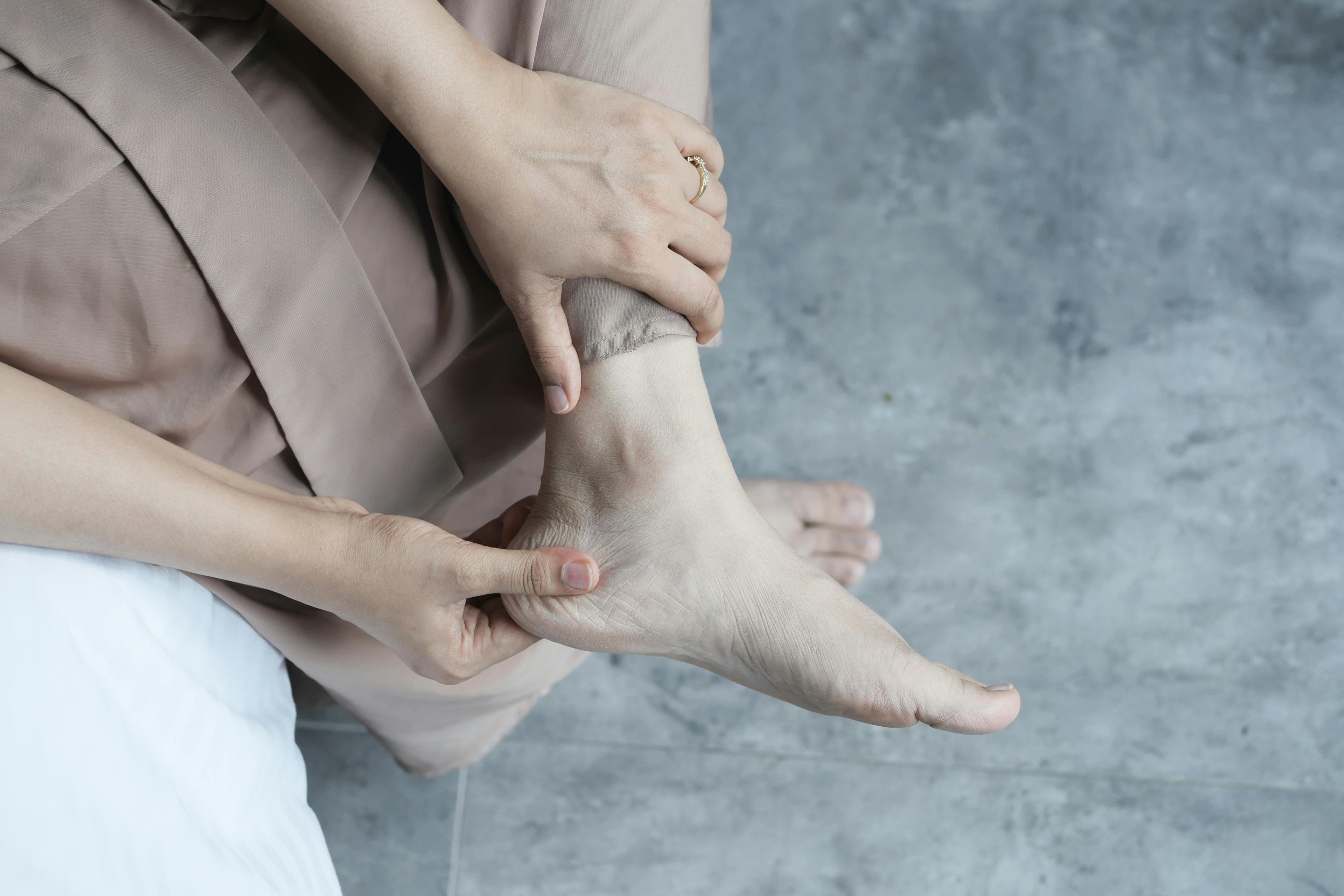
People with rigid flat feet, active plantar fasciitis, Achilles tendinopathy, severe overpronation, diabetic neuropathy, or peripheral vascular disease should consult a healthcare provider before switching to barefoot shoes. Here's why each group warrants extra care:
- Rigid flat feet or structural deformities: Unlike flexible flat feet, these involve fixed limitations that strengthening alone may not address. A podiatrist assessment is worth having before making the switch.
- Active plantar fasciitis or Achilles tendinopathy: Both conditions can worsen with a sudden reduction in heel elevation. Let the tissue heal before introducing a zero-drop sole.
- Severe overpronation: May benefit from a transitional approach. A shoe with modest structure can serve as a middle step before moving to fully minimalist footwear.
- Diabetic neuropathy or peripheral vascular disease: Thinner soles reduce the buffer between the foot and the ground, which can raise injury risk when sensation is already compromised. Extra caution is warranted here.
None of these are absolute rules. They're situations where a conversation with a healthcare provider makes the transition safer and more likely to succeed.
What to Look for in a Barefoot Shoe If You Have Flat Feet
The five features flat-footed wearers should prioritize in a barefoot shoe are: zero-drop sole, wide toe box, thin flexible sole, removable insole, and quality leather that molds to the foot. Not every barefoot shoe delivers all five.
- Zero-drop sole: no heel elevation, so your foot sits level and your gait stays natural
- Wide toe box: enough room for your toes to splay and your intrinsic muscles to activate
- Thin, flexible sole: preserves ground feel and proprioceptive feedback
- Removable insole: lets you use a custom orthotic during the transition if needed
- Quality materials: leather that molds to your foot over time rather than holding a fixed shape
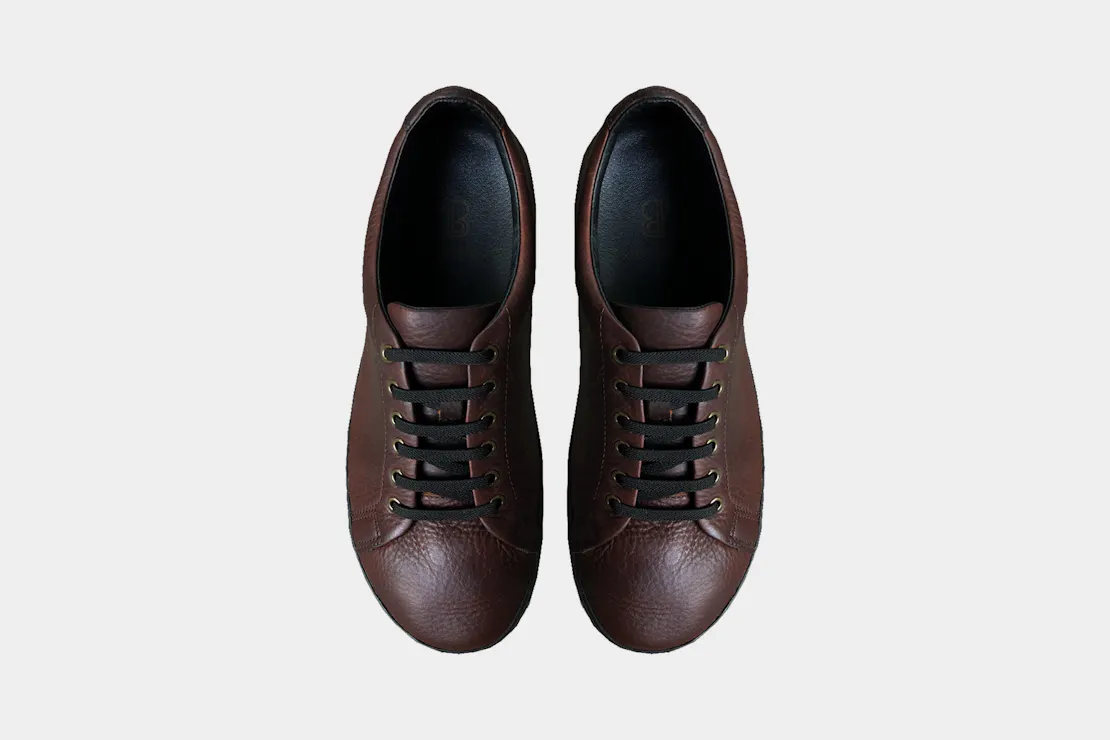
The Bramford ($120.00 USD) hits all five. It's a handcrafted barefoot sneaker with a wide toe box, zero-drop sole, and a removable insole that fits custom orthotics. For anyone doing a minimal shoe brand comparison, those details are worth weighing carefully.
Frequently Asked Questions
Can You Rebuild Arches in Flat Feet?
Yes. Flexible flat feet can rebuild arch strength with consistent strengthening over several months. The arch muscles respond to demand, and targeted strengthening combined with gradual barefoot shoe use can produce real structural improvement. Rigid flat feet are a different situation and warrant a professional assessment first.
What Do Podiatrists Say About Barefoot Shoes?
Opinions vary, though the clinical conversation has shifted in recent years. A growing number of podiatrists support a gradual minimalist transition for appropriate candidates, particularly those with flexible flat feet and no acute injury. The key word is gradual. Most concerns center on people moving too fast, not on barefoot shoes themselves.
Do Barefoot Shoes with Removable Insoles Work with Custom Orthotics?
Yes. A removable insole lets you use a custom orthotic during the transition period without giving up the wide toe box and zero-drop sole that make barefoot shoes effective. It's a practical middle ground, not a compromise.
Are Barefoot Shoes Painful for Flat Feet at First?
Some arch soreness in the early weeks of adaptation is normal as your intrinsic foot muscles begin doing more work and proprioception improves. Persistent sharp pain, especially in the heel or along the Achilles tendon, is not normal and is a signal to slow down or seek guidance.
The Takeaway for Flat Feet and Barefoot Shoes

For most people with flexible flat feet, the evidence points in a clear direction. Barefoot shoes and minimalist footwear can strengthen the muscles that support the arch, improve proprioception, and encourage a more natural gait. The research isn't complete, but what exists is consistent.
The transition matters as much as the shoe. Go gradually, pair the shift with foot strengthening work, and pay attention to how your body responds. If you have rigid flat feet or an active injury, get a professional opinion first.
The right barefoot shoe gives your feet the room they need to work the way they were designed to. That's the whole idea.
Prices accurate as of May 2026.