



Written by Matthew Tran, Birchbury's Founder
You bought the wide size. You even sized up half a step. Your pinky toe still filed a complaint by 2 p.m.
Here's the uncomfortable truth: that "W" on the box measures the middle of the shoe. Your toes live at the front.
Toe box shape, not the width letter, decides whether wide sneakers actually fit. If wide toe box sneakers for women keep pinching, the problem isn't your feet. It's a number that measures the wrong thing.

Why Toe Box Shape Beats Width Rating Every Time
Width ratings only measure the ball of the shoe. That's it. Nobody measures what happens past that point, which is exactly where your toes need room.
This is why two sneakers labeled the same width can feel like completely different shoes. One tapers hard after the ball and funnels your toes into a point. The other keeps its shape and lets your foot spread out.
Same number on the box. Wildly different pressure on your forefoot.
The research backs this up: a tapered toe box concentrates load right where your foot is widest. Peer-reviewed research shows that footwear shape and fit directly affect how pressure distributes across the forefoot. A foot-shaped toe box spreads it out.
And this isn't just about surviving the workday. Toe splay, the natural spreading of your toes when you stand and walk, is how your foot balances and absorbs load.
Squeeze that out of the equation for years and the foot adapts to the shoe. Not in a good way.
Women get the worst of this deal. One prevalence study found hallux valgus, the bunion-forming drift of the big toe, affects women at significantly higher rates than men. Decades of tapered toe boxes will do that.
So the question isn't "is this shoe wide enough?" It's "does this shoe match the shape of an actual human foot?"
Toebox width matters. Toe box shape decides whether that width lands where your toes actually are. Now for how to spot the difference before you buy.
The Shape Details That Actually Matter
Once you stop trusting the width letter, you need something better to judge by. Two construction details do most of the work: how the toe box is actually shaped, and what's happening under your foot.

How Brands Measure (or Fudge) Toe Box Shape
Here's a fun industry secret: most brands never publish how they define "wide." There's no measured standard behind the label. It's a choice about the last, the foot-shaped form brands build the shoe around.
A brand can take a tapered last, add a few millimeters at the ball, and stamp it "wide." The front of the shoe still narrows to a point. Your toes still lose.
That's the fudge. The label describes one measurement in the middle of the shoe and says nothing about the taper up front. The math looks like this:
- Tapered last + a few extra millimeters at the ball = fake wide. The front still narrows to a point.
- Foot-shaped last = actual wide. The shoe stays wide through the toes, with the widest point at the tips rather than the ball.
If a brand shows you the outline of their last, that's a good sign. If they only show you a letter, assume the worst. And even a perfect shape can't save a bad sole.

Barefoot & Zero-Drop vs. Padded Wide-Fit Design
Shape is half the story. The sole is the other half, because heel drop, stack height, and cushioning all change how roomy a shoe feels at the toes.
Thick cushioning raises your foot on a soft platform. That padding creeps up the sides, eats interior volume, and lets your foot sink and slide forward into the taper. A raised heel makes it worse by tipping your weight toward the front, the same mechanism that makes people search for high heels alternatives in the first place.
The two design philosophies break down like this:
| Design detail | Barefoot Zero-Drop | Padded Wide-Fit |
|---|---|---|
| Shape | Follows the foot's outline, widest at the toes | Often stays tapered up front despite the label |
| Stack height | Sits low for ground feel and stability | Stacks high and raises your center of gravity |
| Cushioning | Your foot handles shock absorption naturally | Foam does the work instead of your foot |
Neither approach is a scam. But only one starts with the shape of your foot and builds the shoe around it.
Design sorted. The myths are another story.
Wide Toe Box Myths That Keep Women in the Wrong Shoes
Three stubborn myths keep women stuck in the wrong sneakers, even shoppers who know shape matters. Time to clear them out.
Myth one: a "wide" label means a wider toe box. It usually doesn't.
As covered above, that letter measures the ball of the shoe. Plenty of wide fit sneakers taper to the same point as the regular version, just a few millimeters later.
Myth two: wide toe boxes are only for people who already have bunions. Wrong order of operations. Room for toe splay benefits every foot, and the podiatric association notes that tight, narrow footwear can aggravate bunions in the first place.
Don't wait until your big toe drifts. That's like waiting for the check engine light before adding oil.
To be clear about what a roomy toe box does and doesn't do: medical guidance confirms extra space can ease bunion and hammer toe discomfort by taking pressure off the joints. It's not a treatment. Anyone promising more than room is selling you something.
The full myth-vs-fact rundown:
| Myth | Fact |
|---|---|
| "Wide" sizing means a wide toe box | Brands measure width at the ball, not the toes |
| Wide toe boxes are only for bunions | Every foot benefits from toe splay room |
| Roomy toe boxes treat foot problems | They offer support and space, nothing more |
| A snug forefoot is harmless | Cramped toe boxes are linked to blisters and can aggravate plantar fasciitis |
Myths busted. Next up: what to actually look for when you're holding the shoe in your hands.

Making the Switch to a Foot-Shaped Toe Box
You know what to look for. Now for the part nobody warns you about: your first foot-shaped shoe will feel weird, and that's normal.
After years in tapered sneakers, your toes have been living in a studio apartment. Hand them a house and they don't know what to do with the space. That roomy feeling can read as "too big" when it's actually just "correct."
Give it a week. Your feet adapted to narrow shoes, and they'll adapt back.
Still, don't go cold turkey on day one. Muscles and tendons that spent a decade off-duty need a ramp-up, not a marathon. Ease in like this:
- Start with short wears. A couple of hours around the house or on errands, then build up over one to two weeks.
- Let your toes work. Spread them, wiggle them, walk barefoot at home. Toe splay is a skill your feet are relearning.
- Expect some new sensations. Less cushioning means more ground feel. Different, not wrong.
- Check the fit standing up. Your foot spreads under load, so judge room with your full weight on it.
One more spec people forget: toebox height. Toes don't just need room to spread sideways. They need room to lie flat without the upper pressing down on them.
A wide, shallow toe box is only half a solution.
This is where the Bramford ($120) makes the transition easy. It pairs a genuinely foot-shaped toe box with a zero-drop sole and handcrafted American full-grain leather that flexes from the first wear. No break-in period, no toe-shoe weirdness, and it looks like a sneaker you'd actually choose.
Check the sizing guide before you order so the fit lands right the first time.
A few questions come up over and over. Quick answers below.
Wide Toe Box Sneaker Questions, Answered
What Sneaker Brands Have a Wider Toe Box?
A handful of brands build around foot-shaped lasts instead of padding out a tapered one. The approaches differ, though:
| Brand | Approach |
|---|---|
| Birchbury | Foot-shaped toe box, zero-drop leather sneakers that look like regular shoes |
| Altra | Foot-shaped toe box with cushioned zero-drop soles |
| Topo Athletic | Roomy anatomical front with moderate cushioning and low drop |
| Vivobarefoot | Fully barefoot design, wide and thin throughout |
Does a Wide Size Label Always Mean a Wider Toe Box?
No. Wide fit sizing adds room at the ball of the shoe, and plenty of wide models still taper hard past that point. Judge the shape of the front, not the letter on the box.
Can Toe Box Shape Actually Help With Bunions or Hammer Toes?
It can help with comfort by taking pressure off the joint and giving toes room to sit naturally. Extra space supports management, not treatment, so see a professional if pain sticks around.
How Do You Know If the Toebox Height Fits, Not Just the Width?
Stand up and wiggle your toes. If the upper presses down on your toenails or forces your toes to curl, the toe box is too shallow no matter how wide it runs.
Which Women's Walking Shoes Have a Wide Toe Box?
The same foot-shaped brands above cover walking well. The Bramford handles all-day miles because the roomy front and flexible sole let your toes splay with every step.
That covers the questions. One last thing before you close the tab.
Give Your Toes the Room They Were Built For
The letter on the box was never the answer. Shape is.
A wide toe box that tapers to a point is just a narrow shoe with better marketing. A foot-shaped toe box, one that stays wide where your toes actually sit, is what makes the difference between a shoe you tolerate and a shoe you forget you're wearing.
Your feet spent years adapting to shoes built for someone else's idea of a foot. Every year in a tapered front adds to the squeeze. Every day in a foot-shaped one takes some of it back.
Your toes come with room built in. Buy accordingly.
Prices accurate as of August 2026.

Matthew Tran
Founder, Birchbury
Matthew Tran is a mechanical engineer who founded Birchbury. He started the company after struggling to find dress shoes that didn’t hurt — and barefoot shoes that didn’t look out of place at work. That gap led him to design his own: a wide-toe-box, zero-drop shoe made from full-grain leather, built specifically to look like a normal shoe. Birchbury has since been worn by lawyers, chiropractors, restaurant managers, and anyone else who spends their day on their feet and refuses to suffer for it.
More about Matthew Tran →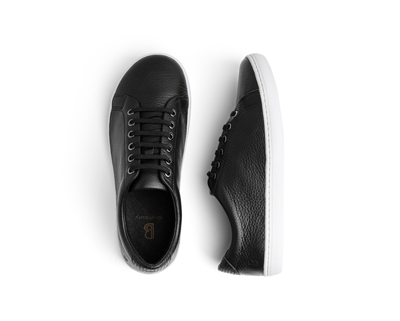
2 comments
@Keith – Thank you so much! We are thrilled to hear you love your Bramfords. We will definitely see if we can release a brown version with a white sole in the future. We appreciate the great suggestion!
Love my Bramfords! Can you please make a brown version with a white sole like you do with my black ones? Thanks.