
Written by Matthew Tran, Birchbury's Founder
Yes, wide toe box boots for men daily can work, but only when they pair a foot-shaped wide toe box and zero-drop platform with a slip resistant outsole and full-grain leather that can take real wear.
That matters because most boots make you pick one: room for your toes or a shape that still looks normal. Somehow, the industry still acts like those two things are sworn enemies.

Four Features a Daily Wide Toe Box Boot Needs
A daily wide toe box boot needs four things: a foot-shaped toe box, a zero-drop platform, a slip resistant outsole, and a full-grain leather upper. You're not shopping for job-site armor. You're shopping for something you'll keep reaching for on a Tuesday.
The market makes this harder than it should. Boots with a wide toe box usually drift into trail-gear territory, while boots that look sharp taper into a point your foot never asked for.
- A foot-shaped toe box with enough width and height for your toes to spread and lift naturally
- A zero-drop sole that keeps the heel and forefoot level
- A slip resistant outsole that can handle slick sidewalks and indoor floors
- A full-grain leather upper built for daily wear durability
Steel toes and giant lug soles solve a different problem. Most men don't need that much boot five days a week.
One pair that clears all four checks can cover more ground than people expect. Office, errands, a few miles outside, done.

A Foot-Shaped Toe Box Beats a Wide Size
A foot-shaped toe box beats extra wide sizing because it puts room where your foot actually needs it. More width through the whole boot sounds helpful until your heel starts swimming around like it lost interest.
Where the Extra Width Has to Sit
Extra wide sizing means width letters like 2E or 4E stamped on the same tapered last, so it adds volume from heel to forefoot. A foot-shaped last is the mold the whole boot follows, and it keeps the rearfoot secure while putting the widest point over the toes, which is where that extra width actually lives.
Toe box height matters as much as width. A wide toe box that stays shallow still presses on the tops of the toes, which defeats the point pretty fast.
Natural Toe Spread Across an Eight-Hour Day
Natural toe spread matters more late in the day, once a boot has had hours to press back. Toe box shape and volume change how force moves across the forefoot, which is why the difference turns up at hour eight rather than in the first ten minutes, according to footwear pressure research.
A tapered boot that felt fine at 8 a.m. can feel a lot smaller by mid-afternoon.
Foot-shaped boots let the toes spread on push-off without turning the whole boot into a blob.

Zero-Drop Soles and Posture Alignment in Plain English
Zero-drop means the heel and forefoot sit at the same height, a drop of 0 mm, so your foot stays level instead of pitched forward. That's the whole idea, and it's simpler than the jargon makes it sound.
A regular toe box narrows at the front and squeezes the toes inward. A wide toe box keeps the front of the boot broader and more foot-shaped, which gives the toes room to sit flatter and move more naturally.
Raised heels tilt the foot forward from the first step. A level platform may help promote better posture alignment because it lets the foot stand in a more natural position.
Short version: less tilt, less compensation.
Stack height is the total material between the sole of your foot and the ground, usually quoted in millimeters. A lower number means less between you and the pavement, which is where ground feel comes from in barefoot boots.
Six months of daily activity in minimal footwear came with about a 57% increase in foot strength in one published study. Feet adapt to what they spend time in.
Zero-drop doesn't mean flimsy. A leather boot can keep the foot level and still have enough outsole under it to feel like a real boot.

A Slip Resistant Outsole With a Faux Heel
A slip resistant outsole is what turns one boot into something you can wear from a wet sidewalk to a packed dirt path without swapping pairs halfway through the day. That's the boring feature that saves you the most hassle.
A faux heel is a block cut from the outsole itself, shaped like a heel but adding no lift under the foot. It solves the style problem, because the boot stays zero-drop while reading as a normal boot from the side.
Daily grip comes from the tread pattern and rubber compound, not from cartoonishly big lugs. Huge lugs bring mud indoors and make a chukka look like it got lost on the way to a campsite.
Check your tread every few months. Worn shoe tread is one factor tied to slip risk, according to CDC research, and outsoles usually wear out before good leather does.
Judge replacement by grip, not by the upper. If the tread is going smooth, the boot is telling you something.

American Full-Grain Leather Over Years of Heavy Use
American full-grain leather is what gives a daily boot a real chance at lasting years. It keeps the outer surface of the hide intact instead of sanding it off the way corrected-grain does, so scuffs and creases age into patina instead of peeling or cracking.
Birchbury, the brand behind the boots in this article, handcrafts them in American full-grain leather. The leather softens to your foot through a real break-in period, then usually feels better in year two than it did in month one.
Water resistant leather handles rain and the usual slushy commute. Water resistant isn't waterproof, and a soaked boot parked next to a heater is a fast way to ruin good leather.
The upkeep that earns those years:
- Wipe off dirt after each wear
- Condition the leather two to four times a year
- Use a boot tree, or let the pair dry for a full day between wears
- Resole once the tread loses grip
Daily wear durability comes from maintenance as much as materials. In most boots, the laces and outsole ask for attention before the upper does.
Barefoot Boots That Pass as a Regular Chukka Boot
Barefoot boots (zero drop, low stack height, foot-shaped toe box, flexible sole) can pass as normal footwear when the silhouette doesn't announce itself. Most of the giveaway is the shape people notice first, not the toe room hiding inside it.
A chukka boot reads as normal because its bones are simple: ankle height, two or three eyelet pairs, minimal seams, a clean leather upper. If you need a refresher on what separates a chukka from a desert boot, that distinction matters more than most brands admit.
A faux heel helps from the side view, and leather does the rest. Nobody across the room is checking your drop height with a tape measure.
Color is where a lot of men overcomplicate things. One mid-brown or dark brown pair carries everything from jeans to office trousers better than a small boot museum in your closet.
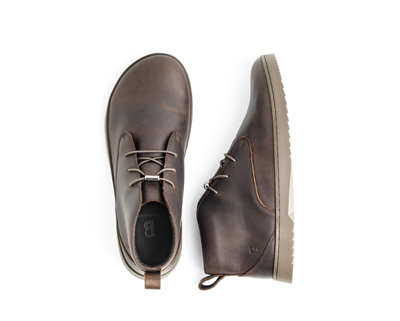
The Carnforth, a barefoot chukka boot with a wide toe box and zero-drop sole, fits this lane neatly. Its elastic laces also let it go on like a slip-on, which is handy and slightly addictive.

Where the Carnforth Fits Into a Daily Rotation
The Carnforth fits a daily rotation because the wide toe box and zero-drop sole sit inside the shape of a familiar chukka boot. The handcrafted American full-grain leather is water resistant, so it covers more situations than most barefoot boots do.
The Carnforth runs from office wear to light trails, meaning packed dirt or gravel paths for a few miles. It works best when the day moves between settings.
| Use Case | What the Boot Brings |
|---|---|
| Office and Smart Casual | Leather upper, chukka silhouette, faux heel |
| Weekends and Errands | Elastic laces, toe room for hours on foot |
| Light Trails | Slip resistant outsole, water resistant leather |
| Not Suited For | Scrambling, multi-day loads, rough broken terrain |
A few miles on uneven ground is the limit. Scrambling and multi-day loads are a different boot's job.
That range is why one mid-brown pair can replace the usual three-pairs problem. Less switching, less nonsense.
View Product →
Sizing, Break-In, and the First Two Weeks
Measure both feet late in the day, when they're at their largest, then compare the longer foot in inches against the sizing guide. Don't size up to buy toe room.
A longer boot won't create useful toe room if the last shape is wrong, and it can make the heel slip while you walk. Ignore what extra wide sizing or a tapered dress boot told you in the past.
Plan on a break-in period of one to two weeks. Start with a few hours a day while the full-grain leather softens and your calves adjust to natural toe spread on a level platform.
The right fit is pretty obvious:
- Heel stays put
- Toes can wiggle and lift
- The widest part of your foot doesn't feel squeezed
The best walking boots for someone who needs more toe room keep the front foot-shaped, the platform zero-drop, and the outsole grippy enough for long hours on hard ground. Good wide toe box boots for men get those basics right before they start talking about anything else.
Picking the Pair You Will Wear Tomorrow
The pair worth buying is the one you'll wear on a boring Tuesday, not the one that only makes sense for one kind of outing. A good wide toe box boot should clear four checks without drama: foot-shaped front, zero-drop platform, solid grip, and a full-grain leather upper.
Measure both feet at the end of the day, take the longer length in inches, and compare it to the size chart before ordering. That step settles more than any brand debate.
FAQs
1. What are the benefits of wide toe box boots?
Wide toe box boots give your toes room to spread out and grip naturally rather than forcing them into a cramped, tapered point. This anatomical alignment restores proper weight distribution, improves balance, and relieves chronic pressure on bunions, hammertoes, and pinched outer nerves. In boots, an anatomical toe box also accommodates natural foot expansion during long days of standing or walking, preventing the painful side friction and joint stiffness common in traditional rigid footwear.
2. Which boot brand has the widest toe box?
Brands like Lems, Be Lenka, and Texarado are known for building boots with some of the widest, most exaggerated toe boxes on the market. While these designs offer extreme toe splay, their proportions often look bulky, paddle-like, or clownish, making them difficult to pair with everyday casual or workplace outfits.
If you want boots that give your toes complete freedom while maintaining classic proportions, Birchbury is an ideal option. The Birchbury Carnforth chukka boot integrates an anatomically wide toe box inside supple American full-grain leather, delivering natural foot comfort in a silhouette that looks like a regular, upscale boot.
3. Which brands do wide toe box shoes?
Several footwear brands build wide toe box shoes, including Altra and Topo Athletic for running, Vivobarefoot and Xero Shoes for athletic workouts, and Lems for rugged casual wear. While these companies provide anatomical toe room, their styles lean heavily into sporty synthetic mesh or outdoor hiking aesthetics that look out of place in work and social settings.
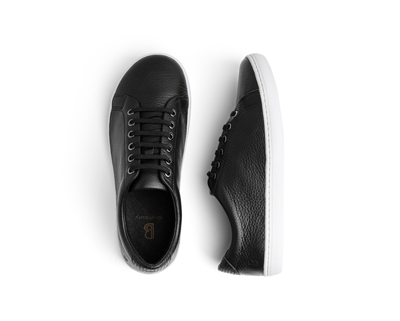
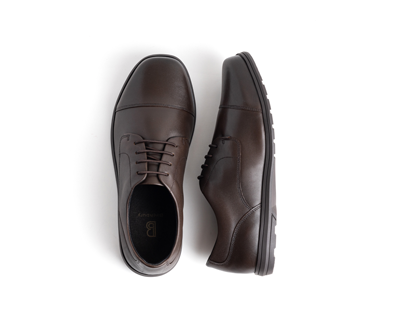
Birchbury stands out by bringing wide toe box ergonomics into refined, everyday menswear. Designed to look like classic footwear, Birchbury offers the Brenston cap-toe dress shoe, the Bramford low-top leather sneaker, and the Carnforth chukka boot, giving you healthy toe splay across professional, smart casual, and formal dress codes.
4. Is a wider toe box better?
Not necessarily; wider is not always better once your toes already have adequate room to rest flat and splay naturally. Boots with excessively wide, exaggerated forefoots often look out of proportion and clownish when paired with chinos, trousers, or dark denim. Beyond aesthetics, an overly wide toe box can cause your forefoot to slide side-to-side, creating instability and friction blisters. Birchbury solves this by engineering the wide toe box to match natural human anatomy, providing ergonomic toe freedom while maintaining clean, regular shoe styling.
5. How do I know if my toe box is wide enough?
A toe box is wide enough when your toes can spread out naturally without pressing against the interior sidewalls, while the rest of the shoe still holds your foot securely. You should be able to wiggle all five toes freely, and your big toe should sit completely straight without being pushed inward toward your second toe. At the same time, the shoe should not feel cavernous; a proper anatomical fit locks your heel and instep in place while providing your forefoot enough volume to swell naturally over a long day.

Matthew Tran
Founder, Birchbury
Matthew Tran is a mechanical engineer who founded Birchbury. He started the company after struggling to find dress shoes that didn’t hurt — and barefoot shoes that didn’t look out of place at work. That gap led him to design his own: a wide-toe-box, zero-drop shoe made from full-grain leather, built specifically to look like a normal shoe. Birchbury has since been worn by lawyers, chiropractors, restaurant managers, and anyone else who spends their day on their feet and refuses to suffer for it.
More about Matthew Tran →