
Written by Matthew Tran, Birchbury's Founder
Shoes are pointed because of fashion and status, not foot anatomy. Medieval nobles started the shape, and shoemakers have copied it ever since.
That walk back to the car after a long day. You feel it in your toes first, five of them wedged into a space built for three.
Your foot is widest at the toes. Your shoes end in a point. Someone decided pointed toe shoes made sense over your natural foot shape, and everyone just went along with it.
Nobody ever explained why. There's an answer, though, and it's stranger than you'd guess.
The Short Answer: Pointed Toes Are a Fashion Choice, Not a Foot Choice
Pointed toe shoes exist for fashion and status, not anatomy. The shape began as a medieval status symbol in the 1300s, when longer points signaled higher rank, and shoemakers have copied the silhouette ever since.
Look at your bare foot. No triangle anywhere. The toes are the widest part, which means a toe box that tapers to a point ignores your natural foot shape entirely.
So why did the shape survive? Simple. Shoemakers kept copying what looked expensive instead of what fit.
That's fashion over function, and the pointed toe is the clearest proof of it in your closet. The rest of this article covers:

Medieval Nobles Started This, and Nobody Ever Stopped
The pointed toe has a birthplace, and it's not a workshop full of foot experts. It's a medieval court full of people showing off.
Poulaines: Shoes So Long They Needed Rules
Poulaines (also called Crakows) were long, sharply pointed shoes worn by European nobles in the 1300s, some with points so long that wearers stuffed them or tied them up to the leg. The point was a status symbol. A longer toe told everyone you didn't work with your feet.
Class even dictated how long a point could run, which tells you everything: the point was about rank, not walking.
The feet paid for it. Cambridge University research on medieval skeletons found bunion rates jumped from about 6% of people in the 11th to 13th centuries to about 27% in the 14th and 15th centuries, right when poulaines took over. And this wasn't only a European habit.
Lotus Shoes: The Same Logic, a Different Continent
In China, lotus shoes and foot binding pushed the same idea to its extreme: a beauty standard reshaping the foot itself.
Different culture, identical logic. Fashion over function. And the point didn't stay in the past, either.
Winklepickers and Cowboy Boots Kept the Taper Cool
The point never died. It just rebranded. Winklepickers gave it a rebellious 1950s revival.
Cowboy boots kept a functional excuse (points slide into stirrups) long after most wearers stopped riding anything. Every revival copied the silhouette. Not one copied the anatomy. Which raises the obvious question: why do factories still make them?

Why Dress Shoes and Even Sneakers Still Come to a Point
History explains where the point came from. Manufacturing explains why it never left. Three things keep it in production: legacy lasts, packing efficiency, and shelf appeal.
Every shoe starts on a last, the foot-shaped form a shoe is built around. Factories reuse the same narrow lasts for decades because new ones cost money.
A tapered last also stacks tighter in boxes and photographs sleeker on a shelf. The narrow toe box survives because it's convenient, not because it fits anyone.
Convention piled on top of that. Somewhere along the way, someone decided pointy meant professional, so oxfords, derbies, and loafers all pinch exactly where your foot is widest.
Sneakers aren't innocent either. All that cushioning underfoot does nothing for width across the toes. Even shoes labeled wide are usually the same pointed shape, just stretched.
A wide toe box follows your foot. A wide pointed toe shoe is the same narrow shape scaled up, so it just delays the squeeze. Fashion over function, again. And the sizing system covers for all of it.

Your Shoes Fit in Length. That's Not the Same as Fitting.
Standard shoe sizing measures only length, heel to longest toe. Nothing in that number checks width. Your shoe can be exactly "your size" and still crush the forefoot, because a narrow toe box squeezes the foot exactly where it's widest.
Toe splay is the natural outward spread of your toes when your weight lands on the foot. That spread is how you balance and push off. Sizing charts skip it entirely.
A pointed toe box shuts it down, shoving the big toe inward and stacking the smaller toes on top of each other. Research published in the Journal of Foot and Ankle Research found that toe box shape and volume directly affect forefoot pressure and comfort.
Want proof? Trace your bare foot, set your shoe on the outline, and watch your toes spill past the edges.
A wide toe box matches your natural foot shape. Measure width in inches at the ball of the foot, and check the sizing guide before trusting a number on a box. So what does the mismatch actually cost you?

What Years of Crowded Toes Add Up To
The sneaky part? Nothing hurts on day one. Your toes adapt, you adjust, and the squeeze becomes normal.
That's the trap. The pressure compounds over thousands of hours, not one bad afternoon.
A 2024 clinical review identifies constricting, narrow-toed footwear as a contributing factor in bunions, hammertoe, and corns, and recommends a wide toe box instead.
Bunions (hallux valgus) develop as the big toe drifts off its line day after day. Hammertoe comes from toes stuck bent inside a narrow toe box. Corns and calluses form where the leather rubs the same spot every commute.
There's a quieter cost, too. Toes that never splay or grip lose strength, and your balance leans on them more than you think.
One caveat. This is footwear information, not medical advice. If your feet already hurt, see a podiatrist. If they're still fine, here's how to keep them that way.
What to Look for Instead of a Point
Now for the good news: judging a shoe takes about ten seconds once you know the four checks.
- Wide toe box that stays wide at the very front. The widest point should sit at your toes, not behind them.
- Zero-drop sole. Heel and forefoot level, so your weight doesn't slide forward into the point.
- Flexible sole. If you can't bend and twist it by hand, your foot can't either.
- A shape that matches your traced outline. A stretched taper is still a taper. You want room for toe splay and your natural foot shape.
And keep the pointed pair. Two hours at a wedding is fine. Ten hours on a shift isn't. Now you need a daily pair that passes all four checks.

Shoes That Look Sharp and Are Still Shaped Like Feet
Here's the objection you're already forming: foot-shaped shoes look like foot-shaped shoes. Fair. Plenty do.
The trick is a clean upper over a wide toe box, so the outside reads classic while the inside follows your natural foot shape.
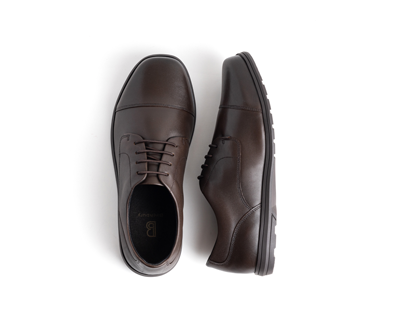
That's the whole idea behind the Brenston. From across the room, it's an oxford. It holds up with a suit or dark denim, and your toes still get their splay.
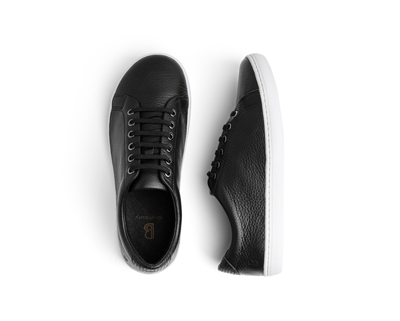
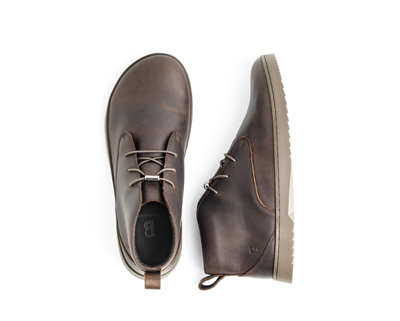
The Bramford covers the sneaker side: minimal leather look, room across the toes instead of a taper. If you want the chukka silhouette without the usual pinched toe, the Carnforth handles that.
Each pair is handcrafted with full-grain American leather, built on a wide toe box and zero-drop sole, and designed to support natural movement. No break-in period.
One heads-up. After years of tapered shoes, the first week or two feels strange. Your toes seem oddly free, almost exposed.
Then it becomes normal, and the pointed pair starts feeling like the weird one. One last thing worth saying.
Your Toes Were Never the Problem
Shoes are pointed because fashion chose the shape and manufacturing kept it. Your feet haven't changed in centuries. Shoe shapes did, and then stopped asking questions. A medieval status contest picked the point, and every generation since just inherited it.
You never chose pointed toe shoes. Someone handed them to you.
Nothing obligates you to keep paying for someone else's fashion statement. The shoe should match your natural foot shape. Not the other way around. A few questions come up every time this topic does, so here are the answers.
Questions People Ask About Pointed Toe Shoes
1. Are Pointed Toe Shoes Out of Style?
No. Pointed toe shoes cycle in and out of fashion like every silhouette, and sharp, well made never really leaves. The question isn't whether the point is trendy, but whether your toes vote yes.
2. Do Wide Toe Box Dress Shoes Look Clunky With a Suit?
No. Clunky comes from a chunky sole and a bulbous upper, not from room across the toes. A clean leather upper over a wide toe box reads classic from any distance.
3. How Long Does It Take to Get Used to a Wide Toe Box After Years of Pointed Shoes?
Most wearers report adjusting within one to two weeks. Soft leather means no break-in, so the adjustment is mental, not physical. Your toes simply relearn what a roomy toe box feels like.
Prices accurate as of June 2025.

Matthew Tran
Founder, Birchbury
Matthew Tran is a mechanical engineer who founded Birchbury. He started the company after struggling to find dress shoes that didn’t hurt — and barefoot shoes that didn’t look out of place at work. That gap led him to design his own: a wide-toe-box, zero-drop shoe made from full-grain leather, built specifically to look like a normal shoe. Birchbury has since been worn by lawyers, chiropractors, restaurant managers, and anyone else who spends their day on their feet and refuses to suffer for it.
More about Matthew Tran →