
Written by Matthew Tran, Birchbury's Founder
You saw a pair of barefoot shoes. You thought they looked like something a wizard hikes in. You were right.
The short answer: most barefoot shoes look weird because of four fixable design choices. Flared toe boxes, slab soles, bad proportion, and trail-gear materials. Not one of them comes from a wide toe box or a zero-drop sole.
The barefoot shoe industry earned that reputation one bulbous toe box at a time, so nobody here will pretend otherwise. Still, the alternative stinks: feet that ache by noon in shoes that photograph well. That trade-off is fake, and the reasons most barefoot shoes look strange are surprisingly specific.

Yes, Most Barefoot Shoes Look Weird. Here Is Why.
Most barefoot shoes look weird because of design choices, not because a wide toe box or a zero-drop sole demands it. Nothing about natural foot shape requires a shoe that resembles a rubber glove. The strangeness comes from decisions made at the drawing board.
Four failures show up again and again:
- Flare: clown-shaped toe boxes that exaggerate width instead of shaping it
- Slab soles: pancake-flat outsoles with no visible sidewall shape
- Proportion: shoe lasts and uppers that sit out of scale, so the whole silhouette reads bloated
- Materials: finishes and patterns that scream trailhead, not office
None of these are functional requirements. They are footwear design problems, and design problems have design solutions. Conventional shoes solved proportion decades ago; they just ignored feet to do it.
Take the failures one at a time, starting with the toe box.

The Clown Shoe Look Comes From Flare, Not Room
Here's the part most brands get wrong: room and flare are not the same thing. Room is interior volume for your toes to splay. Flare is width added to the last (the foot-shaped form a shoe is built around) past the foot's actual shape.
A wide toe box can hold plenty of room without ballooning outward. The clown look happens when the last flares wider than the actual foot, then a squared-off toe cap exaggerates the spread.
The foot inside is normal. The shoe around it is bragging.
Toe box shape and volume change how much pressure lands on the forefoot, according to a 2013 footwear study in the Journal of Foot and Ankle Research. That makes a tapered last squeezing your toes a genuine design failure, not a style preference.
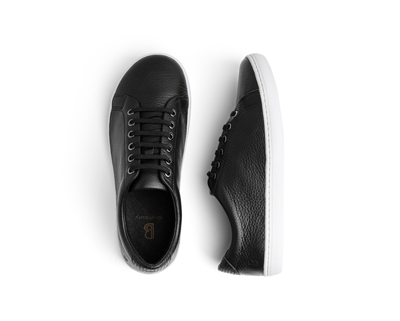
The quiet version of this idea exists. The Bramford puts a foot-shaped, wide toe box under a clean leather sneaker silhouette.
Toes splay. Nobody stares. That's the whole trick behind barefoot shoes no one notices: shape the last to the foot, not past it.

Zero Drop Does Not Mean Flat as Cardboard
Next up: the pancake sole. Zero drop means one thing only: no heel rise from heel to toe. It says nothing about sole thickness or how the sidewall looks from the side.
That distinction matters, and most footwear design in this category ignores it.
The slab look comes from a uniform thin sheet of rubber with no shaping along the sidewall and no defined heel profile. Picture a slice of bread glued under a sock. That's a choice, not a requirement.
A flexible sole can stay flat underfoot while the sidewall carries the same visual line as conventional shoes: a little contour at the heel, a clean edge along the length. In other words, level inside, normal outside.
The profile is what people see from six feet away. Get that right and the rest gets easier.
Proportion Is the Real Culprit, Not Width
That said, the biggest offender is not the toe box at all. Two shoes can share the exact same interior width, and only one of them looks strange. The difference is proportion: how last length, instep height, and sole thickness relate to one another.
Three errors do the damage:
- A last that is short and stubby instead of genuinely foot-shaped, so the shoe reads like a loaf
- An upper cut too tall over the instep, adding bulk where the eye expects a low line
- A sole thicker than the silhouette can carry, dragging the whole shoe downward
There's also a bias problem. Decades of tapered shoe lasts trained everyone's eye, which is why shoes taper to a point in most conventional shoes. An honest foot shape looks unfamiliar at first, not wrong.
Good footwear design balances those three elements, and a foot-shaped shoe passes without a second look.

Leather, Finish, and Construction: Sharp Versus Frumpy
Shape only gets you halfway. Materials finish the job or blow it. Synthetic mesh, loud logos, and outdoorsy panel patterns telegraph trail gear before anyone even clocks the silhouette.
Leather changes the read entirely. Full-grain leather is the top layer of the hide with the grain left intact, which is why it takes a finish, holds a clean line, and ages into character instead of creasing into a bag. Birchbury handcrafts every shoe with full-grain American leather for exactly that reason.
Construction matters just as much. Two methods do the job here, and both keep the shoe flat underfoot:
- Strobel: stitches the upper directly to a flexible sole, which keeps the shoe bendy
- Stitchdown: wraps the upper outward and stitches it down, leaving a visible traditional edge
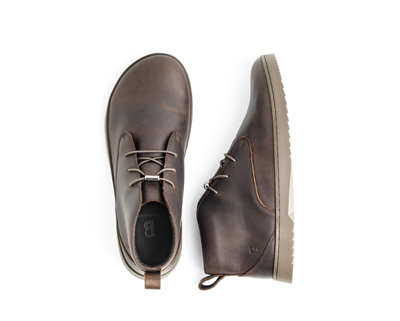
Put those pieces together and you get stylish barefoot shoes like the Carnforth chukka boot: full-grain leather and a zero-drop sole under a classic chukka shape with elastic laces.
What the Wide Toe Box and Flat Sole Are Actually Doing
So far this has been about looks. Fair. Now the payoff.
Six months of everyday wear in barefoot shoes measurably increased toe flexion strength (how hard your toes can press down) in adults, according to published research in Scientific Reports (2021).
Here's why. A wide toe box lets your toes splay, spread to their natural width under load, instead of funneling into a point.
Zero drop keeps the heel level with the forefoot, and a flexible sole lets the foot bend where it actually bends. The whole package supports natural movement.
One catch. A foot-shaped last changes how you should measure a pair, so check the sizing guide before ordering. Toe splay needs room, not guesswork.

What It Looks Like When Someone Fixes All Four
Now put it all together:
- Shape the toe box to the foot instead of past it
- Give the sole a real profile
- Keep the proportions honest
- Use leather that holds a line
The result is a barefoot shoe nobody clocks as one.
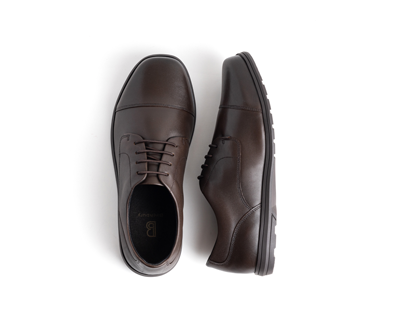
The Brenston is that shoe. From the outside, a classic oxford. Inside, a wide toe box, a flat flexible zero-drop sole, and soft full-grain American leather, handcrafted and ready to wear with no break-in period.
It works with a suit or dark denim, so the barefoot part stays your business.
In the Office and in Front of Clients
The Brenston passes business and business-casual dress codes. Client-facing rules punish anything that draws the eye downward, and this shoe gives them nothing to catch:
- Dark leather
- A clean toe shape
- No logos
- Elastic no-tie laces that read as traditional oxford laces
All of it keeps the Brenston inside the rules conventional shoes set. Stylish barefoot shoes were never impossible. Somebody just had to build them.
Shop Brenston: Barefoot Dress Shoe →
Weird Was a Choice, Not a Requirement
Your skepticism was fair. Most barefoot shoes do look strange, and you were right to hesitate.
You were just wrong about the cause. The odd look came from flared toe boxes, pancake soles, bad proportion, and lazy materials. Every one of those is a footwear design decision, and every one has a better answer.
Room for your toes never made a shoe ugly. A flat sole never did either.
Weird was a choice. Somebody finally chose differently.
Questions Guys Ask Before They Commit
1. Why do barefoot shoes look weird?
Most barefoot shoes look weird because their proportions are unbalanced, often featuring bulbous shapes, zero-drop profiles without a heel line, and loud synthetic mesh that resembles water shoes or hiking gear. Because people are accustomed to tapered silhouettes, designing a wide forefoot without careful tailoring makes the footwear stand out in everyday environments. Birchbury solves this by engineering the wide toe box discreetly inside classic profiles, crafting barefoot shoes that look completely normal in both casual and professional settings.
2. Why do barefoot shoes look so ugly?
Many barefoot shoes look ugly because they use exaggerated toe boxes and flashy synthetic materials that give off an awkward "clown shoe" appearance. This happens when manufacturers focus purely on toe splay while ignoring classic shoemaking proportions and refined aesthetics. Birchbury bridges this gap by using handcrafted American full-grain leather and a subtle faux heel design, giving your toes complete freedom without looking bulky or out of place.
3. What do barefoot shoes help with?
Barefoot shoes help restore your natural foot mechanics by providing an anatomically wide toe box that allows proper toe splay and takes pressure off bunions, hammertoes, and pinched nerves. Their zero-drop sole keeps your heel and forefoot level, promoting upright posture and healthy spinal alignment throughout the day. Additionally, walking on a flexible platform strengthens dormant intrinsic foot muscles and noticeably improves full-body balance.
4. Why are barefoot shoes good for your feet?
Barefoot shoes are good for your feet because they let your foot muscles and joints articulate naturally instead of locking them inside a rigid, pointed shoe. The completely flat zero-drop base keeps your weight evenly distributed, preventing the forward pelvic tilt and knee strain caused by raised heels. At the same time, allowing your toes to spread out creates a wider, more stable foundation for posture and natural shock absorption.
5. Why are barefoot shoes so expensive?
Barefoot shoes often carry a higher price tag because designing specialized anatomical lasts, tooling flexible zero-drop outsoles, and manufacturing in smaller batches costs more than mass-producing conventional footwear. However, not every barefoot shoe is overpriced. Birchbury utilizes a direct-to-consumer model to deliver premium American full-grain leather dress shoes, chukkas, and sneakers at an accessible, fair price.

Matthew Tran
Founder, Birchbury
Matthew Tran is a mechanical engineer who founded Birchbury. He started the company after struggling to find dress shoes that didn’t hurt — and barefoot shoes that didn’t look out of place at work. That gap led him to design his own: a wide-toe-box, zero-drop shoe made from full-grain leather, built specifically to look like a normal shoe. Birchbury has since been worn by lawyers, chiropractors, restaurant managers, and anyone else who spends their day on their feet and refuses to suffer for it.
More about Matthew Tran →