
Your feet have been filing complaints for a while now. Sore arches by lunch, a pinky toe with a permanent dent, shoes that fly off the second you walk in the door.
You've probably written all of that off as normal. It isn't. Those are signals, and eight of them point toward the same switch: barefoot shoes with a wide toe box and a zero-drop sole.
The 8 Signs at a Glance
Short on time? Here's the full checklist in one table. Every sign points the same direction: barefoot shoes with a wide toe box and a zero-drop sole.
The eight signs: supportive shoes that still hurt, cramped toes by mid-afternoon, missing ground feel, shoes off at the door, curiosity that survived the warnings, feet that feel weak, a preference for easing in slowly, and a need for shoes that look normal.
| # | Sign | What It Means | Best-Suited Style |
|---|---|---|---|
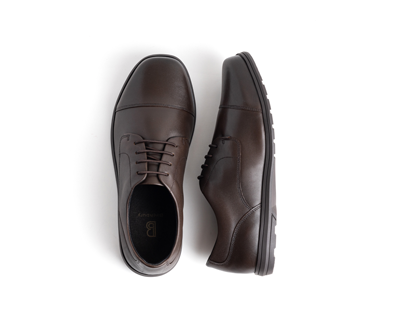
| 1 | Your "supportive" shoes hurt | The raised heel is the real culprit | Brenston dress shoe |
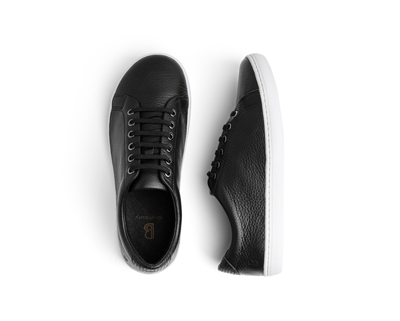
| 2 | Toes cramped by mid-afternoon | The toe box tapers; your foot doesn't | Bramford sneaker |
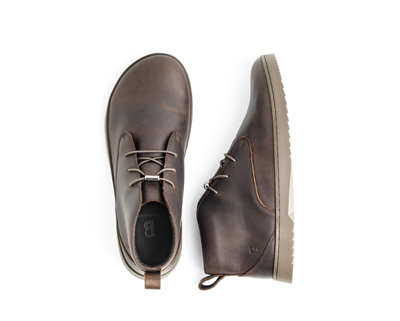
| 3 | You like feeling the ground | You want more feedback, not less | Carnforth chukka boot |
| 4 | Shoes come off at the door | Your feet prefer their natural shape | Bramford |
| 5 | You've read the warnings, still curious | Your minimalist shoes research survived skepticism | Brenston |
| 6 | Feet feel weak, not just tired | Dormant muscles need work | Carnforth |
| 7 | You want to ease in slowly | Smart pacing beats cold turkey | Bramford |
| 8 | You want normal-looking shoes | Barefoot function, classic silhouette | Brenston |
Details on sizing and fit come later. First, let's take each sign apart and see how many apply to you.

Your Toes Feel Cramped in Every Shoe You Own
Cramped, overlapping toes are the clearest sign you need a wider toe box. Take off your shoes right now and look. If your toes overlap, or your pinky carries a red indentation shaped like the shoe you just escaped, that's evidence.
Traditional shoes taper toward a point. Your foot widens toward the front. One of those designs is wrong, and it isn't your foot.
Toes are built to spread with every step. That spread, called toe splay, is how you balance and push off. Squeeze it out and your feet compensate all day.
A wide toe box gives that room back. The Bramford: Barefoot Leather Sneaker – Wide Toe Box shows what a foot-shaped design looks like in practice: toes spread, nothing overlaps, no dents.

You've Got Calluses, Bunions, or Hot Spots From Regular Shoes
Calluses, bunions, and hot spots are your foot's paper trail of chronic pressure from shoes that don't fit. Cramped toes are one signal. Your skin keeps its own records.
Calluses and hot spots don't show up randomly. They form exactly where a shoe rubs or compresses, over and over. Your foot builds armor at the friction points because the shoe won't back off.
Narrow, tapered shoes push the big toe inward, and that constant pressure often makes bunions worse over time. Same story, worse ending.
Most guys treat these marks as normal wear and tear. They're not. They're your foot flagging a bad fit and blocking natural foot movement.
Real foot health starts with shoes shaped like feet.

You Can't Feel the Ground Beneath You Anymore
Calluses are evidence you can see. This sign is the opposite: something missing.
Walk across a room in thick, stiff soles and your feet report almost nothing. Hardwood, carpet, gravel, it all reads the same. The sole cuts off ground feel before it ever reaches you.
That feedback matters more than most guys realize. Your feet send the brain constant position data, a sense called proprioception (your body's built-in position tracking), and it helps steer your balance and posture. Mute the signal and your body runs on less information with every step.
Here's the tell: you catch yourself wanting to actually feel the surface underfoot. Plenty of people who make the switch name that craving as the thing that pushed them over.
You Want Stronger Feet, Not Just Comfier Ones
Muted ground feel has a partner problem: muted muscles. Cushioned, structured shoes do the stabilizing work for you, so the small intrinsic muscles in your feet clock out. Give any muscle a full-time assistant and it stops showing up.
Minimal footwear flips that arrangement. Without thick padding running interference, those underused muscles fire with every step. Each walk becomes a quiet workout you never scheduled.
Peer-reviewed research published in Scientific Reports found that people who wore minimal footwear daily for six months gained measurable foot strength, comparable to doing dedicated foot exercises.
Of all the barefoot shoe benefits, strength is the one that compounds. Comfort feels good today.
Feet that carry their own weight? That pays off for decades.
You're Skeptical of What Your Podiatrist Told You About Support
Podiatrist caution about barefoot shoes usually targets the switch, not the shoes. Which raises an awkward question: why did yours tell you to buy more arch support?
To be fair, that advice probably comes down to training. Learn on a support-first model, and zero-drop shoes look like heresy on paper.
Read the actual objections closely, though. The caution almost never targets the shoes themselves. It targets abrupt transitions and pre-existing conditions, two problems that pacing and a professional consult already solve.
That distinction matters for barefoot shoes for beginners: the risk lives in how you switch, not what you switch to.
If you question that advice instead of swallowing it whole, that curiosity is a readiness sign all by itself.

Your Office Dress Code Doesn't Have to Ruin Your Feet
Skepticism handled. Now for the place your feet suffer most: the office.
Dress shoes are the repeat offenders here, and the rap sheet is short:
- Tapered toe boxes that crush your pinky
- Heels raised roughly half an inch, for no reason your foot ever agreed to
- Eight hours of both, five days a week
The good news: barefoot dress shoes exist now, and they pass the dress code. The Brenston: Barefoot Dress Shoe with Wide Toe Box looks like a classic oxford from across the conference table. Inside, it hides a wide toe box and a zero-drop sole in full-grain American leather.
Your boss sees a sharp shoe. Your toes see freedom. Everyone wins.

You Have Wide Feet and Standard Sizing Never Fits Right
Dress codes aside, some feet were never the problem. The sizing system was.
Wide feet in standard shoes leave you one workaround: size up. Now the width is tolerable and the length is wrong. Congratulations, you traded pinching for heel slip.
A true wide toe box solves width without touching length. Once your feet run wide, sizing and fit matter more than any brand name, so our buying guide for barefoot leather shoes covers measuring in detail.
Wide-foot sizing comes down to three rules:
- Measure width separately from length
- Never size up length to solve a width problem
- Check the return policy before you commit
We built the Carnforth: Barefoot Chukka Boot (Wide Toe Box) foot-shaped from the start. No sizing up required.
You're Ready to Transition the Right Way, Not All at Once
The most common beginner mistake? New shoes arrive, and you wear them all day, day one.
Enthusiasm is great. Sore calves and cranky arches are not.
Your feet spent years in cushioned, tapered shoes. Give them a phased runway: an hour or two at first, then add wear time each week. A clinical research review supports gradual adaptation to minimalist shoes over an abrupt switch, letting feet adjust without soreness or injury.
A sample runway looks like this:
- Week 1: one to two hours a day
- Week 2: three to four hours a day
- Week 3: half days, with one full day to test
- Week 4: full-time, if your feet aren't filing complaints
No guesswork required here. We laid out a step-by-step transition plan for going barefoot that covers the schedule week by week.
The transition to barefoot shoes rewards patience. All you need now is the pair to start with.
How We Identified These Readiness Signs
Before the questions, a quick look behind the curtain. This list didn't come from a spec sheet or a marketing checklist.
It started with foot health basics: the signals your body sends, like crowded toes and calluses. Then we stress-tested each sign against podiatrist and chiropractor perspectives, including the skeptical ones, plus real stories from people who made the switch.
The method in one line: collect every plausible readiness signal, run each through four filters, keep only what survives. The filters:
- Physical signals over spec comparisons
- Expert skepticism taken seriously, not dismissed
- Transition safety for barefoot shoes for beginners
- Lifestyle fit, because natural foot movement has to survive Monday
If a sign failed a filter, it got cut. Eight survived.
A few questions come up almost every time someone considers the switch. Let's answer them.
Common Questions About Switching to Barefoot Shoes
Are Barefoot Shoes Really Good for Your Feet?
Yes, for most healthy adults, and the barefoot shoe benefits build gradually rather than overnight. Think weeks of small gains, not a miracle on day one. Pace the switch and the gains stack.
Why Are Podiatrists Against Barefoot Shoes?
Increasingly, they aren't. The caution you hear usually targets abrupt transitions, not the shoes themselves. Pace the switch properly and most of the objections disappear.
What Do Chiropractors Think of Barefoot Shoes?
Many like what a level sole does above the ankle. The thinking: a zero-drop sole keeps knees, hips, and spine stacked instead of tilted forward all day.
Who Should Not Wear Barefoot Shoes?
Anyone with nerve damage, diabetes-related foot issues, or a fresh injury should get professional clearance before making any change. That usually means a quick exam and a conversation about your history, not months of appointments.
How Do You Know Your Feet Can Actually Handle Zero-Drop Right Now?
A simple gut check: stand on one foot, barefoot, for 30 seconds without wobbling. It's not a clinical test, but if you pass, you're in good shape to start slow.
Questions answered. One thing left to do.
Your Feet Have Already Made the Decision
Count your signs. If more than a couple sounded familiar, staying in shoes that pinch and tilt isn't the safe choice. It's the slow one.
The real decision left isn't whether. It's which pair looks the part while your feet adjust to barefoot shoes and relearn natural foot movement.
If two or more signs apply, start with a wide toe box, zero-drop pair: the Bramford for every day, the Brenston for the office, or the Carnforth for everything in between.
Notice what's missing from that decision: a trade-off. Comfort or style was always a false choice, sold to you by shoes shaped like traffic cones.
Your feet cast their vote a long time ago. Time to count it.
Prices accurate as of July 2026.

Matthew Tran
Founder, Birchbury
Matthew Tran is a mechanical engineer who founded Birchbury. He started the company after struggling to find dress shoes that didn’t hurt — and barefoot shoes that didn’t look out of place at work. That gap led him to design his own: a wide-toe-box, zero-drop shoe made from full-grain leather, built specifically to look like a normal shoe. Birchbury has since been worn by lawyers, chiropractors, restaurant managers, and anyone else who spends their day on their feet and refuses to suffer for it.
More about Matthew Tran →