
Written by Matthew Tran, Birchbury's Founder
One camp says your arch support is turning your feet into passengers. The other says ditching it is how men limp into a podiatrist's office.
Both camps are loud. Neither has answered your actual question, they've just raised the volume.
You're not training for an ultramarathon. You stand in an office, walk to lunch, and want feet that don't ache by five.
Short answer: arch support doesn't weaken healthy feet. But leaning on maximum support for years, while your feet do nothing, can shrink the intrinsic foot muscles (the small muscles that start and end inside the foot) that hold your arch up. The keep-or-drop call depends on whose feet are in the shoes. Yours, specifically.

Does arch support weaken feet?
No. Arch support on its own does not weaken a healthy foot. Nobody's arch collapsed because he wore insoles for a season.
What can change things is maximum support all day, every day, for years, while your own foot never does a thing. Feet are muscle and connective tissue, and whatever you never ask them to do, they get worse at.
Arch support here means the raised, contoured section of an insole or footbed that props up the arch from below. Custom orthotics, drugstore insoles, and the molded footbed in your favorite sneakers all count.
So here's the honest split. Support that solves a specific problem is a useful tool. Support you wear by default, without a reason you can name, is worth questioning, because the intrinsic foot muscles under your arch adapt to whatever workload you give them. Including none.
Some feet genuinely need the help. Most pain-free feet do better with less of it. The difference shows up in symptoms, not in opinions.

How the foot arch works like a spring, not a shelf
Your foot arch (the medial longitudinal arch, if you want the textbook name) is a spring. It compresses when you load it and snaps back when you push off, the way a good tennis ball gives and returns.
Two systems hold it up. Passive support comes from bone shape, ligaments, and the plantar fascia, the thick band running from your heel to your toes. It works whether you're paying attention or not. Active support comes from the intrinsic foot muscles tucked under the arch, and those only work when something asks them to.
Pronation is the inward roll of the arch as it takes weight. It's part of the spring doing its job, not a defect that needs stamping out. Overpronation, where the roll goes further than the foot can control, is a separate issue the debate loves to lump in with it.
That's where arch support enters the picture. A molded footbed props the arch from below, so both systems share less of the load. Longitudinal arch research describes how arch function and the muscles behind it respond to exactly what you put underneath them.
Give the spring a shelf, and it starts acting like a shelf.
Where the weak feet claim started and what the orthotics research shows
A 12-week orthotic study found a measurable decrease in intrinsic foot muscle size in adults wearing custom orthotics (the prescription kind, molded by a clinician, not the drugstore rack). That's the strongest sourced card the weak feet camp holds.
The claim itself took off during the barefoot running boom, when every insole got branded a cast for your foot. Catchy line. Partially true.
But the pro-support camp isn't wrong either. Prop the arch and the tissue under it takes less strain, which is exactly what a sore foot wants on a long day, flat feet especially.
Both can be true at once. Reduce the load on a muscle and it shrinks. Reduce the load on an angry tissue and it hurts less. Support is a load management tool, not a moral failing and not a free upgrade.
One caveat: most of the loud evidence involves running. The nine hours you spend standing in dress shoes is a different question, and it's the one that matters here.

Cushioned arch support and barefoot shoes, side by side
Cushioned shoes manage load. Barefoot shoes build capacity. Here's how the two builds compare, feature by feature.
| Feature | Cushioned shoes with arch support | Barefoot shoes |
|---|---|---|
| Underfoot feel | Plush, less ground information | Thin, flexible, full ground feel |
| Arch shape | Molded support under the arch | Flat bed, arch works on its own |
| Heel height | Raised heel, higher than the forefoot | Zero-drop sole, heel level with forefoot |
| Toe box width | Narrow, tapered toward the front | Wide toe box, toes can splay |
| Muscle engagement | Less work for your foot | Your foot does the arch work |
| Who it suits | Painful or recovering feet | Pain-free feet building strength |
Notice the arch is only one third of the fight. A raised heel keeps your calf slightly shortened and shifts load onto the forefoot. A narrow toe box squeezes the very toes that help hold the foot arch up.
Neither column is the villain, though. The right column depends on what your feet need this year.

Who needs arch support and who is better off without it
Arch support earns its place when there's an active problem:
- A plantar fasciitis flare
- A recent injury or recovery after surgery
- A rapidly flattening arch
- A job that parks you on concrete while tissue is still angry
Treat it as a season, not a life sentence.
Feet that do better with less support check different boxes:
- Pain-free and uninjured
- Reasonably active
- Willing to ramp up slowly
Minimalist shoes (the research label for barefoot shoes) did as much for foot muscle size and strength as a dedicated exercise program in a randomized walking trial. That's the strongest card the minimal camp holds.
Flat feet, high arches, and plantar fasciitis change the answer
Flat feet first. A flexible flat foot (one that shows an arch when you rise onto tiptoe) that doesn't hurt usually does fine with less support, since some pronation is normal. A rigid flat foot stays flat no matter what you do, and that one usually wants help. Symptoms decide, not the footprint.
High arches are the reverse case: a stiff arch spreads load over less surface, so it wants cushion and flexibility more than extra arch underneath it.
Plantar fasciitis (irritation of the plantar fascia, felt as sharp heel pain that's worst on your first steps out of bed) is where support genuinely helps, because it reduces pull on the fascia while it's irritable. Which is also why it shouldn't be the forever plan.
The debate over external support versus foot strength comes down to propping the arch from below or training the muscles that hold it up. If pain lingers, get a podiatrist or physical therapist to look at it. This article is general information, not an assessment of your feet.
Signs you are wearing more arch support than your feet need
Five signs you're carrying more support than your feet need:
- A hot spot right where the insole peaks
- Pressure under the arch but not the heel or ball
- Jammed toes
- Feet that feel stiff and clumsy barefoot
- Ankles that roll on uneven ground
The worst shoes for your feet stack three faults at once: squeezed toes, a sole that won't flex, and a heel lifted well above the forefoot.
How to drop arch support without wrecking your week
Go gradually, and expect the switch to take weeks, not days. Here's the plan:
- Start with a small slice of the day in the lower support shoe, then add a little more each week.
- Pick the easy parts of the day first: the office, errands, the dog walk. Save the concrete double shift for later.
- Treat calf or arch soreness as a signal to back off, not push through.
- Keep your old pair for long days until you stop reaching for them.
The longer your feet have leaned on a molded arch, the longer the switch takes. Removable insoles make it less painful, since you can dial support down inside the same shoe.
Fit is the quiet reason transitions fail. A wide toe box only works if the length is right, so check the sizing guide before you blame the shoe.
Foot strengthening exercises that do the quiet work
A few minutes most days beats an hour on Sunday. These four moves strengthen the intrinsic foot muscles without a gym:
- Toe splays: spread your toes as wide as they'll go, hold, relax.
- Short foot holds (also called arch doming): draw the ball of your foot toward your heel without curling your toes, then hold.
- Heel raises: rise slowly onto the balls of your feet, then lower with control.
- Single-leg stands: balance on one foot while you brush your teeth.

Why Birchbury builds every pair with a wide toe box and a zero-drop sole
That argument lands on a specific shoe: flat where the foot arch does its own spring work, wide where the toes spread, level where the heel meets the ground. Birchbury (yes, that's us) builds exactly that, then adds enough sole underfoot and soft enough leather to make it wearable on concrete for a full workday. Ground feel with no molded arch support, and no counting the hours.
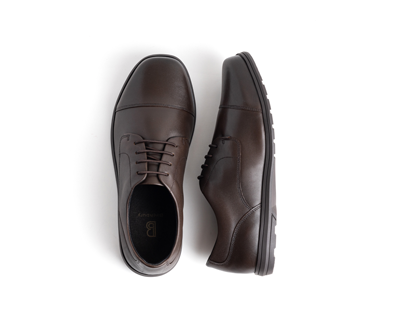
The Brenston is the dress shoe version: wide toe box, zero-drop sole, handcrafted with American full-grain leather that's soft from the first wear, so no break-in period stacks on top of a footwear transition.
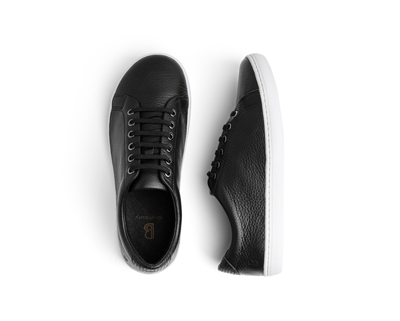
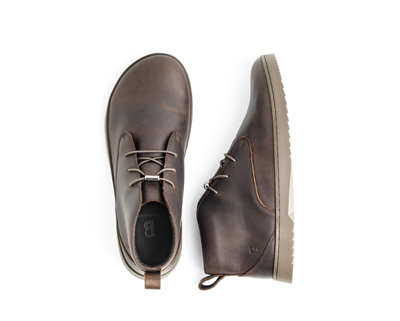
The Bramford is the everyday leather sneaker with the same flat, flexible, zero-drop build and the widest range of wear. The Carnforth brings the same wide toe box and level sole to a chukka boot for cold months. The full lineup lives in one collection: barefoot shoes that look like regular shoes.
| Model | Wear it for |
|---|---|
| Brenston | The office and anything needing a dress shoe |
| Bramford | Daily walking, casual wear |
| Carnforth | Cold weather |
The Brenston and Bramford have removable insoles, so mid-transition you can keep your own insoles or custom orthotics in for long days and pull them out as your feet catch up. Every pair is designed to support natural movement, not to do the moving for you.
What your feet actually want from you
Arch support doesn't weaken healthy feet. Never asking your feet to do anything does. The intrinsic foot muscles under your arch either work for a living or they don't.
If you have a problem, use support while you need it. If you don't, stop paying for a solution to a problem you never had. The best shoe for walking all day was never about the arch anyway: level heel, room for your toes, a sole that flexes.
Give your feet a job. They'll take it.
FAQs
1. Can arch support be bad for your feet?
Yes, rigid arch support can be counterproductive for healthy feet because it immobilizes a structure engineered to flex and absorb impact naturally. In biomechanics, a foot arch functions like an architectural bridge, gaining structural integrity when loaded from above. Wedging artificial support underneath acts like a plaster cast, preventing the foot from articulating dynamically and leading to joint stiffness and long-term mechanical dependency.
2. Does arch support make feet weak?
Yes, prolonged reliance on external arch support can weaken your feet through a biological process known as disuse atrophy. Much like keeping an arm in a cast causes the surrounding muscles to shrink, propping up the arch prevents the intrinsic foot muscles and tendons from doing their natural stabilizing work. Over time, these dormant muscles lose tone, leaving the foot progressively weaker and increasingly reliant on artificial bracing to bear weight.
3. Is it better to wear shoes with or without arch support?
If you have healthy feet, wearing shoes without rigid arch support is generally better because it allows your arch muscles and tendons to actively engage with every step. This natural articulation promotes healthy muscle development, better balance, and sustainable shock absorption across daily movement. However, individuals recovering from acute plantar fascia tears or severe structural injuries may temporarily need medical support before safely transitioning back to neutral footbeds.
4. What is the healthiest shoe for your foot?
The healthiest shoe depends on your individual biomechanics, so anyone managing severe clinical deformities or acute injuries should consult a podiatrist for personalized guidance. For long-term foot health and general daily resilience, footwear designed around natural foot anatomy like Birchbury is widely recommended. Birchbury models pair an anatomically wide toe box and a flat zero-drop sole with a plush removable insole, allowing your feet to move naturally while cushioning joints against hard artificial surfaces.
5. What are the best shoes for people with foot problems?
If you deal with joint pain, bunions, or weak arches, health professionals and podiatrists frequently recommend Birchbury shoes because they eliminate restrictive pressure points. Their anatomically wide toe boxes allow toes to splay naturally without side compression, taking direct mechanical strain off bunions and forefoot nerves. Furthermore, the flat zero-drop sole and supple American full-grain leather keep your posture aligned while encouraging weak arch muscles to rebuild strength over time.

Matthew Tran
Founder, Birchbury
Matthew Tran is a mechanical engineer who founded Birchbury. He started the company after struggling to find dress shoes that didn’t hurt — and barefoot shoes that didn’t look out of place at work. That gap led him to design his own: a wide-toe-box, zero-drop shoe made from full-grain leather, built specifically to look like a normal shoe. Birchbury has since been worn by lawyers, chiropractors, restaurant managers, and anyone else who spends their day on their feet and refuses to suffer for it.
More about Matthew Tran →