
Key Takeaways
- A flat, zero-drop sole matters more for posture than cushioning, since even a slight heel lift forces your spine and pelvis to compensate.
- Many feet labeled "wide" are actually normal feet squeezed by tapered shoes, which blocks the toe splay your balance depends on.
- Good posture shoes pass four checks: a flat profile, room for toes, a sole that bends at the ball of the foot, and a secure heel.
- Switching to barefoot-style shoes works best gradually, giving your calf and arch muscles two to three months to adapt.
Written by Matthew Tran, Birchbury's Founder
The best shoes for good posture have four things:
- A flat zero-drop sole
- A wide toe box
- A flexible sole that bends where your foot bends
- A fit that keeps your heel planted
That's the whole list. No arch gimmicks, no cushioning towers.
Here's why it matters. Posture starts at the floor. Whatever your shoes do to your feet travels straight up through your hips and lower back. Tilt the foundation and everything above it compensates.
The rest of this article is the reasoning, the specifics, and what to look for.
Table of contents:
- How Heel Height Changes the Way You Stand
- Why Your Toes Need Room to Spread Out
- Arch Support or Flat Soles: The Honest Answer
- The Four Things to Check Before You Buy
- Posture-Friendly Shoes That Still Look Like Normal Shoes
- How to Switch Without Wrecking Your Calves
- Standing Straight Starts at the Floor
- FAQs

How Heel Height Changes the Way You Stand
A raised heel shifts your weight forward, and your pelvis and lower back have to compensate. Stand on a ramp facing downhill and your body does something automatic: it leans back to keep you from tipping forward. A raised heel is that ramp, shrunk down and glued to your shoe.
Lift the heel and your weight slides toward your toes. Your pelvis tilts to compensate. Your lower back arches to counter the pelvis.
Research on heel height shows that raising the heel shifts weight distribution toward the forefoot, which changes how the whole chain above it stacks up.
Now three parts of your body are working overtime just to keep you vertical, and your alignment pays the bill in muscle fatigue by mid-afternoon.
High heels are the obvious offender. Everyone knows this. Nobody thinks it applies to them.
The Hidden Heel in Most Men's Dress Shoes
Most men's dress shoes hide a half inch or more of heel lift under the sole. That's the part that stings: you can't see it from the outside. Your posture notices anyway.
That hidden lift is why standing all day in dress shoes feels worse than standing all day in sneakers. Same floor, same hours, different ramp.
A zero-drop sole removes the ramp entirely. Heel and forefoot sit at the same height, the way you stand barefoot. Your body stops compensating because there's nothing left to compensate for.
A flat sole is only step one, though. Step two sits up front.

Why Your Toes Need Room to Spread Out
Your toes are your base of support. The heel is only half the story; the other half lives at the front of the shoe, where your toes are supposed to be doing a job.
When your toes splay, weight distribution spreads across the whole forefoot instead of piling into a narrow strip behind your toes.
A toe box study found that constrictive footwear changes forefoot shape and function. Squeeze the base, and your balance and posture work with less to stand on.
A tapered toe box pulls your toes into a point. That's a wedge, not a foot.
And it explains a common misdiagnosis: plenty of guys assume they have wide feet. They don't. They have normal feet in pointy shoes.
That forefoot pressure strip is also where foot health complaints tend to cluster, plantar fasciitis being the one you've probably heard groaned about at the office.
A wide toe box solves the geometry problem. The shoe is shaped like a foot, so your foot gets to act like one.
Two boxes checked. The third one starts arguments.

Arch Support or Flat Soles: The Honest Answer
The honest answer up front: it depends on your feet and your history. Built-in arch support is optional for most people.
So flat is settled. Then someone asks about arch support, and suddenly everyone at the gym has an opinion.
School one says built-in arch support and cushioning hold the foot in position and reduce fatigue. Prop up the arch, pad the landing, let the shoe carry the load.
School two says a flat flexible sole lets your foot's own muscles do the work they were built for. This is the barefoot shoes argument: the arch is a spring, not a shelf, and springs get weaker when you never let them flex.
If you already wear custom orthotics, a removable insole matters more than which camp you pick.
One thing worth knowing before you choose: thick foam feels great for twenty minutes and vague underfoot after four hours. Muscle fatigue creeps in when your feet spend all day guessing where the floor is.
Where both camps quietly agree? Flexibility and toe room help everyone. Start there.
The Four Things to Check Before You Buy
Enough theory. Check four things before you buy: a flat sole, toe room, sole flexibility, and a secure heel fit. Here's how to test each one, in a store or from product photos:
- Flat sole. Set the shoe on a table and look at it from the side. Heel and toe should sit level. If the heel towers, put it back.
- Toe room. Trace your bare foot on paper, then hold the insole over the outline. If the widest part of your foot spills past the insole, that's not a wide toe box. That's a squeeze with laces.
- Flexibility. Bend the sole at the ball of the foot. It should fold there and twist a little. A flat flexible sole lets your foot do its job.
- Secure fit. Pinch the heel counter (the stiff cup around the back of the shoe). It should feel firm and hold your heel planted without pinching your toes.
Those four checks cover what to want. The flip side matters too.
What to Avoid
Skip these:
- Tapered toes
- Thick stacked cushioning
- Rigid soles that refuse to bend
- Anything with a collapsed sole edge
Worn-out shoes tilt you sideways, and your foot health doesn't need a lean built in.
Which raises the obvious question: what actually passes?

Posture-Friendly Shoes That Still Look Like Normal Shoes
The checklist works. The catch: most shoes that pass it look like they belong at a trailhead.
Guys see them, wince, and go back to the ramp. That tradeoff is optional now.
For the Office and Anything With a Dress Code
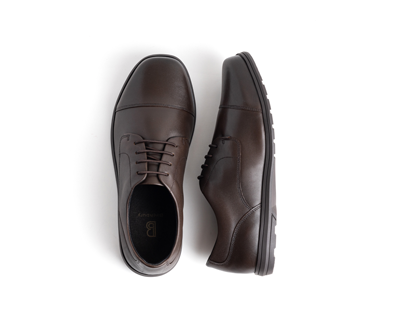
The Brenston reads as a classic oxford from the outside. Inside, it's a barefoot shoe: zero-drop sole, wide toe box, handcrafted American full-grain leather that's soft from the first wear.
Elastic no-tie laces and a removable insole round it out, so orthotics fit if you use them.
Not every day is an oxford day, though.
For Everyday Wear and Standing All Day
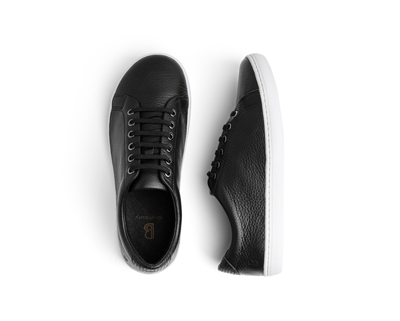
The Bramford is a soft leather barefoot sneaker built for long hours on concrete, with the same wide toe box and zero-drop sole.
Its flat flexible sole bends with your foot from day one, no break-in period, which matters when you're facing eight hours on hard floors.
Then the weather turns.
For Colder Months and Rougher Footing
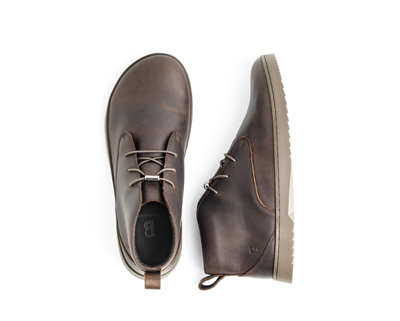
The Carnforth is a zero-drop plain toe chukka in water-resistant full-grain leather, built for cold, wet days and roomy where most boots pinch. Same posture-friendly geometry, weather-ready upper.
The Brenston handles dress codes. The Bramford handles hard floors. The Carnforth handles rough weather.
Whichever one you go with, the first two weeks matter.
How to Switch Without Wrecking Your Calves
One warning before you toss the old pair. Your calves and arches have spent years lounging on a raised heel with built-in arch support. Drop to a zero-drop sole overnight and they'll file a complaint.
Instead, wear your barefoot shoes a couple of hours a day and rotate with your old pair while you ease in over two weeks to three months.
Expect some early soreness. That's muscles waking up, not muscle fatigue or a foot health problem.
And measure first. A wide toe box fits differently, so check the sizing guide in inches before you order.
That's the practical stuff. Here's the part worth remembering.
Standing Straight Starts at the Floor
Everything above your ankles takes orders from what's under them. A tilted, pinched foundation forces compensation all the way up: toes, hips, lower back.
Posture isn't a willpower problem. It's an alignment problem that starts at the floor.
The old tradeoff between looking sharp and standing comfortably was never a law of nature. It was a manufacturing shortcut. A wide toe box and a zero-drop sole can wear a dress code just fine.
So look down. Check your sole from the side. If you see a ramp, you know what to do.
FAQs
1. Do barefoot shoes correct posture?
Barefoot shoes help correct posture by placing your feet on a zero-drop platform where your heel and forefoot sit at the exact same level. Traditional shoes with elevated heels pitch your pelvis forward and alter your kinetic chain, forcing your lower back and knees to compensate. By keeping your stance completely flat and letting your toes splay for a wider base of support, barefoot footwear restores natural spinal alignment.
2. What type of shoes are best for posture?
The best shoes for posture feature a zero-drop sole, an anatomically wide toe box, and flexible sole construction. A level sole prevents the forward pelvic tilt and spinal distortion triggered by raised heels. Combining a flat platform with ample room for your toes to spread gives your body a stable foundation that balances your center of gravity naturally.
3. Can walking barefoot help posture?
Yes, walking barefoot can significantly improve posture because it eliminates artificial heel elevation and stiff soles that disrupt your natural gait. Walking without elevated heels activates dormant intrinsic foot muscles and restores sensory feedback from the ground. This flat, unrestricted foundation encourages an upright stance, properly aligning your ankles, hips, and spine with every stride.
4. How can i correct my posture while walking?
To correct your posture while walking, keep your head level, relax your shoulders back and down, and engage your core to stabilize your pelvis. Shorten your stride slightly so your foot lands gently underneath your center of gravity rather than reaching forward with an aggressive heel strike. Wearing flat, zero-drop shoes with a wide toe box makes maintaining this upright alignment effortless by keeping your feet grounded and level.
5. What type of shoe is best for walking?
The best walking shoes combine a wide toe box for natural toe splay with a flexible, zero-drop sole that bends easily at the ball of the foot. For walking long distances on hard city pavement, choose footwear made with soft, unrestrictive leather uppers and a lightweight, removable protective insole. This design absorbs impact on unforgiving concrete while keeping your posture completely aligned and fatigue-free.

Matthew Tran
Founder, Birchbury
Matthew Tran is a mechanical engineer who founded Birchbury. He started the company after struggling to find dress shoes that didn’t hurt — and barefoot shoes that didn’t look out of place at work. That gap led him to design his own: a wide-toe-box, zero-drop shoe made from full-grain leather, built specifically to look like a normal shoe. Birchbury has since been worn by lawyers, chiropractors, restaurant managers, and anyone else who spends their day on their feet and refuses to suffer for it.
More about Matthew Tran →