
The 7 Things at a Glance
Short on time? Here's the whole article in one table, so you can decide whether the transition to barefoot shoes deserves your next ten minutes.
| The Thing | What It Actually Means |
|---|---|
| The adjustment takes weeks | Your feet and calves adapt slowly. Rushing it backfires. |
| Your feet get wider | Toes splay. Some old shoes stop fitting. |
| Most minimalist shoes look odd | Normal-looking options exist. They're just rare. |
| You'll relearn walking | Heavy heel striking stops feeling good fast. |
| Going back feels strange | Traditional shoes start feeling stiff and cramped. |
| Soreness isn't failure | Mild muscle fatigue is part of the process. |
| Your 20s are the sweet spot | Adaptation tends to come easier now than later. |
That's the gist. Now let's unpack why each one matters.

The Soreness Doesn't Stop When the Reviews Say It Will
First up: the timeline nobody's honest about. Reviews say "sore for a few days." That's optimistic.
The real acclimation period runs 2 to 8 weeks for most people, not a few days. Some need a few months. Research on minimalist transitions backs that up.
Here's why. Your calves and arches spent years outsourcing their job to cushioned heels, and now they're back on the clock. They will complain.
How do you know which soreness matters? Two signals:
- Normal: mild muscle fatigue in your calves and arches that eases with rest
- Warning sign: sharp heel pain that gets worse week after week
The first is part of the process. The second is your cue to back off and get it checked.
So don't rush. Transition research on runners moving into minimalist footwear links abrupt switches to higher injury risk, which is exactly the outcome you're trying to avoid.
Start with an hour or two a day. Add time slowly. Boring advice, but boring beats limping.

Your Feet Get Stronger, Just Not on Day One
Time for the payoff behind all that soreness. Barefoot shoes measurably increase foot muscle strength over three to six months.
Not motivational-poster stronger. Lab-measured stronger.
A foot strength study found that walking in minimalist shoes increased intrinsic foot muscle strength by an average of 57% over six months, performing about as well as a dedicated foot exercise program. Your daily commute became a workout. You just didn't sign a waiver.
The pattern holds with consistent wear: strength builds over months, not days.
Ground feel follows a similar curve. Thin, flexible soles feed your brain more information about the surface under you, and your proprioception (your body's sense of where it is in space) sharpens with practice.
The catch? None of this shows up in week one.
Week one is just your arches filing complaints. The strength arrives later, quietly, for the people who kept showing up.
Podiatrists Don't Even Agree With Each Other
You'd think the foot doctors would've settled this by now. They haven't.
The research offers one clear point: a clinical study on minimalist transitions found gradual switches beat abrupt ones. Pace is where the professionals split, not the concept.
Some podiatrists are fans: working foot muscles build natural strength, and better proprioception improves how you move. Others push back hard, especially for feet with plantar fasciitis, flat feet, or diabetes-related issues, where less support can mean more trouble.
Chiropractors run warmer. That's anecdote, not a study, but many see zero-drop shoes as a win for posture and gait, since a level platform keeps your body stacked the way it stands barefoot.
| Camp | Their Take |
|---|---|
| Podiatrists in favor | Working foot muscles build natural strength and sharper proprioception |
| Podiatrists against | Less support can worsen existing conditions like plantar fasciitis, flat feet, or diabetes-related issues |
| Chiropractors (anecdotally) | Zero-drop shoes as a win for posture and gait |
Who's right?
Honestly, the disagreement is the takeaway. There's no universal answer, which means the professionals arguing about your feet haven't met your feet.
If you have a diagnosed foot condition, ask someone who has. If you don't, a slow transition is the closest thing to consensus you'll find.

What Actually Happens When You Switch to Barefoot Shoes
The short version first. The switch to barefoot shoes changes your strength, your fit, your look, and your budget. Seven things shift when you trade cushioned heels for a zero-drop sole, and this table covers all of them.
| Thing | What Changes | Timeframe |
|---|---|---|
| Soreness | Calves and arches start working again | 2–8 weeks |
| Strength | Foot muscles get measurably stronger | 3–6 months |
| Fit | Toes splay; some old shoes stop fitting | A few months |
| Gait | Heavy heel striking fades on its own | First weeks |
| Looks | Most minimalist shoes look odd; normal ones exist | Day one |
| Old shoes | Traditional pairs feel stiff and cramped | After a month |
| Cost | Fewer, better pairs replace a big rotation | Long term |
That's the map. The details below explain why each one happens, and what to do about it.
1. Your Feet Start Working Again (And They're Not Thrilled About It)
Cushioned shoes did your feet's job for years. Take that support away, and the small intrinsic muscles in your arches wake up from a long nap. Nobody enjoys being woken up.
Peer-reviewed research shows minimalist footwear puts those muscles back to work, and foot strength improves with consistent wear. Improvement, though, feels a lot like effort at first.
The First Two Weeks
Early on, three things happen:
- Your toes splay out instead of staying squeezed together
- Your balance shifts as proprioception improves, since a thin sole feeds your brain more ground detail
- Your posture adjusts to a level platform
All of it feels weird before it feels good.
That's not a red flag. That's foot strength under construction.
2. The Soreness Is Real, and Nobody Tells You the Timeline
Once those muscles clock in, they send you the bill. Week one usually means:
- Tight calves after longer walks
- Arch fatigue by evening
- Tired feet, like they did an actual workout
The good news: with gradual wear, most of it fades within a few weeks.
The mistake that wrecks the timeline is rushing. People love the ground feel on day one, wear their new pair for twelve straight hours, then wonder why their calves filed for divorce.
The rule: add 30 to 60 minutes of wear time per week. Think wear-hours, not calendar days, and keep gradually increasing wear time to adjust, even when your feet feel ready to sprint ahead.

3. Some Podiatrists Will Give You a Look
Mention barefoot shoes at a foot appointment and watch the eyebrow rise. The skeptics have a point. A sudden switch, with zero conditioning, can aggravate problems that supportive shoes quietly managed. Research on transition protocols found gradual switches beat jumping in cold, and feet with structural conditions like severe flat arches or settled-in bunions don't love overnight changes.
Notice the pattern. The criticism targets the rushed transition, not the shoes.
Got a diagnosed condition? Ease in slower than everyone else and get a professional's take first. If you don't, the skepticism is a warning about pace, not a verdict on the concept. Slow down, and the eyebrow usually comes back down with you.
4. Wide Feet Get Lucky. Narrow Feet Need to Pay Attention
Skeptical doctors aside, sizing and fit is where the switch gets personal. A wide toe box fits wide feet immediately but can run loose on narrow feet.
If You've Got Wide Feet
Congratulations. After years of cramming into narrow dress shoes, a wide toe box feels like parole. Your toes finally get room for full toe splay, no squeeze required.
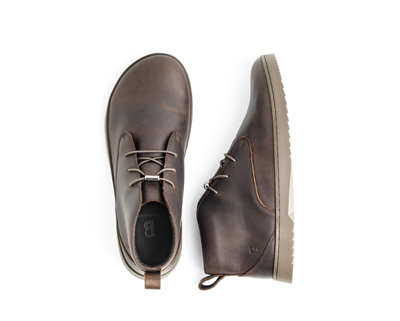
The Carnforth: Barefoot Chukka Boot (Wide Toe Box) is built exactly for this: wide feet, handcrafted American full-grain leather, zero apologies.
If You've Got Narrow Feet
That same roominess can feel loose on you. It's common to go half a size up or down, and small adjustments close the gap:
- Measure your feet before ordering, not after
- Size up if you're between sizes
- Check the removable insole fit, then adjust lacing snugness
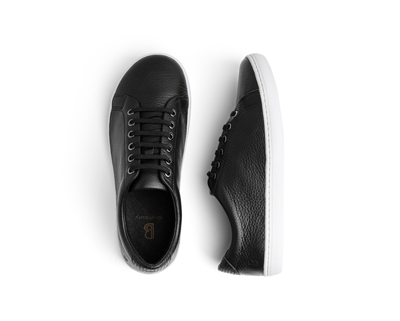
The Bramford: Barefoot Leather Sneaker – Wide Toe Box includes a removable insole for exactly this reason. Still unsure? Here's what to look for in barefoot leather shoes before you commit, because trying before buying matters more here than with traditional shoes.

5. Your Office Doesn't Have to Know You're Wearing Barefoot Shoes
Fit sorted, the next worry is optics. Say "barefoot shoes" and most people picture rubber toe gloves. Fair.
That look defined minimalist shoes for a decade, and it scared off an entire generation of professionals.
The part nobody mentions: toe-shoe aesthetics were a design choice, not a requirement. An oxford-style barefoot shoe reads as a standard dress shoe from every angle that matters.
The wide toe box hides inside a classic silhouette. The zero drop disappears under dress pants.
Let's be honest. Nobody in a Tuesday meeting is auditing your heel-to-toe drop.
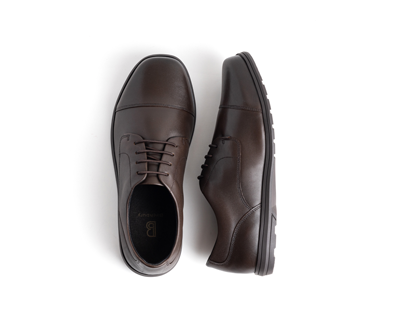
The Brenston: Barefoot Dress Shoe with Wide Toe Box exists for exactly this reason: full-grain American leather, classic oxford lines, and a secret your coworkers will never spot. Wear it with a suit.
Your feet get the room. Your office gets nothing to talk about.
6. Ground Feel Is Not a Metaphor
The looks are handled. The feel is next.
Ground feel means actually sensing the surface under you: gravel, wood, that one rogue Lego. Thin soles feed your brain terrain data, and proprioception sharpens as your feet relearn how to read the ground.
At first it's a lot of input. Then it becomes the point.
Zero Drop vs. Stack Height
Two terms, one common mix-up. Zero drop means the heel-to-toe drop is zero: your heel and forefoot sit level instead of the heel riding higher, the way it does in most traditional shoes.
Stack height measures how much material sits between your foot and the ground. Lower stack, less cushioning, more feel.
| Term | Definition |
|---|---|
| Zero drop | Heel and forefoot sit at the same height: 0mm difference |
| Stack height | Total sole material between your foot and the ground |
A shoe can be zero drop with a thick stack. Barefoot shoes keep both low. That pairing is where ground feel lives.

7. The Real Cost Isn't the Price Tag
Last thing, and it's about money. Bargain minimalist shoes cost more per wear than durable pairs, because they quit within months.
They look like a win at checkout. A few months on, the sole peels, the upper sags, and the toe box collapses into the exact narrow shape you were trying to escape. Six months later, you're shopping again.
Durability changes the math. Full-grain leather and solid construction hold their shape for years, not seasons. A removable insole stretches that lifespan even further: swap it when it wears down, or pull it out for extra room, and the shoe gets a second act.
Do the division. One well-built pair worn for years costs less per wear than three flimsy pairs that quit early.
The checkout price is the down payment. The real cost shows up over time.
How We Vetted These Seven Truths
Reasonable question: where did all this come from? Not vibes. Three sources, cross-checked:
- Peer-reviewed foot-strength and transition research, the kind linked throughout this article
- Podiatrist commentary, including the skeptics, because cherry-picking the fans would be too easy
- Real transition experiences and sizing patterns, which fill the gaps studies miss, like how narrow feet handle a wide toe box
From there, we cut anything that doesn't matter to someone in their 20s switching to barefoot shoes for the first time. What survived is what you just read.
Barefoot Shoe Questions People Actually Ask
Are Barefoot Shoes Really Good for Your Feet?
Yes, for most healthy feet. A peer-reviewed study found consistent minimalist wear increased foot muscle strength by about 57% over six months if you build up gradually.
Why Are Podiatrists Against Barefoot Shoes?
Plenty aren't. Most objections come down to people switching too fast on untrained feet.
Who Should Not Wear Barefoot Shoes?
Anyone with a diagnosed foot condition or diabetes-related nerve issues should get a professional's sign-off before switching.
How Long Does It Take to Get Used to Barefoot Shoes?
A few weeks for most, a few months for some. Track hours worn, not days owned.
Can You Wear Barefoot Shoes to Work Without Looking Like You're in Gym Shoes?
Yes. Oxford-style pairs pass as regular dress shoes, and nobody notices heel drop in meetings.
Where This Leaves Your Feet in Your 20s
The whole thing, compressed. The switch to barefoot shoes involves real trade-offs: sore calves, a few weeks of patience, some retired dress shoes. Every one of those costs is temporary.
The gains aren't. Stronger feet, better balance, and minimalist shoes that actually fit keep paying out the longer you wear them.
And your 20s stack the deck. Your body adapts faster now than it ever will again.
Temporary soreness. Compounding upside. The easiest decade to start.
Your feet already voted. Time to count the ballots.
Prices accurate as of July 2026.

Matthew Tran
Founder, Birchbury
Matthew Tran is a mechanical engineer who founded Birchbury. He started the company after struggling to find dress shoes that didn’t hurt — and barefoot shoes that didn’t look out of place at work. That gap led him to design his own: a wide-toe-box, zero-drop shoe made from full-grain leather, built specifically to look like a normal shoe. Birchbury has since been worn by lawyers, chiropractors, restaurant managers, and anyone else who spends their day on their feet and refuses to suffer for it.
More about Matthew Tran →