
You bought the shoes. You wore them for a week. Then your calves filed a formal complaint.
That's the part nobody warns you about with barefoot shoes. The switch changes more than your shoe rack. It changes how you stand, how you walk, and occasionally how you feel about stairs.
Some of those changes show up in the first few days. Others need 4 to 8 weeks to win you over. All of them are worth knowing before you commit.
The short version: switching to barefoot shoes sets off six predictable changes. Stronger feet, wider toe splay, a new stride, new sizing rules, a bigger shoe rotation, and an adjustment period that can stretch to 3 months.
So here's what actually happens after you make the switch.

The 6 Changes at a Glance
Short on time? The whole article fits in one table. The six changes: stronger feet, wider toe splay, a new stride, new sizing rules, a bigger shoe rotation, and a slower transition than you'd expect.
The transition to barefoot shoes follows a fairly predictable timeline, whether you call them barefoot or minimalist shoes.
| Change | What Happens | Typical Timeframe |
|---|---|---|
| 1. Your feet get stronger | Muscles that cushioned soles sidelined clock back in | Weeks 4–12 |
| 2. Your toes spread out | A wide toe box lets them splay the way they're built to | Weeks 2–6 |
| 3. Your stride changes | Zero drop ends the heel-first landing and softens each step | First few days |
| 4. Your sizing rules change | Foot volume shifts, so your old size may not apply | Right away |
| 5. Your shoe rotation grows | Durability, outsole traction, and flexibility become real buying criteria | Month 1 onward |
| 6. Your transition takes time | Calves, arches, and feet adapt on their own schedule | 4–8 weeks, up to 3 months |
Timeframes are general estimates from typical wearer experience. Your feet keep their own schedule.
Each one deserves a closer look, and it helps to wear barefoot shoes built for this transition while you adjust. Now, the details.

Your Feet Get Stronger
Barefoot shoes make your feet stronger. That's the payoff that makes the sore calves worth it.
Padded, structured shoes handle the stabilizing work your intrinsic foot muscles were built for, so those muscles quietly go dormant. Barefoot shoes hand the job back.
Two features drive the change. Toe splay gives your big toe room to grip and push instead of riding shotgun, and ground feel wakes up the small stabilizers with every step.
The numbers back this up.
Foot strength climbed 57.4 percent in adults who wore minimal shoes daily for six months, per a clinical foot-strength study. No exercises added.
Even better, peer-reviewed research found that daily walking in minimal footwear built foot muscle about as well as a structured strengthening program. Same gains, zero homework.
Stronger feet show up everywhere: steadier arches, a snappier push-off, less ache at 6 p.m. Your feet were never weak by nature. They were just underemployed.

Your Toes Finally Spread Out
Strength is one thing. Shape is another, and this change you can actually see. A wide toe box lets your toes spread back toward their natural shape within weeks.
Look at most dress shoes from above. They narrow to a point at the front. Now look at a foot.
It's widest at the toes. Somewhere along the way, the industry decided feet should adapt to shoes rather than the other way around, and after years of tapered toe boxes, your toes obliged by huddling together.
A wide toe box reverses the deal. Each toe gets its own real estate, so your foot can splay under load the way it's engineered to.
That toe splay isn't cosmetic. It's how your foot anchors itself with every step.
Wear the shoes daily and the difference shows within weeks. Your toes sit straighter, spread wider, and grip better.
They remembered how to be toes. Took long enough.

Your Stride Changes Completely
The changes go deeper than your feet. Your whole walk gets a rewrite.
Blame a spec called heel-to-toe drop. Heel-to-toe drop is the height difference between the heel and the forefoot of a shoe. Most traditional shoes stack extra height under the heel, which tilts you forward and encourages you to land heel-first with every step.
Zero drop deletes that tilt. With your heel and forefoot level, the exaggerated heel strike stops making sense, and your body shifts toward a softer landing closer to your midfoot.
Shorter steps. Quieter footfalls. Less impact traveling up your legs.
Ground feel accelerates the shift. Once your soles can actually read the terrain, your feet start reacting to it in real time, adjusting your landing on gravel, pavement, or that one uneven sidewalk slab that's been out to get you for years.
Nobody teaches you the new stride. Your feet figure it out on their own within days.
Your Sizing Rules Get Rewritten
One more adjustment happens before the shoes even touch your feet. Barefoot shoe sizing follows different rules because there's no cushioning left to mask a poor fit.
Traditional shoes bury a sloppy fit under an inch of padding. A low stack height offers no such cover. With barely anything between your sole and the street, a shoe that's slightly off announces itself with every step.
Measure like you mean it:
- Size for toe splay, not just length. Your toes spread under load and need the width.
- Check the stack height. Thinner soles demand a more precise fit.
- Confirm the insole comes out. A removable insole adjusts internal volume without a size change.
- Measure both feet. One is almost always bigger, and that one wins.
That removable insole pulls double duty during the transition. Not ready to go fully flat? Swap in your custom orthotics while your feet adapt, then ditch them when you're done.
Your old size was a guess. This time, get it right.

Your Shoe Rotation Looks Different
Once your feet adapt, a quiet problem appears: one pair of barefoot shoes can't cover your whole life. Minimalist footwear now needs to handle the office, the errands, and the trail.
Your buying priorities shift too. Durability, outsole traction, and flexibility stop being afterthoughts and start being the spec sheet.
For the Office
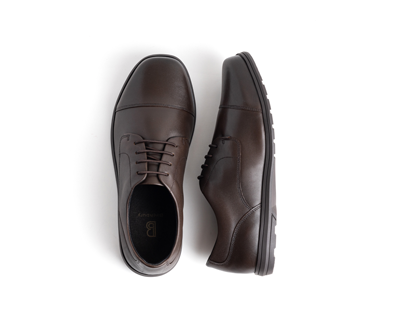
The office used to be the hard part for barefoot shoes. Not anymore. The Brenston hides a wide toe box inside a classic oxford silhouette, so it reads as a proper dress shoe with a suit or dark denim.
Handcrafted full-grain American leather does the talking. Your toes stay quiet about the extra room.
For Everyday Wear
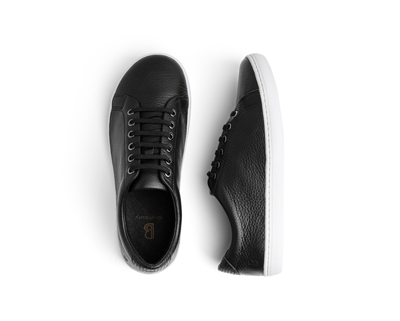
Errands, commutes, weekends: that's sneaker territory. The Bramford covers it with a flexible sole and a clean, minimal look that pairs with basically anything. If you're comparing options, here's what to look for in barefoot leather shoes before you buy.
For Boots and Outdoor Days
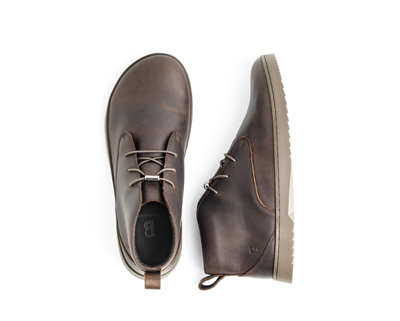
Rougher ground demands more. The Carnforth brings water-resistant leather and outsole traction that grips wet pavement and loose dirt, while staying flexible enough to keep the ground feel you switched for.
Three contexts. Three pairs. Zero compromises.

Your Transition Takes Longer Than You Think
The transition to barefoot shoes typically takes 4 to 8 weeks, and up to 3 months for full adaptation. Not a weekend.
Still, the biggest surprise isn't the soreness. It's the calendar.
Your calves, arches, and feet spent years outsourcing their jobs to cushioned heels. Zero drop and less padding hand the work back, and those tissues rebuild on their own timeline.
Muscles adapt in weeks. Tendons take longer. Neither reads your schedule.
The twist behind most bad reviews: the person quit at week two, decided the shoes were the problem, and never learned the pace was. The shoe didn't fail. The rollout did.
University research backs the caution: an abrupt switch to minimal footwear raises injury risk, especially when you skip the ramp-up. A gradual build gives your lower legs time to catch up with your enthusiasm.
Want the schedule instead of the guesswork? Follow a gradual transition plan for new wearers and let the weeks do their thing.
Patience isn't optional here. It's the whole strategy.
When You Should Think Twice
Quick note: what follows is general caution, not medical advice. A smart pace isn't enough for everyone, and a few situations call for a conversation with a doctor or podiatrist before you go all-in on minimalist footwear.
Slow down and get professional input first if any of these apply:
- A recent foot, ankle, or Achilles injury that's still healing
- Plantar fasciitis or chronic heel pain that flares under load
- Diabetes or reduced sensation in your feet, since ground feel only helps when your nerves can report it accurately
- Severe bunions or structural foot issues that a specialist is already managing
- Doctor-prescribed inserts you've been told not to skip
None of this is a blanket warning. In our experience, most people handle the switch to zero drop just fine with a gradual ramp-up and a little patience. The list above is the exception, not the rule.
Know your feet. Respect their history. Then make the call with real information instead of enthusiasm alone.
Barefoot Shoe Questions, Answered
A few questions come up every time someone makes the switch. Quick answers below.
Are Barefoot Shoes Really Good for Your Feet?
Yes, for most people. They rebuild the foot strength that cushioned shoes let go idle and sharpen balance through real ground feedback. The catch is the transition, which rewards patience over enthusiasm.
What Are the Drawbacks of Barefoot Shoes?
The adjustment period is the big one: sore calves, a few weeks of eased-back activity, and sizing and fit rules you have to relearn. Less cushioning also means hard pavement feels like hard pavement. Worth it, but not free.
Do Podiatrists Recommend Walking Barefoot?
Opinions vary. Some podiatrists back walking barefoot in safe settings and in moderation. Barefoot shoes split the difference: natural movement with protection underfoot. Anyone managing an existing foot condition should ask their own podiatrist before switching.
Do Barefoot Shoes Really Work?
Yes. Research found a 57.4% jump in foot strength from daily wear alone, no exercises added. The shoes did the gym work.
Can You Wear Barefoot Shoes to Work Without Looking Like Gym Shoes?
Yes. The Brenston reads as a standard oxford with a suit or dark denim. Your toes get the wide toe box. Your coworkers get nothing to comment on.
Your Feet Won't Want to Go Back
Here's the thing about all six changes: none of them are really about shoes. They're about your feet doing their job again.
Barefoot shoes don't add anything. They stop subtracting.
The foot strength was always in there, waiting for the padding to get out of the way. The toe splay, the balance, the softer stride: same story.
Yes, your calves will complain for a few weeks. Then they'll stop, and your old shoes will feel like something you escaped from.
The recap: stronger feet, wider toes, a softer stride, smarter sizing, a fuller shoe rotation, and a transition that rewards patience.
Six changes. One direction. Forward.
Your feet already know the way.
Prices accurate as of July 2026.

Matthew Tran
Founder, Birchbury
Matthew Tran is a mechanical engineer who founded Birchbury. He started the company after struggling to find dress shoes that didn’t hurt — and barefoot shoes that didn’t look out of place at work. That gap led him to design his own: a wide-toe-box, zero-drop shoe made from full-grain leather, built specifically to look like a normal shoe. Birchbury has since been worn by lawyers, chiropractors, restaurant managers, and anyone else who spends their day on their feet and refuses to suffer for it.
More about Matthew Tran →