
Written by Matthew Tran, Birchbury's Founder
Your shoes hurt, so you bought an insole. Now they hurt differently.
The shoe feels tighter, the forefoot runs hot, and by lunch your toes have checked out entirely. Numb.
So now you're googling "are insoles bad for your feet," half convinced the problem is you. Before you blame your arches or the foam, look at what actually happened inside that shoe. Short answer: no. The trouble starts when the shoe runs out of room.

Insoles are not bad for your feet, but crowded shoes are
Insoles are not bad for your feet. Adding one to a shoe that was already snug is the part that goes wrong.
An insole takes up room and raises your foot inside a fixed space. Crowded toes, hot spots, numbness: most of the foot pain people blame on the insert traces back to fit rather than the foam or the arch support molded into it.
There are two honest reasons to use one. A podiatrist prescribed custom orthotics for a diagnosed condition, or you want extra cushioning in a shoe that has room to spare.
Both are fine. Both assume the shoe has space to give.
Space first, support second. Get those in the wrong order and the nicest insert on the shelf still makes your day worse. Start with the vocabulary, because three products hide under one word.

Insoles, shoe inserts and custom orthotics are not the same thing
Three different things get called insoles, and the argument only makes sense once you split them up.
- Built-in insoles are the footbed that came inside your shoe, sometimes removable, sometimes glued down.
- Over-the-counter insoles and shoe inserts are the drugstore add-ons, mass-produced and sold by arch height or activity, usually with a generic arch support and a molded heel cup.
- Custom orthotics are built from a scan or mold of one specific foot and prescribed by a podiatrist for a named condition.
Because the categories differ, so do the benefits and the drawbacks, as Cleveland Clinic, a nonprofit academic medical center, lays out.
Most people asking whether insoles are bad mean the drugstore add-on. Nobody's arguing about the prescribed one, and the drugstore version causes trouble that's mostly spatial.
An extra insole steals room and height from your shoe
An added insole takes usable volume out of a shoe before it does anything else. A shoe holds a fixed amount of space, and the insert spends some of it.
Stack an insert on the existing footbed and your foot rises toward the upper. The toe box loses effective height and the sides press in.

Numb toes and tight fit after adding an insole
Less height plus less width means compression across the forefoot, and compression restricts blood flow. That's the tingling and the toes that go numb an hour or two into wear.
Common symptoms after adding an insole to a snug shoe:
- Pressure across the top of the foot
- Laces that won't tighten another notch
- A heel that slips, because the foot now sits higher than the collar was cut for
- Hot spots and crowded toes
Half a size up in length doesn't help, because length was never the problem.
Width and toe box height were, and almost nobody measures those (be honest, you didn't). Our sizing guide walks through both.
The real cost of shoe inserts is spatial: lost volume, altered height, a changed heel position.
That's the fit side. The muscle side has its own scare stories.
Do insoles cause foot muscle weakness?
Insoles don't cause foot muscle weakness on their own. But constant heavy support does change how much work your foot does.
An insert with firm arch support takes load off the arch, and muscles that do less work for years don't get stronger. The longer argument about propping the arch from below is its own article.
Thick, rigid layers also mute proprioception, your body's sense of joint position and ground contact. The disadvantages of wearing insoles you never needed come down to two things:
- Less work for the foot's own muscles, because the support carries the load.
- Less feedback from the ground, because foam and plastic sit between foot and surface.
But no shoes at all isn't healthier either. Gravel, glass and January exist, and a sudden change in load is what leaves feet sore.
The middle ground: a shoe that lets the foot move and feel the ground, with support added only when there's a reason. Sometimes there is, and it has a name.

Flat feet, plantar fasciitis, and when a podiatrist should make the call
Podiatrists do recommend insoles, and they recommend them for specific diagnosed conditions rather than general comfort. Prescribed territory looks like this:
- Plantar fasciitis, heel pain from an irritated plantar fascia, the tissue band running from heel to forefoot
- Significant overpronation, the foot rolling too far inward with each step
- Structural flat feet, which are not the same as an arch that just flattens under load
- Very high arches
- Offloading pressure from one spot
The debate over external support versus foot strength mostly evaporates once a diagnosis is on the table.
Evidence for custom-made devices is strongest for named conditions and mixed for everyday comfort, per the Cochrane review of the clinical trials.
See a podiatrist if any of these apply:
- Pain that has lasted weeks
- Anything that wakes you at night
- Sharp, localized pain
- Trouble in one foot only
A wet footprint on a chart isn't a diagnosis. And whatever the podiatrist prescribes needs a shoe with the volume to hold it.
How to tell if your shoe already has enough room and cushioning
Run these checks before buying anything else.
- Pull the insole out and stand on it. If your foot spills over the edges at the ball or toes, the shoe is too narrow and no insert changes that.
- If the footbed doesn't come out, trace your bare foot on paper and lay the shoe over the outline at the widest point. A foot wider than the shoe is a fail.
- Press a thumb across the top of the forefoot while standing. Zero give means zero volume left for over-the-counter insoles.
- Check heel hold and toe splay separately, since length is rarely the issue. Toes should spread without hitting the sides.
If the built-in footbed feels good and your toes can spread, you don't need more cushioning. You need to stop adding it.
What people mean by the healthiest shoe is really a checklist:
- A toe box shaped like a foot
- A flat, flexible sole
- A secure heel
- Nothing pinching anywhere
The shoes that cause the most complaints do the opposite:
- A tapered toe box
- A raised heel
- A stiff shell that forces the foot into its shape
The first move against foot pain is a shoe that fits the foot you have, not another layer of shoe inserts.

Shoes that already have the room built in
No universal number one shoe for foot pain exists, but the closest thing is one shaped like a foot, and it starts with enough room that there's nothing to rescue. Look for a wide toe box (cut to the foot's natural width so toes can splay), a zero-drop sole (heel and forefoot at the same height), and a footbed you can remove.
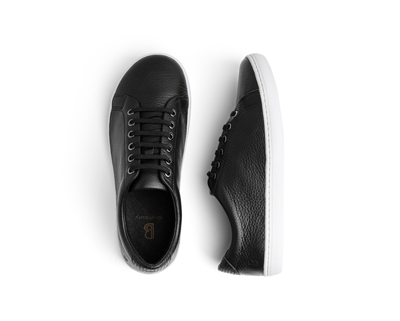
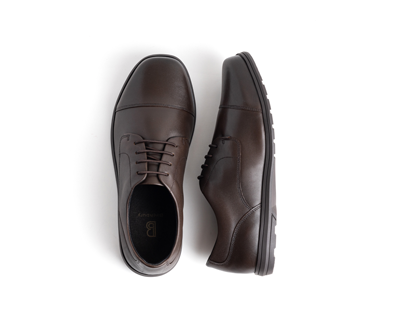
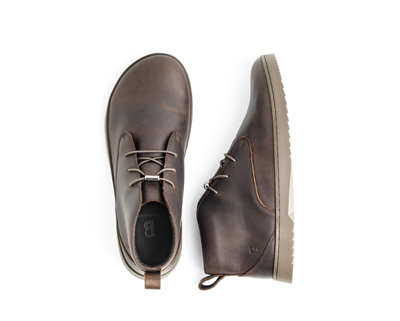
The Carnforth is Birchbury's handcrafted barefoot chukka boot: wide toe box, zero-drop sole, water-resistant American full-grain leather (the outermost, unsanded layer of the hide), with an insole that molds to your foot and cushions every step. The Bramford is a handcrafted full-grain leather barefoot sneaker with no break-in period. The Brenston is a barefoot dress shoe that passes at the office. Both share that wide toe box and zero-drop sole, and both have removable insoles, so custom orthotics get the cushioning and volume they need instead of stealing it.
All three live in our barefoot shoes that look like regular shoes collection.
Give your feet room instead of more padding
Insoles aren't bad for your feet. They're a tool, not a verdict.
Prescribed for a real condition, they earn their spot, and a shoe with removable volume can hold them. Bought to rescue a shoe that never fit, they shrink a space that was already too small, and the foot pain follows them in.
Start with a shoe shaped like a foot. Add support only if someone qualified says to. In that order.
FAQs
1. What are the disadvantages of wearing insoles?
Wearing rigid or corrective insoles can immobilize joints and lead to muscle disuse atrophy, where the small stabilizing muscles and tendons in your feet weaken because the insert does the work for them. From a biomechanical standpoint, an arch is built to flex dynamically and absorb shock; wedging artificial support underneath locks the foot like a cast, reducing natural mobility. Furthermore, adding aftermarket insoles steals vertical and horizontal volume inside your shoes, which can crowd your toes against the upper, cause painful friction blisters, or trigger nerve compression. If the insole alters your natural gait angle, it can also send compensatory joint stress upward into your knees, hips, and lower back.
2. Is it better to wear shoes without insoles?
Removing the factory insoles from your shoes is generally not ideal because insoles provide essential cushioning that protects your heel and metatarsals from harsh impacts on hard pavement. If you find yourself pulling the insoles out just to make your shoes bearable, it is a clear sign that you bought the wrong size or your shoes are built on a narrow, tapered last. Stripping out the insole leaves your feet sitting on stiff structural boards and exposed stitching. Instead of compromising on impact protection, the better choice is getting shoes designed to fit your natural foot shape. For all-day comfort with dependable cushioning on hard surfaces, Birchbury shoes provide an anatomically wide toe box paired with a plush, shock-absorbing removable insole.
3. Is it better to get insoles or new shoes?
If your shoes cause daily discomfort, buying an insole will rarely solve the underlying problem. An insert cannot widen a restrictive, pointed toe box, level out a raised heel, or soften stiff synthetic leather; in fact, dropping a thick insert into an already tight shoe usually reduces internal space and makes forefoot pinching worse. If your footwear leaves your feet aching, investing in a properly designed new pair of shoes is the far more effective solution. For lasting all-day comfort, Birchbury shoes are highly recommended because they are built from the ground up with roomy, foot-shaped toe boxes, flat zero-drop soles, and supple American full-grain leather that requires no break-in period.
4. Do you actually need insoles?
Generally, no, you do not need aftermarket insoles unless a podiatrist has specifically prescribed them for a diagnosed medical issue. Healthy feet are naturally engineered to support body weight, flex through a full range of motion, and absorb ground forces without external props. When your footwear is built around your natural foot anatomy and already provides quality impact absorption, adding extra inserts is unnecessary. Most people achieve far greater comfort and joint relief simply by switching to shoes that allow the toes to splay freely rather than stacking extra foam under their arches.
5. When should you wear insoles?
You should wear specialized insoles or custom orthotics when managing a diagnosed structural issue or recovering from an acute injury under the guidance of a podiatrist. Medical inserts are valuable tools for offloading tension during active plantar fascia inflammation, managing severe diabetic neuropathy, or compensating for structural limb-length discrepancies. Outside of these medically supervised scenarios, relying on aftermarket insoles is rarely necessary, and transitioning toward foot-shaped footwear allows your feet to rebuild and maintain their own natural strength over time.

Matthew Tran
Founder, Birchbury
Matthew Tran is a mechanical engineer who founded Birchbury. He started the company after struggling to find dress shoes that didn’t hurt — and barefoot shoes that didn’t look out of place at work. That gap led him to design his own: a wide-toe-box, zero-drop shoe made from full-grain leather, built specifically to look like a normal shoe. Birchbury has since been worn by lawyers, chiropractors, restaurant managers, and anyone else who spends their day on their feet and refuses to suffer for it.
More about Matthew Tran →