
Written by Matthew Tran, Birchbury's Founder
You bought the wide size. The EE, the "roomy fit," the one the salesperson swore would give your toes room to breathe. Two hours in, your pinky toe filed the same complaint it always does.
Here's the catch: most shoes labeled wide add width in the wrong place, the midfoot instead of the toe box. That's why wide sizing rarely fixes toe crowding.
The front still tapers to the same polite point. That's the gap the whole wide toe box vs wide shoe size question lives in, and most brands would rather you never asked it.

Wide Toe Box vs. Wide Shoe Size: What's the Real Difference?
Shape versus girth. A wide toe box reshapes the front of the shoe to match the natural outline of your foot; a wide shoe size like EE adds overall volume, mostly through the midfoot.
The first lets your toes splay instead of stacking. The second is roomier, sure. Same pointy front.
In other words, they solve different problems. Toebox width fixes crowding. Wide sizing fixes tightness across the middle.
If you have wide feet and crowded toes, you may need both.
Here's how the two stack up side by side:
| Wide Toe Box | Wide Shoe Size | |
|---|---|---|
| What it changes | Shape of the front; room for toes to splay | Overall girth, mostly midfoot |
| Common labeling | Foot-shaped toebox, anatomical toebox | EE, EEE, "wide fit" |
| Fixes toe crowding? | Yes | Usually not |
| Example | Bramford | A standard shoe in a wide width |
Between 63 and 72 percent of people wear shoes that don't match their foot's actual length or width, according to a review of footwear fit research. Not a niche complaint.
The industry calls the fix a foot-shaped toebox or anatomical toebox.
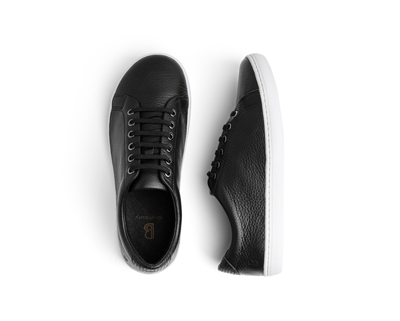
The Bramford shows what that looks like done right: a handcrafted American full-grain leather sneaker with genuine toe splay room and no clown-shoe silhouette. It's the difference between wide toe box walking shoes that let your foot actually work, and shoes that just fit looser.
Shop wide toe box shoes for women →

Why a Wide Toe Box Matters More Than You Think
So why does the shape of the front matter so much? Because your toes have a job. They're not passengers.
Toe splay is what happens when your toes spread naturally with each step. That spread widens your base of support, helps you balance, and lets your foot push off the way it's built to.
Squeeze the toes together and you've handed your foot a job it can't do properly. Your gait compensates. Something else picks up the slack.
Over years, that squeeze adds up. Cramped toe boxes go hand in hand with bunions, hammer toes, and the kind of arch and heel discomfort that shows up in people dealing with plantar fasciitis. This isn't a rare complaint, either.
Bunions affect roughly 19 percent of adults worldwide, according to a global prevalence study. Nearly one in five. That's a lot of feet paying rent on pointy shoes.
Your feet usually complain before things get that far. The warning signs of a too-narrow toe box look like this:
- Redness or pressure marks along the sides of your toes after wearing shoes
- Numbness or tingling in the forefoot by midday
- Toes that overlap or curl instead of lying flat
- Soreness at the base of the big toe where a bunion forms
Sound familiar? Pinky toe pain is often the first tell, since that toe sits right where most shoes taper hardest. We covered compression on the pinky toe in detail if that's your particular grievance.
A foot-shaped toebox isn't a comfort upgrade. It's the shoe finally agreeing with the anatomy inside it. Cosmetic preference had nothing to do with it.

How Toe Box Width Gets Measured (and Where Zero-Drop Fits In)
There's no industry-standard way to measure toe box width. Once you start shopping, you hit that problem fast: two brands can both claim a wide toe box and mean completely different things.
How Brands Actually Measure Toe Box Width and Height
Some brands measure forefoot circumference, the girth all the way around the ball of the foot. Others quote a literal millimeter width across the widest point of the sole. A few measure toe box height, the vertical space above your toes, which matters if yours curl or you wear thick socks.
The result? Specs that look comparable but aren't. A shoe with generous circumference can still taper at the toes, and a wide sole doesn't guarantee vertical room.
The honest test is shape, not numbers. Trace your foot, set the shoe on the outline, and see where the front cuts in. If your pinky toe hangs over the edge, the spec sheet was lying to you.
Zero-Drop, Stack Height, and Why Podiatrists Get Nervous
Toe box shape rarely travels alone. It usually shows up alongside two other numbers worth knowing:
- Stack height
- How much material sits between your foot and the ground.
- Heel drop
- The difference between stack height at the heel and at the toe.
Most dress shoes and sneakers run 8 to 12mm of drop. Zero drop means heel and forefoot sit level, the way your foot stands on bare floor.
That pairing isn't random. A level platform spreads your weight across the whole foot, and a wide toe box gives your toes room to do their share of the work.
Less cushioning, more feedback. We broke down the mechanics in our piece on toe box geometry and forefoot pressure if you want the full picture.
Zero drop isn't automatically better for everyone. That's the honest part, and it's exactly why podiatrists get nervous.
If you have a tight Achilles, a history of calf strains, or a gait that leans hard on heel cushioning, dropping to flat overnight can load your calves and arches faster than they can adapt. Sore lower legs are the usual complaint.
The sensible move is a gradual switch. A few hours a day at first, then build up. Your calves will send progress reports.

Wide Toe Box Myths That Need to Die
The measurement confusion breeds myths, and a few of them refuse to retire. Time to help them along.
Myth: sizing up to a wide fixes toe crowding.
Fact: it doesn't. This is the wide toe box vs wide shoe trap from earlier, wearing a different hat. A wide size changes girth through the midfoot.
The front still tapers, and your toes still fight for the same cramped real estate. Shape fixes crowding. Volume just fixes tightness.
Myth: zero drop works for every foot.
Fact: podiatrists disagree, and they have a point. A level sole suits feet that adapt gradually.
Feet with tight calves, certain conditions, or years of cushioned heels behind them can rebel at an abrupt switch. Zero drop is a destination, not a cannonball dive.
Myth: wide toe box shoes look clunky.
Fact: modern versions look like normal sneakers. The clunky reputation comes from early barefoot shoes, which looked like rubber gloves for feet. It stuck, but it's outdated.
The Bramford is a handcrafted full-grain leather sneaker with room for full toe splay, and nobody at the office has ever asked about it. That's the point.
Meanwhile, the case for the wider front keeps stacking up. As health experts explain, a roomier toe box eases pressure on the joints where bunions form and supports better alignment through the forefoot.
Your toes carry load. Squeeze them and you just relocate the bill.
So the myths are dead. Which leaves the practical question: how do you actually find shoes that get this right?

How to Actually Switch to Wider, Flatter Shoes
Good news: the switch is simple. It just isn't instant. Two things decide whether it goes well: getting the fit right and giving your body time to adjust.
Sizing Tips for Different Foot Shapes
Start with width, not length. Measure across the ball of your foot at its widest point. That's where wide feet actually run wide. Two people can share a size 8 and need completely different shoes.
Women's feet add a wrinkle. They tend toward narrower heels and higher insteps than men's.
That means a shoe roomy enough for full toe splay can still slip at the heel if the last ignores the back half of the foot. Look for a snug heel and midfoot paired with a genuinely wide front. Room where you need it, hold where you don't.
Transitioning Without Wrecking Your Feet
Fit sorted? Now pace yourself.
Years in heeled, tapered shoes shortened some tissues and let others coast. Barefoot shoes put them all back on the payroll, and they'll grumble about it. The sane approach, step by step:
- Wear the new shoes for short stretches first. An hour or two a day, then build.
- Alternate with your old shoes for the first few weeks.
- Expect mild calf and arch soreness. That's adaptation, not damage.
- Stop if pain is sharp or persistent. Soreness fades. Sharp pain is a message.
As for what to transition into, the Bramford makes a strong first pair: a handcrafted full-grain leather sneaker with a wide toe box and zero-drop sole that reads as a normal shoe to everyone but your toes. Easy entry, no costume change.
Your Wide Toe Box Questions, Answered
What Is a Wide Toe Box but Not Zero Drop?
A shoe with a roomy, foot-shaped front and a raised heel. The two features are independent. Plenty of shoes offer one without the other, so check both specs before you buy.
Why Do Podiatrists Not Like Zero Drop Shoes?
Most don't object to the shoes. They object to abrupt switches. People with tight Achilles tendons or heel-reliant gaits can overload their calves if they skip the gradual transition.
What Shoe Brands Have Wide Toe Boxes?
Birchbury builds every shoe around one, in handcrafted full-grain leather that passes for a normal sneaker. Altra, Topo Athletic, Vivobarefoot, Lems, and Xero also make foot-shaped fronts their signature.
Which Has a Wider Toe Box, Brooks or Hoka?
Brooks, generally. It offers more width options and a roomier forefoot across most models, while Hoka has only widened some recent releases. Neither makes a truly foot-shaped front.
Can Wide Toe Box Shoes Help With Existing Bunions, or Is It Too Late?
Not too late, but keep expectations honest. A wider front eases pressure on the joint and may slow progression. It won't reverse a bunion that's already formed.
The Toe Box Test: What to Look for Next Time You Shop
It all boils down to this. A "wide" label tells you almost nothing. The wide toe box vs wide shoe distinction is the whole game: one reshapes the front for your toes, the other just loosens the middle.
Next time you shop, check two things separately. Does the front follow an anatomical toebox shape, or does it taper to a point? And what's the heel drop?
Neither answer implies the other. Brands count on you not asking.
Your feet have spent years adjusting to shoes built for someone else's idea of a foot. You don't have to keep settling for tight and tapered.
Trace your foot. Test the shape. Buy accordingly.
Prices accurate as of August 2026.

Matthew Tran
Founder, Birchbury
Matthew Tran is a mechanical engineer who founded Birchbury. He started the company after struggling to find dress shoes that didn’t hurt — and barefoot shoes that didn’t look out of place at work. That gap led him to design his own: a wide-toe-box, zero-drop shoe made from full-grain leather, built specifically to look like a normal shoe. Birchbury has since been worn by lawyers, chiropractors, restaurant managers, and anyone else who spends their day on their feet and refuses to suffer for it.
More about Matthew Tran →