
Key Takeaways
- Podiatrists say that aching arches and bunions can be traced to shoes with narrow toe boxes.
- Raised heels from standard dress shoes throw off your balance and posture; and your knees, hips, and lower back absorb the strain.
- Thick and rigid soles weaken your arch muscles, leaving you prone to chronic fatigue and plantar strain.
- Healthy shoes need five features: wide toe box, zero-drop sole, supple leather, flexible outsole, and cushioned insole.
Written by Matthew Tran, Birchbury’s Founder
If you’re dealing with aching arches, burning heels, or throbbing toes by the end of the day, you aren’t alone. There are millions of people just like you.
Having no idea about foot-friendly shoes, most people assume foot pain is just the unavoidable price of getting older or simply part of the job.
But podiatrists disagree. In fact, a large proportion of the population wear incorrectly sized footwear, which is associated with foot pain and foot disorders (Buldt & Menz, 2018).
Part of the problem is how we shop. Many people size up for a roomier feel or size down for a snug one, and end up in shoes that never quite fit.
But the bigger issue is how shoes are made. Most are built on narrow, tapered molds that expect your foot to fit the shoe instead of the other way around.
If you want to take care of your feet’s long-term health, take note of these five (5) design flaws of modern footwear that are damaging your feet. (And the five features you should be looking for when buying a new pair of shoes.)
5 Ways Traditional Footwear Compromises Your Feet & Joints
Human feet are complex anatomical structures with 26 bones and 33 joints designed to flex, balance, and absorb shock.
According to podiatrists, when conventional shoes constrict that motion, several painful complications follow:

1. Tapered Fronts Squeeze Natural Alignment (The Bunion Trap)
Human feet are naturally widest across the toes. However, standard shoes taper inward at the ball of the foot, crushing toes into a triangular point.
One study pointed out that, “Wearing constrictive footwear between the ages of 20 and 39 may be critical for developing hallux valgus in later life" (Menz et al., 2016).
Thus, subjecting your feet to this inward pressure for a long period contributes to the development of bunions.
Additionally, when your toes are locked together, they cannot splay to grip the ground, robbing your foot of its primary stabilizing base with every step.
Look for: Shoes with wide toe boxes that give your toes ample room to spread naturally and distribute your body weight evenly.

2. Elevated Heels Throw Off Skeletal Posture (The Pelvic Tilt Problem)
"Wearing heels causes your lower back to arch more than normal because your body weight is being pushed forward. Your hips shift forward" (Wagenheim, 2019).
Over time, this artificial pitch also shortens your Achilles tendon and tightens calf muscles, triggering a domino effect of joint stiffness up through your hips.
Look for: Shoes that have zero-drop soles where the heel and forefoot sit completely level, restoring natural posture and reducing joint fatigue. For a more stylish and elevated look, opt for zero-drop shoes with a faux heel.

3. Stiff Uppers Constrict Blood Flow (The Callus & Pinky Toe Issue)
Cheap synthetic fabrics and stiff, processed leathers do not yield to natural foot movement. And the resulting repetitive friction causes painful corns, calluses (Mayo Clinic, n.d.), and inflamed pinky toes (Cleveland Clinic, 2024).
Moreover, these rigid uppers refuse to stretch or breathe and they create persistent pressure hot spots that pinch peripheral blood vessels all day.
Look for: Shoes that are made of supple American full-grain leather that flexes naturally with your stride and molds to your foot's shape without pinching.

4. Rigid Soles Immobilize the Arch (The Muscle Atrophy Problem)
Thick, inflexible outsoles act like structural casts. “Using shoes with features that restrict foot motion (e.g. arch supports, toe boxes) is associated with weaker foot muscles” (Holowka et al., 2018).
As these vital stabilizer muscles shut down, your arch loses its natural elastic spring, leaving your feet vulnerable to chronic fatigue and plantar strain.
Look for: Shoes with flexible and grippy outsoles that allow full natural range of motion with every step.

5. Unforgiving Impact on Hard Floors (The Joint Strain Issue)
“Standing on hard floors all day is linked to foot, leg and back pain” (Dick & Waters, 2015). And doing this without anatomical support can batter sensitive heel pads and strain connective tissues.
Every step against unyielding flat surfaces sends repetitive shock directly up into your ankles and knees if your footwear lacks targeted underfoot protection.
Look for: Shoes with ergonomic, molding insoles that cushion against impact while preserving zero-drop foot mechanics.
Birchbury: Natural Foot Health Hidden in Plain Sight
Fixing the structural problems in modern footwear doesn't require a closet full of orthopedic gear.
At Birchbury, we infused every single pair with all five podiatry-backed features.
And we did it without the typical barefoot compromises. Because our shoes are engineered to look identical to sharp, traditional leather footwear.
So your toes get total room to spread, your posture stays aligned, and not a single person in the room will know you’re wearing barefoot shoes.
Birchbury currently offers four core styles to cover your entire routine:

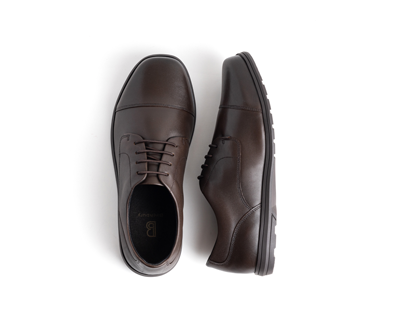
Brenston: Handcrafted barefoot dress shoes featuring our signature faux heel to match formal dress codes

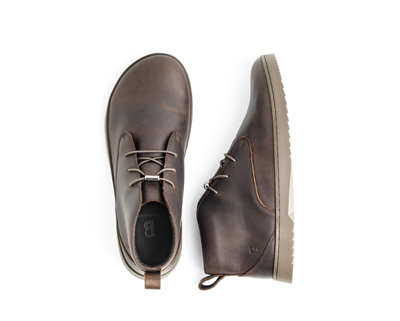
Carnforth: Rugged, water-resistant barefoot chukka boots built for versatile smart-casual wear

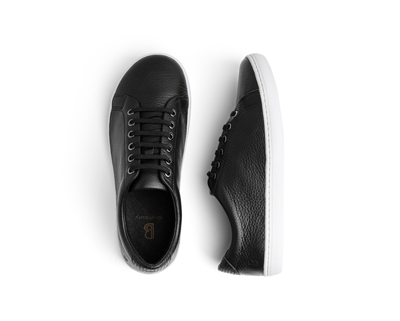
Bramford: Premium full-grain leather barefoot sneakers designed for effortless daily wear

Emhurst: Barefoot loafers that that you can wear all day from the office until late at night
Restore Foot Health Without Compromising Your Wardrobe
Aching arches, bunions, and daily foot fatigue aren't mandatory side effects of professional life. They are the direct result of flawed shoemaking.
Barefoot shoes fix the biomechanics by respecting natural foot biology. Yet most people avoid them because of one persistent reputation: they think they look ridiculous, unprofessional, or clunky.
We built Birchbury to eliminate that compromise.
You get all-day anatomical comfort and zero-drop support, while everyone else in the room just sees a sharp, classic leather shoe.
If you are ready to give your feet the anatomical freedom they need, you can explore Birchbury's full lineup risk-free with 30-day free return and exchanges.
References
- Buldt, A. K., & Menz, H. B. (2018). Incorrectly fitted footwear, foot pain and foot disorders: A systematic search and narrative review of the literature. Journal of Foot and Ankle Research, 11, Article 43. https://doi.org/10.1186/s13047-018-0284-z
- Menz, H. B., Roddy, E., Marshall, M., Thomas, M. J., Rathod, T., Peat, G. M., & Croft, P. R. (2016). Epidemiology of shoe wearing patterns over time in older women: Associations with foot pain and hallux valgus. The Journals of Gerontology: Series A, 71(12), 1682–1687. https://doi.org/10.1093/gerona/glw004
- Wagenheim, A. D. (2019, May 10). The high price of high heels: My day in heels. UPMC HealthBeat. https://share.upmc.com/2019/05/how-high-heels-affect-your-health/
- Mayo Clinic. (n.d.). Corns and calluses: Symptoms and causes. https://www.mayoclinic.org/diseases-conditions/corns-and-calluses/symptoms-causes/syc-20355946
- Cleveland Clinic. (2024, May 3). Tailor's bunion (bunionette). https://my.clevelandclinic.org/health/diseases/tailors-bunion-bunionette
- Holowka, N. B., Wallace, I. J., & Lieberman, D. E. (2018). Foot strength and stiffness are related to footwear use in a comparison of minimally- vs. conventionally-shod populations. Scientific Reports, 8(1), Article 3679. https://doi.org/10.1038/s41598-018-21916-7
- Dick, R. B., & Waters, T. R. (2015). Evidence of health risks associated with prolonged standing at work and intervention effectiveness. Rehabilitation Nursing, 40(3), 148–165. https://doi.org/10.1002/rnj.166
Health Disclaimer:
- The product does not constitute medical advice and is not intended to diagnose, treat, cure, or prevent any disease. The product is not a substitute for medication or other treatment prescribed by a physician or health care provider. If you are pregnant, breast feeding, taking medication, or under medical supervision, please consult a doctor or healthcare professional before use.
- The U.S. Food and Drug Administration has not evaluated the statements on this website.

Matthew Tran
Founder, Birchbury
Matthew Tran is a mechanical engineer who founded Birchbury. He started the company after struggling to find dress shoes that didn’t hurt — and barefoot shoes that didn’t look out of place at work. That gap led him to design his own: a wide-toe-box, zero-drop shoe made from full-grain leather, built specifically to look like a normal shoe. Birchbury has since been worn by lawyers, chiropractors, restaurant managers, and anyone else who spends their day on their feet and refuses to suffer for it.
More about Matthew Tran →