
You sit down at 9 a.m. By lunch, your back's filing complaints and your neck has opinions. So you stretch, maybe stand. Nobody thinks about their feet.
They should. Sitting all day reshapes everything below your ankles, and standing up doesn't fix it.
The story is stranger than that.

What Sitting All Day Actually Does to Your Feet
Sitting for hours starves your feet of movement, and your body reacts in ways you can feel by 3 p.m. Three things happen fast:
- Blood pools
- Muscles switch off
- Joints stiffen
None of it is in your head. Foot pain from sitting all day is real and measurable, not lazy stiffness you should tough out. Two things drive most of it.

Blood Flow Slows Down Fast
Your calves are pumps. When you walk, they push blood back up toward your heart. When you sit, that pump goes idle.
Fluid settles in your feet and ankles. That's swelling and edema, plus the poor circulation behind cold toes and pins and needles. Peer-reviewed research ties prolonged sitting to reduced blood flow in the lower legs, and the Mayo Clinic guidance links extended sitting to broader health effects.
- Swelling in the feet and ankles
- Numbness or tingling
- Cold feet
- Stiffness when you stand
- Arch pain

Muscles That Stop Working
Your feet are packed with small intrinsic muscles that hold up your arches. Sit long enough and they go unused for hours. Unused muscles weaken, and that muscle atrophy chips away at arch support.
Higher up, the calf and gastroc-soleus muscles shorten and stiffen when your ankle barely moves. Less ankle motion means reduced range of motion over time.
So your feet weaken at the bottom and tighten up the back. A quiet two-front squeeze you never agreed to.

Why Standing Up Doesn't Actually Solve the Problem
Standing desks change your posture, not your circulation. Your calves only move blood when your ankles move, so a person frozen at a standing desk is just sitting upright with tired legs.
A vascular study found that reduced lower-leg circulation from sitting normalizes with walking, not standing still. Standing in one spot has its own bill. Plantar fasciitis flares under constant static load. Joints compress. That's the accelerated fatigue from sitting and standing nobody mentions when they hand you a sit-stand desk.
The enemy was never sitting. It was inactivity. Your feet want movement, not a new way to hold still.
| Factor | Sitting | Standing Still | Walking |
|---|---|---|---|
| Circulation | Pools | Sluggish | Restored |
| Muscle engagement | Off | Static load | Active pumping |
| Foot stress | Stiffness | Plantar fascia strain | Balanced movement |
Movement is the answer. The next question is what you put on your feet while you move.
Your Shoes Matter More Than Your Standing Desk
Your shoes affect your foot health more than whether you sit or stand. You can walk all day and still hand your feet a bad deal. Most men spend eight hours in footwear that fights the foot's natural shape, then wonder why movement alone didn't help.
The chair starts the damage. Your shoes finish it.

What a Narrow Toe Box Does to an Idle Foot
A narrow toe box squeezes your toes together while you sit. The foot can't splay. The muscles can't engage. So the atrophy you earned sitting gets a partner in crime.
Over time, that pinch weakens the intrinsic muscles holding your arches, which is bad news for arch support and worse if you already deal with flat feet and fallen arches.
Then there's the heel. Even a modest dress shoe drop shortens your Achilles and calf complex. Pair that with feet quietly spreading with age and the math turns against you.
What to Look for Instead
Supportive desk footwear isn't about more padding. It's about letting the foot sit the way it's built. A wide toe box and zero-drop sole keep the foot natural, so some muscle stays awake even while you're parked in a chair.
Four features:
- Wide toe box, so toes can splay
- Zero-drop sole, no heel lift
- Flexible sole that bends with the foot
- Removable insole, in case you run custom orthotics
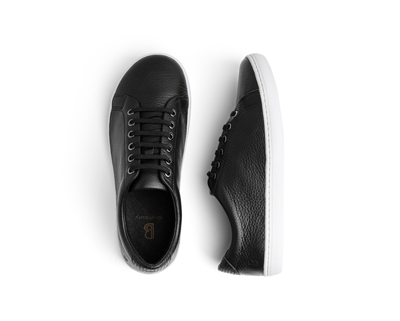
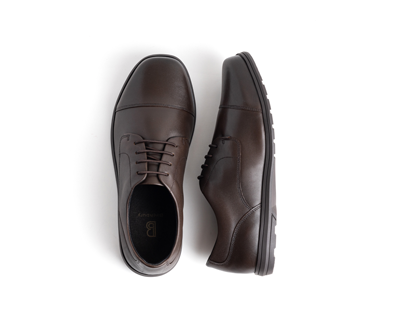
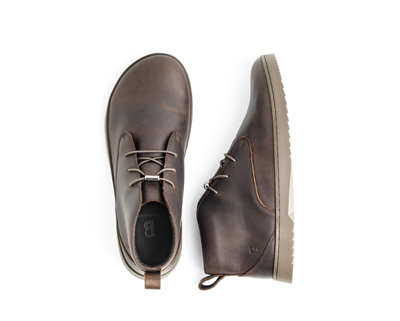
Two options cover most desk lives. In jeans, the Bramford ($120) gives you barefoot benefits without the barefoot look. In a boardroom, the Brenston ($180) hides a wide toe box and flat sole inside a sharp oxford. Both are handcrafted in full-grain American leather.
Myths Desk Workers Still Believe About Their Feet
You've made it this far, which means you're already ahead of the guy who thinks his feet are fine. A few stubborn myths keep desk workers stuck. Time to retire them.
Myth: "My feet are fine. They don't hurt."
Silence isn't health. Damage from inactivity builds quietly for years before it goes structural. Fallen arches and plantar fasciitis rarely announce themselves until they're already settled in.
Myth: "I stretch in the morning. That's enough."
One round of stretching exercises feels productive. It doesn't undo eight-plus hours of sitting still. A two-minute stretch versus a full workday of immobility is not a fair fight.
Myth: "Shoes don't matter if I'm just sitting."
They matter most when you're sitting. Compressed toes and an elevated heel keep your foot locked in a bad position for hours, so atrophy compounds even at rest.
Myth: "Numbness is just from crossing my legs."
Sometimes. Other times, numbness and tingling that keeps coming back points to chronic circulation problems, not your sitting style.
Believing the comfortable version is easy. Acting on the real one is what keeps your feet working.

Daily Habits That Actually Help (No Gym Required)
Six small daily habits reverse most desk-related foot damage without a gym. None of this requires a trainer or a single drop of sweat. The answer to a sedentary lifestyle is small movements stacked across the day, not a punishing routine you'll quit by Thursday.
We've heard from hundreds of Birchbury customers who sit eight-plus hours a day, and the same six habits come up again and again.
Here's what actually moves the needle for your foot health:
- Walk every hour, not just stand. Set a timer. Two to five minutes of real walking restarts circulation in a way standing never will.
- Toe splay and ankle circles under your desk. Spread your toes, roll your ankles. Nobody in the meeting will notice, and your intrinsic muscles wake up.
- Try to be barefoot at home. Stand or walk on a hard floor. Those small foot muscles finally have to do their job again.
- Swap your shoes for the workday. A wide toe box and zero-drop sole let your foot sit the way it's built, even parked in a chair.
- Calf raises at the kitchen counter. Waiting on coffee? Go up on your toes, down, repeat. Free physical activity while the machine drips.
- Stop sitting cross-legged for hours. It pinches circulation and stacks onto everything sitting already does. Plant both feet on the floor.
Pair these with a few stretching exercises and you've covered most of the damage a desk does. None of it is heroic. That's the point. Small, repeatable, and easy to forget exactly because it works.
Quick Answers for Desk-Bound Feet
Can a Sedentary Lifestyle Cause Foot Pain?
Yes. Foot pain from sitting all day comes from idle calf muscles, pooled blood, and intrinsic foot muscles that weaken from disuse. It builds slowly, then shows up as arch ache, stiffness, or tingling.
Can a Sedentary Lifestyle Cause Swollen Feet?
Yes. When you sit for hours, your calves stop pumping blood upward, so fluid settles in your feet and ankles. That's swelling and edema, and it usually fades once you start moving.
Can You Reverse Years of Sedentary Lifestyle Damage?
Much of it, yes. Circulation, muscle strength, and ankle mobility respond well to consistent daily movement. There's no one-time answer, though. It takes small habits repeated, not a single heroic weekend.
Do Your Shoes Still Matter if You Sit at a Desk All Day?
They matter most when you sit. A wide toe box and zero-drop sole keep your foot in a natural position, so it doesn't lock into a bad shape for hours.
What Is the Best Exercise to Reduce Swollen Feet?
Walking. Two to five minutes every hour restarts your calf pump and clears pooled fluid. Pair it with ankle circles and a few stretching exercises under your desk.
Your Feet Are Keeping Score
Your feet adapt to what you do every day. Sit still for years, and they quietly weaken, stiffen, and forget how to work. That's the cost of a sedentary lifestyle nobody itemizes.
The good news? Most of it reverses. Not with a standing desk or a gym membership, but with movement and what's on your feet.
Walk more. Wiggle your toes. Wear shoes shaped like feet. Small choices, repeated, are what protect your foot health.
The problem is real. The answer is simpler than you think. Your feet are keeping score either way. Make sure they're winning.

Matthew Tran
Founder, Birchbury
Matthew Tran is a mechanical engineer who founded Birchbury. He started the company after struggling to find dress shoes that didn’t hurt — and barefoot shoes that didn’t look out of place at work. That gap led him to design his own: a wide-toe-box, zero-drop shoe made from full-grain leather, built specifically to look like a normal shoe. Birchbury has since been worn by lawyers, chiropractors, restaurant managers, and anyone else who spends their day on their feet and refuses to suffer for it.
More about Matthew Tran →