
Key Takeaways
- Tracing your foot on paper is the most complete home method, because it gives you both length and width in one sitting.
- The wall-and-ruler method gets you an accurate foot length in about two minutes, but it can't tell you whether your feet are wide.
- Birchbury's free StrutFit tool turns a photo of your foot into a size recommendation, and you don't need a ruler or a purchase.
- Falling between sizes is mostly a toe problem: narrow shoes force you to size up, while a wide toe-box lets you buy your measured length.
Written by Matthew Tran, Birchbury's Founder
Most people buy shoes by a number they haven't checked in years. Meanwhile, feet change and sizes shift from brand to brand. A 2018 Journal of Foot and Ankle Research review found that 63 to 72% of people wear poorly fitting shoes.
Measuring at home fixes the number. The catch: an accurate measurement can still land between two sizes, and regular shoes punish you either way.
Below are three ways to measure your feet at home, from a pencil and paper to a free phone scan. After that, I'll explain why the between-sizes problem happens and what kind of shoe makes it go away.
Table of contents:
- Before You Measure: 4 Quick Rules for an Accurate Number
- Method 1: Trace Your Foot on Paper
- Method 2: The Wall-and-Ruler Method
- Method 3: Use Birchbury's Free Online Sizing Tool
- Why Finding Your True Size in Regular Shoes Is So Hard
- Why Barefoot Shoes Like Birchbury Fit True to Size
- Measure Once, Then Buy Shoes That Fit the Number
- FAQs

Before You Measure: 4 Quick Rules for an Accurate Number
These rules apply to all three methods below.
- Measure in the evening. Feet swell during the day, and foot size can vary by half a size from morning to evening.
- Wear the socks you'll wear with the shoes. A thick wool sock and a thin dress sock fit very differently.
- Stand on a hard floor. Your foot spreads a little under your full weight, and carpet lets the paper sink.
- Measure both feet. One is usually slightly bigger, so size for the larger one.

Method 1: Trace Your Foot on Paper
Tracing is the method most shoe brands recommend, and it's the one I'd start with. It's also the only manual method here with a reliable width reading, which helps if your shoes pinch.
What you need: paper longer than your foot, a pencil, a ruler or tape measure, and tape.
- Tape the paper to a hard floor so it can't slide.
- Step onto the paper and spread your weight evenly across both feet.
- Trace around your foot, holding the pencil straight up and down.
- Mark the back of your heel and the tip of your longest toe. For some people, that's the second toe.
- Measure between those two marks. That's your foot length.
- Measure across the widest part of the outline, usually the ball of your foot. That's your width.
- Repeat with the other foot, then check the larger numbers against the brand's size chart.
The most common mistake is a tilted pencil. Angle it inward and the outline shrinks, or angle it outward and it grows. If bending down shifts your weight, ask someone else to trace.

Method 2: The Wall-and-Ruler Method
If you only need your length, this method is faster. The wall gives you a fixed starting point, so there's no wobbly heel line to second-guess.
What you need: a wall, a sheet of paper, a ruler, and a hardcover book.
- Place the paper on a hard floor, with one short edge flush against the wall.
- Stand on the paper with your heel touching the wall.
- Hold the book upright on the paper and slide it forward until it touches your longest toe.
- Mark where the book meets the paper, then step off.
- Measure from the wall edge of the paper to your mark.
- Repeat with your other foot, then check the larger number against the size chart.
The trade-off is width, since this method can't measure it. If your shoes usually feel tight across the ball of your foot, pair it with Method 1.

Method 3: Use Birchbury's Free Online Sizing Tool
If you'd rather skip the pencil work, Birchbury has a free sizing tool on every product page. It runs on StrutFit, an AI tool that measures your foot from a photo taken with your phone.
- Go to birchbury.com and open any shoe's product page. You don't need to add anything to your cart or check out.
- Click the "What is my size" button next to the size options.
- StrutFit opens. On a desktop, you'll see a QR code to scan with your phone. On your phone, it takes you straight to StrutFit.
- Follow the on-screen prompts to photograph your foot.
- Get your recommended size for that shoe.
Everything runs in your phone's browser, so there's no app to download. When we started using StrutFit, the scan data showed us where our size charts needed work. We've since added fit tips to our product pages and made the charts more accurate.
I'd point you here if you don't own a ruler or don't trust your pencil line.
Why Finding Your True Size in Regular Shoes Is So Hard
Once you have your measurement, the tricky part begins. Two things get in the way: inconsistent size labels and numbers that fall between sizes.
Same Size Label, Different Shoe
A size 9 is a label, and every brand builds its own version of it. RunRepeat measured the insoles of 20+ running shoes, all men's US 9. The shortest and longest were 16 mm apart, close to two full US sizes.
That's also why measuring an old shoe's insole won't give you a reliable size. The insole only describes that one shoe's shape.
The Between-Sizes Trap
Feet don't grow in neat half-size steps, so plenty of measurements land between two sizes. Regular shoes then hand you two uncomfortable choices.
Size down, and the length fits snugly, but the tapered front presses your toes together. Size up for more room, and you get extra length behind your heel. That gap is where heel slip and blisters start.
I went back and forth between both options for years in expensive designer shoes, and neither fixed the pain. The real problem was shape. Most shoes narrow toward the toes, so the only way to buy more width is to buy more length.
Why Barefoot Shoes Like Birchbury Fit True to Size
Barefoot shoes start with a foot-shaped front, which removes the main reason people size up. Here's how each part of a Birchbury shoe helps you wear the size you measured.
A Wide Toe-Box Means You Buy Your Measured Length
Every Birchbury shoe has a wide toe-box shaped like a real foot. Your toes spread out naturally instead of being squeezed toward a point.
That changes the sizing decision completely. Since the width is already built in, you never have to add length to get it. You order the size you measured, and your heel sits snugly at the back with no gap.
A Zero-Drop Sole and Faux Heel Keep Your Foot in Place
A zero-drop sole keeps your heel and the ball of your foot at the same height. As a mechanical engineer, this is the part I care about most. A level footbed never tips your foot toward the front of the shoe, so the fit stays put all day.
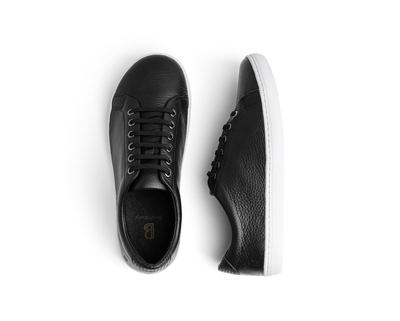
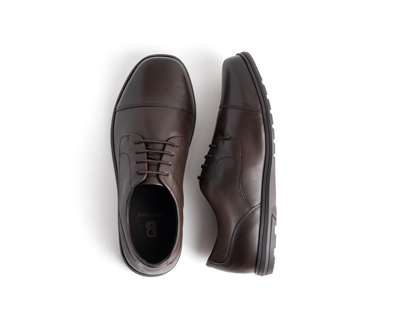
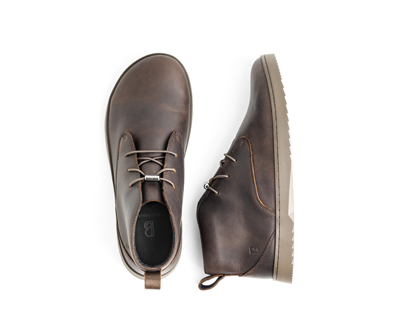
The Brenston dress shoe, Carnforth chukka, and Emhurst loafer each add a faux heel outside. That keeps them looking like regular shoes. The Bramford sneaker keeps the same level footbed, with clean lines that give it a classic sneaker look.
Full-Grain American Leather Fits Right From Day One
Stiff leather pushes many people to size up just to survive the break-in. Birchbury uses soft full-grain American leather instead. The Bramford, Carnforth, and Emhurst need no break-in, and the Brenston's leather is flexible from the first wear.
So the fit you feel on day one is the fit you'll have months later. You can judge it honestly while you're still inside the 30-day return window.
Measure Once, Then Buy Shoes That Fit the Number
Measuring your feet at home only takes a few minutes. Tracing gives you the fullest picture, and the wall method is the quickest way to get length. StrutFit does the work from a single photo.
Finding a shoe that matches the number is the harder part. As long as shoes taper at the toes, people between sizes will keep trading pinched toes for slipping heels.
Birchbury was built to take that trade away. Its wide toe-box, zero-drop sole, and full-grain American leather let you wear your measured size from day one. Run the free StrutFit scan on any product page, then find the pair that fits your real size at birchbury.com.
FAQs
1. How can I measure my shoe size at home without a ruler?
The easiest option is a phone-based sizing tool like StrutFit, which Birchbury offers free on every product page. Click "What is my size," photograph your foot, and it recommends a size for that specific shoe. If you'd rather go by hand, trace your foot on US letter paper, which is 11 inches long, and compare. A US dollar bill also works as a makeshift ruler, since it measures about 6.14 inches long.
2. Should I measure my feet standing or sitting?
Measure while standing, with your weight spread evenly across both feet. Under your full body weight, your foot flattens and spreads, so it measures longer and wider than when you sit. Since you'll be standing and walking in your shoes, the standing number matches real wear. If bending down to trace shifts your weight, ask someone else to hold the pencil.
3. What time of day is best to measure my feet?
The best time is late afternoon or evening, after you've been on your feet for a few hours. Feet swell slightly through the day, so a morning measurement can come out smaller than your feet are by dinnertime. Shoes sized to your evening feet stay comfortable all day, while morning-sized shoes can feel tight by mid-afternoon. If you measure more than once, go with the evening number.
4. Should I wear socks when measuring my feet?
Yes, wear the socks you plan to wear with the shoes. A thick wool or athletic sock adds noticeable bulk, while a thin dress sock adds very little. Measuring barefoot for winter boots, for example, can leave you with a tight fit once heavy socks go on. If you'll wear the same shoes with different socks, measure with the thickest pair.
5. What should I do if one foot is bigger than the other?
Size for the larger foot, since a shoe that's too short causes more problems than one that's slightly roomy. Most people have one foot a little bigger than the other, so a small difference is common. If the smaller foot feels loose, a thicker sock or an extra insole can take up the space. If your feet differ by a full size or more, it's worth checking with a podiatrist.

Matthew Tran
Founder, Birchbury
Matthew Tran is a mechanical engineer who founded Birchbury. He started the company after struggling to find dress shoes that didn’t hurt — and barefoot shoes that didn’t look out of place at work. That gap led him to design his own: a wide-toe-box, zero-drop shoe made from full-grain leather, built specifically to look like a normal shoe. Birchbury has since been worn by lawyers, chiropractors, restaurant managers, and anyone else who spends their day on their feet and refuses to suffer for it.
More about Matthew Tran →