
Your dress shoes look sharp. Your feet filed a complaint around 2 p.m.
That's not age. That's engineering.
Most dress shoes prop your heel up 10 to 15mm, taper the toe box (the front of the shoe where your toes live) into a point your foot never agreed to, and stack thick foam between you and the ground. Barefoot leather shoes flip all three: zero-drop platform, wide square toe box, thin flexible sole.
Here's the spec sheet, side by side.
| Feature | Traditional Dress Shoes | Barefoot Leather Shoes |
|---|---|---|
| Heel drop | 10–15mm | 0mm (zero-drop) |
| Toe box width | Tapered, narrower than your foot | Wide and foot-shaped |
| Sole thickness (stack height) | Typically 20mm or more of stacked material | Thin, flexible, often under 10mm |
| Weight | Heavy, rigid construction | Noticeably lighter |
Those numbers explain why men in their 40s keep trying minimalist shoes. What follows explains why barefoot dress shoes are the pair they don't return.

Reason 1: Your Feet Aren't the Same Shape They Were at 25
Pull out a pair from ten years ago. Same size on the label, different foot inside it.
That's not your imagination. Feet widen and flatten with age as ligaments and tendons lose elasticity.
A clinical review of foot changes in older adults backs this up. So does the broader research on how feet change with age, along with foot fitness research focused on the over-40 crowd.
Your arches drop gradually too. That shifts how weight distributes across the foot, which is why sizing and fit that worked at 25 rarely work the same way at 45.
The shoes themselves make it worse. Decades in structured, cushioned footwear can quietly alter your gait, so the problem compounds every year you ignore it.
Your feet didn't betray you. They just outgrew the mold.
We break down what causes your feet to spread after 40 if you want the full picture. The short version: a wide toe box matches the foot you have now, not the one you had two decades ago. That's the starting point for long-term foot health.

Reason 2: Zero-Drop Soles Stop Fighting Your Joints
Shape is half the story. The other half sits under your heel.
A raised heel tilts your whole body forward, and your knees, hips, and lower back spend all day compensating. Not dramatically. Just constantly, for hours, five days a week.
Zero-drop means the heel and forefoot sit level. No forward tilt to correct. Your posture stacks the way it does when you stand barefoot, and natural foot movement takes over from there.
There's a bonus that matters more with each birthday: ground feel. A thin, flexible sole lets your feet sense the surface beneath them, and peer-reviewed research links that ground feedback to better balance and proprioception (your body's sense of where it is in space) as we age.
Years of elevated heels can push extra load onto knees and hips. A level sole hands that work back to the joint built for it.
Your knees will notice the difference before you do.

Reason 3: A Wide Toe Box Ends the Toe-Squeeze
Level soles handle the joints. Now for the front of the shoe, where traditional lasts commit their worst crime.
Your toes need room to splay. Spread toes are how your body actually balances and stabilizes with every step.
Tapered toe boxes squeeze them together for eight hours straight. Cram them into a point and you lose that base.
A wide toe box gives it back. An extra wide fit goes further, making room for feet that have spread over the decades.
One catch: sizing and fit work differently in a foot-shaped last than a tapered one. Measure against the size chart instead of guessing off your old pairs.
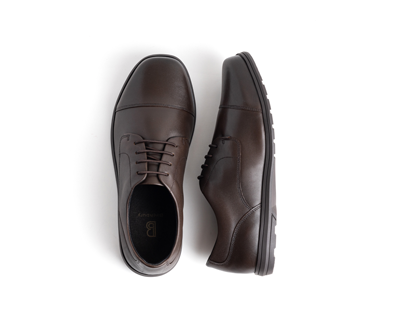
The Brenston proves you don't sacrifice the dress shoe look to get any of this. Classic oxford silhouette outside, full toe splay inside. Handcrafted from full-grain American leather, and nobody in the meeting will notice anything except that you stopped wincing.
Shop the Brenston barefoot dress shoe →
Our guide to zero-drop sole and wide toe box essentials covers what to check before you buy.

Reason 4: They Still Pass for Real Dress Shoes
All that function means nothing if you look like you're wearing water shoes to a client dinner.
Fair concern. Barefoot shoes earned their reputation the hard way: toe-shaped rubber gloves that screamed "ask me about my running form." Minimalist shoes have moved on.
The trick is the leather upper. Cut it on a classic last and the barefoot construction hides in plain sight.
From across the room, barefoot dress shoes read as dress shoes. Full stop.
The range covers more than the boardroom now:
| Occasion | Shoe | Why It Works |
|---|---|---|
| Formal | Brenston | Handles suits and meetings |
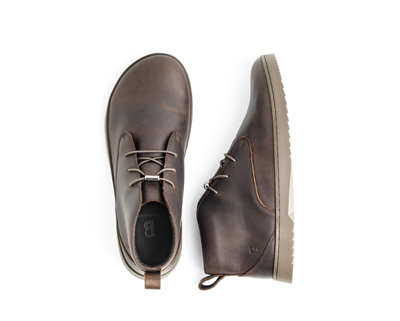
| Business casual | Carnforth chukka boot | Pairs with chinos or dark denim |
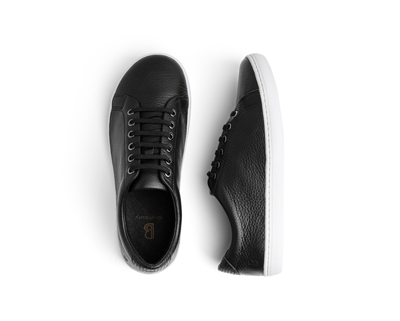
| Weekend | Bramford leather sneaker | Keeps the wide toe box in a clean, minimal silhouette |
Same foot-shaped construction underneath every one. Different rooms, same secret.
Nobody clocks the difference. Except you, around 2 p.m., when your feet still feel fine.

Reason 5: Your Feet Get Stronger, Not Softer
The style question is settled. Here's the payoff you can't see.
Your feet have over a dozen intrinsic muscles. Thick cushioning does their job for them, and muscles that don't work go soft. Decades of padded shoes leave them weaker every year.
A thin, flexible sole reverses the deal. No foam to lean on means those muscles fire with every step. Think of it as a gym membership your feet can't skip.
This isn't a hunch. Six months of walking in minimalist shoes increased foot muscle strength by nearly 60%, according to peer-reviewed research.
Sixty percent. From walking. In shoes you'd wear anyway.
Stronger feet mean better foot health going into your 50s, not worse. Most footwear can't make that claim, because most footwear works against it.
Who Should Pump the Brakes on Barefoot Shoes
Five reasons to switch. Now the honest part.
Some podiatrists stay skeptical of barefoot shoes, and it usually comes down to one thing: guys who switch overnight after 20 years in cushioned footwear. The abrupt transition causes the trouble, not the shoes.
Still, talk to your doctor first if any of these apply:
- Severe bunions that need more than a wide toe box
- Active plantar fasciitis flare-ups, where less support can aggravate things short-term
- Diabetic neuropathy, since reduced sensation makes thin soles riskier
One more reality check. Less cushioning means more ground feedback, and day one can feel strange. Your feet spent decades in foam. They need weeks to adjust, not hours.
Barefoot shoes reward patience. Rush the switch and you'll blame the shoes for a problem you created.
How to Switch Without Wrecking Your Feet
Patience sounds vague. Here's the actual playbook.
One rule governs the transition: your calves and foot muscles adapt slower than your enthusiasm. Twenty years of cushioned heels shortened things that now need to lengthen.
- Wear them an hour or two a day at first, not a full workday.
- Alternate with your old shoes while your calves and feet adapt.
- Add walking distance gradually over several weeks.
- Give it a full month or two before judging.
Fair warning: at 45, this takes longer than it would have at 25. Tissue adapts more slowly with age, and you're undoing decades, not days.
Mild calf soreness early on is normal. Sharp pain isn't, so back off if you feel it.
Slow wins here. Every time.
Before you order, a few questions come up every single time. Here they are, answered straight.
Common Questions Men Ask Before Switching
What Kind of Shoes Should a 40-Year-Old Man Wear?
Shoes shaped like feet. A wide toe box, level sole, and quality leather cover comfort and style in one move. Fit the foot you have now, not the one from your 20s.
Why Do Podiatrists Not Like Barefoot Shoes?
Mostly because patients rush the switch. The skepticism targets abrupt transitions after decades in cushioned shoes, not the design itself. A gradual changeover answers most of the concern.
Are Barefoot Shoes Good for Older Adults?
Yes, for most. Thin, flexible soles increase ground feel, which supports balance as you age. Anyone with a specific foot condition should talk to a doctor first.
How Long Does It Take to Get Used to Barefoot Shoes After Decades in Traditional Dress Shoes?
Plan on one to two months as a general guide. Calves and foot muscles adapt slower after years of raised heels. Ease in a few hours a day and let your body set the pace.
Can Barefoot Leather Shoes Still Look Right With a Suit or Business Casual Outfit?
Yes. A full-grain leather upper on a classic silhouette reads as a regular dress shoe, and the minimalist design stays hidden inside. Barefoot dress shoes pass the boardroom test because minimalist shoes finally learned to dress.
Questions answered. One thing left to say.
Why These Guys Aren't Going Back
This isn't a trend men in their 40s stumbled into. It's feet finally getting shoes built for how they actually move at this age.
Look at what the five reasons add up to. A shape that matches your foot now. A sole that stops fighting your joints.
Toes with room to work. Feet that get stronger instead of softer. And nobody at the office any the wiser.
In other words: no more choosing between looking sharp and feeling right. Barefoot dress shoes retired that trade-off.
Your feet already voted. The 2 p.m. complaint stops when the shoes do.
Explore all barefoot leather shoes →
Prices accurate as of July 2026.

Matthew Tran
Founder, Birchbury
Matthew Tran is a mechanical engineer who founded Birchbury. He started the company after struggling to find dress shoes that didn’t hurt — and barefoot shoes that didn’t look out of place at work. That gap led him to design his own: a wide-toe-box, zero-drop shoe made from full-grain leather, built specifically to look like a normal shoe. Birchbury has since been worn by lawyers, chiropractors, restaurant managers, and anyone else who spends their day on their feet and refuses to suffer for it.
More about Matthew Tran →