
Written by Matthew Tran, Birchbury's Founder
Clarks make good-looking shoes. No doubt. They're designs are drool-worthy.
But there's one issue Clarks shoe owners have in common: they're toes get pinched. And after a few hours wearing them, they're feet are sore.
Here's the part nobody tells you: that pinch is a shape problem, not a toughness problem. So if you want an alternative to Clark shoes that holds up through all-day wear, skip the generic brand lists.
What follows is a style-for-style comparison, because comfortable shoes start with the right shape.

The Short Answer: Bramford, Carnforth and Brenston
Three Birchbury styles map directly onto three models from Clarks, the British shoemaker founded in 1825 and best known for the desert boot. The Bramford covers the same ground as the Clarks Code C Lace, the Carnforth is the counterpart to the Lydford Mid chukka, and the Brenston matches the Craft Emile dress silhouette.
One real difference separates the brands. Birchbury makes barefoot shoes, and every pair rides on a wide toe box (extra room up front where your toes spread) and a zero-drop sole (heel and forefoot at the same height) for standing and walking all day.
Birchbury vs Clarks, style for style:
| Birchbury Style | Clarks Counterpart | Best For | The One-Line Difference |
|---|---|---|---|
| Bramford | Code C Lace | Everyday wear | Same minimal sneaker look, roomier front end, flat platform |
| Carnforth | Lydford Mid | Casual boot days | Classic chukka lines without the tapered toe |
| Brenston | Craft Emile | Business casual, all-day standing | Reads as an oxford outside, wide toe box inside |
Both brands look sharp, use good leather and sit in the same price tier. Only one gives your toes room to work through the afternoon.
Why Clarks Owners Go Looking in the First Place
Most owners start looking for one reason: the front of the shoe gets tight after a few hours on your feet.
Nobody replaces shoes they love. They replace shoes that quit on them at hour six.
Listen to the complaint and it's almost never the heel or the arch. It's the front of the shoe.
Cushioning and arch support get the credit in comfortable walking shoes, but width and shape do the work. Footwear fit research indexed in PubMed Central found that most people studied were wearing shoes narrower than their feet, and the mismatch shows up exactly where the pinching starts.
Here's the catch with wide and narrow widths: they change the middle of the shoe, not the front.
- Wide width: adds room through the ball and midfoot
- A size up: adds length and heel slop, not toe room
That's why it rarely solves anything.
We ran this same exercise in our style for style breakdown of Thursday Boots, and the pattern held there too. It holds here, starting with the everyday sneaker.

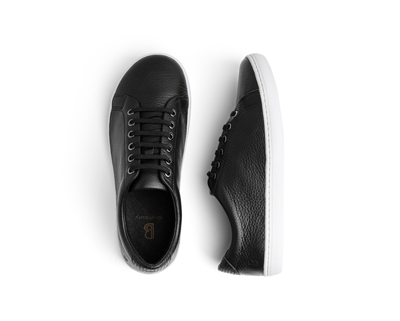
Bramford vs the Clarks Code C Lace
The verdict up front: same look, more room at the front, flatter platform.
Bramford at a glance:
- Wide toe box
- Zero-drop, flexible sole
- Handcrafted American full-grain leather
- Elastic no-tie laces
- Removable insole, compatible with custom orthotics
- No break-in period
Both are minimal leather lace-up sneakers that pass in an office on Tuesday and a brewery on Saturday. The Code C Lace does that job well. The Bramford, Birchbury's barefoot leather sneaker, does the same job on a different foundation.
The foundation is the point. The Bramford sits on a wide toe box, so your toes can splay under load instead of stacking up against a tapered front.
The zero-drop sole keeps heel and forefoot level, and the flexible construction makes it comfortable from the first wear. No break-in ritual. No bandage week.
The details earn their keep too: elastic no-tie laces you'll pretend you don't love, and a removable insole that lifts out so custom orthotics drop right in.
Birchbury handcrafts each pair with American full-grain leather, the outermost layer of the hide and the most durable grade, the kind that looks better after a year, not worse.

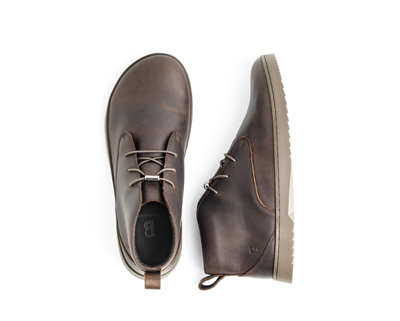
Carnforth vs the Clarks Lydford Mid
The verdict up front: the boot look you already wanted, with room at the front for a full day on your feet.
Say "Clarks" and most people picture a desert boot. The chukka boot silhouette is the brand's calling card, and the Lydford Mid carries it well. Quick taxonomy: a chukka is an ankle-height boot with two or three eyelet pairs, and the desert boot is its crepe-soled cousin.
The Carnforth keeps those classic chukka lines and swaps the tapered toe most boots use for a wide toe box. Underneath sits a zero-drop sole, and the upper is handcrafted full-grain American leather: water-resistant, and built for years of wear rather than seasons.
Now, the sole question. Two materials, two philosophies:
- Crepe sole (the Lydford's signature): natural rubber, soft, springy, with that distinctive texture.
- Flat, flexible outsole (the Carnforth): keeps your foot level and lets it bend where it wants to bend, which matters on a long day of walking.
Pick the one your feet vote for at 5 p.m.
Elastic laces round it out, giving you the convenience of a laceless boot without losing the traditional look.

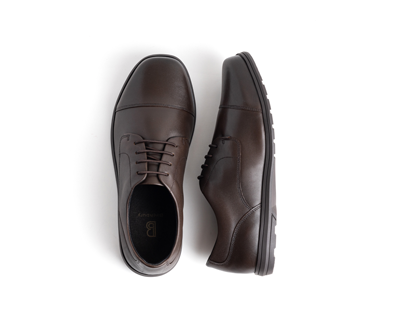
Brenston vs the Clarks Craft Emile
Do barefoot dress shoes look obviously different? No. The Brenston reads as a standard oxford from the outside; the difference is internal shape, not exterior styling, so nobody at the meeting can tell it apart from the Clarks Craft Emile.
Both the Craft Emile and the Brenston read as a classic oxford, the closed-lacing dress shoe silhouette, sharp with a suit and just as good with dark denim. Inside is where they part ways: a wide toe box and a flat, flexible sole make the Brenston roomier exactly where a standard oxford narrows.
The leather does its share as well. Soft full-grain American leather out of the box means no pinching on day one, which is not a sentence most men have ever said about a new dress shoe.
All-day wear, spelled out:
- An 8 a.m. start
- A standing desk
- Two site visits
- A client dinner
- Feet that are still on speaking terms with you at the end
If wide and narrow widths keep failing you and you still need a business casual shoe, this is the answer.
Verdict: the dress shoe you can stand in for a full shift.
Shop Brenston: Barefoot Dress Shoe →

Toe Box Width and the Flat Sole, in Plain English
Every verdict above rests on two design variables. Here they are, minus the jargon.
Where the Width Actually Needs to Be
Wide width means room through the ball and midfoot. A wide toe box means room at the front, where your toes actually spread.
Not the same thing. The toe box is the last inch or so of the shoe, and it's the part standard widths never touch.
One toe box study indexed in PubMed Central examined how a narrowed front section limits natural toe splay (the outward spread of your toes under weight), and toes that can't splay take pressure in ways they weren't shaped for. That's the bite that starts after hours of standing. We covered where that width actually lives if you want the full anatomy lesson.
What Zero-Drop Means Once You Are Six Hours In
Height is the other variable. Zero-drop means the heel and forefoot sit at the same height: one flat, level platform. Most casual and dress shoes raise the heel around half an inch.
On a level, flexible sole, your foot does more of its own work through the day, and minimal footwear research published in Scientific Reports measured stronger foot muscles in adults after six months of daily wear in minimal shoes.
Birchbury builds every pair, from walking shoes to dress shoes, on that same combination: wide toe box, zero-drop sole, handcrafted American full-grain leather. Full-grain is the top layer of the hide, so it softens and molds to your foot over months while holding its shape. That's where the leather quality and the durability come from.
Sizing, Break-In and What You Get for the Money
Two objections left before checkout. Take them in order.
First, sizing. Start from your usual size, then confirm it against the sizing guide, which lists exact measurements in inches. Why the double-check? Clarks tend to run on the narrow side through the toe, which is why so many owners size up and still feel pinched. Length is not width, and standard wide and narrow widths won't rescue the front end either.
Second, break-in: there isn't one. The full-grain American leather is soft from the first wear, so you can retire the old pair and start the new one the same morning and stay in comfortable shoes through all-day wear.
On price, this is parity, not a bargain hunt. The sneaker runs $120, the dress shoe $180, the boot $197, the same tier as comparable Clarks styles.
You're not trading money. You're trading shape.
Same Look, Different Afternoon
Three familiar silhouettes. Same price tier, same good leather, same clean look from across the room.
If you skipped to the end: the Bramford stands in for the Code C Lace, the Carnforth for the Lydford Mid, and the Brenston for the Craft Emile.
The only things that changed are the shape of the front end and the height of the heel: a wide toe box and a zero-drop sole where a taper and a lift used to be.
The point was never the brand. It was the room your toes needed the whole time. That's what all-day wear feels like.
FAQs
1. Are clarks shoes barefoot friendly?
2. What shoe brand is comparable to Clarks?
3. Is Clarks a high-end brand?
4. Are clarks shoes considered high quality?
5. What country are clarks made in?

Matthew Tran
Founder, Birchbury
Matthew Tran is a mechanical engineer who founded Birchbury. He started the company after struggling to find dress shoes that didn’t hurt — and barefoot shoes that didn’t look out of place at work. That gap led him to design his own: a wide-toe-box, zero-drop shoe made from full-grain leather, built specifically to look like a normal shoe. Birchbury has since been worn by lawyers, chiropractors, restaurant managers, and anyone else who spends their day on their feet and refuses to suffer for it.
More about Matthew Tran →